
Amid America’s Angst, Public Gatherings Lift Up Local Communities
In the middle of the loneliness epidemic and myriad fractures in American society, the desire for social connection often goes unfulfilled. Earlier this year, a report by the nonprofit US Chamber of Connection began, “Social disconnection now defines the American experience, impacting our health, democracy, and quality of life.” As if to highlight the point, in July, Axios posted the story “Americans of all ages are spending less time socializing.”
At the same time, there are endeavors for social connection in local public gatherings. Ones that feel truly communal are marked by a shared purpose and sense of belonging. “Communities of play, [shared activities in groups], were the number one intervention that seems to have the biggest impact on trust and bridging, [connecting across difference], enabling people to build social connection, overcoming loneliness,” said Aaron Hurst, the nonprofit’s founder and CEO.
The American Communities Project/Ipsos 2024 survey of more than 5,000 Americans did not find these kinds of activities widely popular. Nationally, just above a third of respondents said they attend a community event, such as a local fair, church group, or concert in the park, at least monthly. Some rural communities stood out from the trend. In the mostly rural, Mormon-dominated LDS Enclaves, where many community gatherings relate to the LDS church, 50% said they attend an event at least once a month. In the very rural Aging Farmlands and Native American Lands, percentages hovered around or climbed higher than 60%. (In these sparsely populated places, surveys were conducted by telephone rather than online.)
Today’s digital culture can complicate how people relate in real-life gatherings. While smartphones greatly ease the ability to organize events and capture moments for social media, Hurst said, people may not be interacting but out on their phones. Organizers can help build connections among attendees with two structural elements: name-tagging and having an opening and closing with social components, he added. “Phone-free social events” are also a trending option.
To better understand how Americans of various backgrounds are gathering now and what makes for positive experiences, we enlisted writers from around the country to attend and report on free or low-cost public events near where they live. Reflecting diverse terrains, histories, and cultures, this tapestry of gatherings shows how residents are coming together to support their communities — and repeatedly finding authentic connections. (Click on the anchor links below to jump to specific vignettes.)
- St. Mary’s County, Maryland (Military Post)
- Sarasota County, Florida (Graying America)
- St. Louis City, Missouri (Big City)
- Bernalillo County, New Mexico (Big City)
- Tillamook County, Oregon (Graying America)
St. Mary’s County, Maryland (Military Post)
By Matt Price
LEONARDTOWN, MARYLAND – On this steamy Saturday in mid-June at the St. Mary’s County Fairgrounds, the flagship crab feast was well underway when I approached two friendly-looking older women and quietly asked, “Would it be alright if I sat with you for five minutes tops and asked a couple of questions about why you attend community gatherings like this?”
They blinked at me for a few beats. Finally, one responded, incredulous and without apology: “No!”
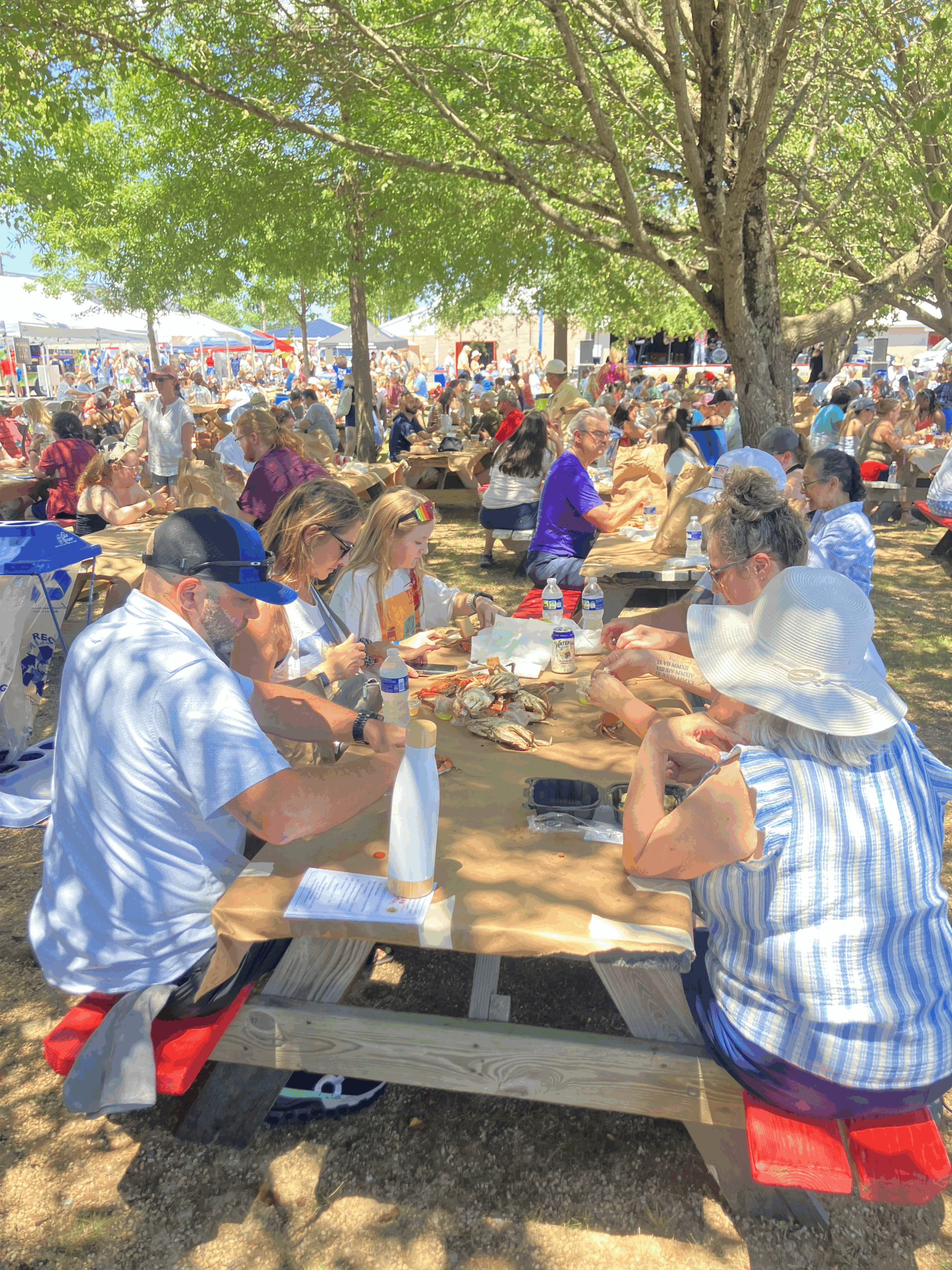
This was the 40th year of the St. Mary’s County Crab and Music Festival, and most participants were repeat visitors, paying the $10 ticket fee to enjoy the experience — without interruption. These Southern Marylanders treated eating steamed crab as serious business.
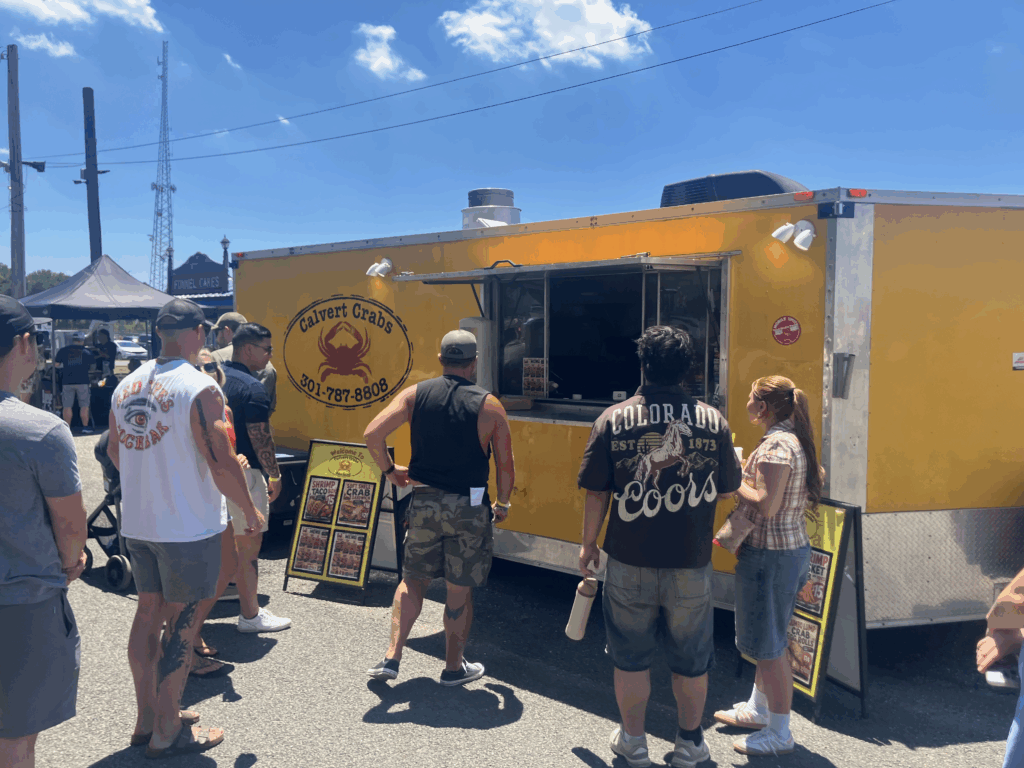
Like the St. Mary’s community, this crowd was foremost a military crowd. Most were not in military-related apparel, beyond a few older festivalgoers sporting veterans’ hats. It was more common to see a Maryland flag tattoo or an Old Bay Seasoning T-shirt than fatigues. But when I chatted with attendees, usually someone in each group touched on a military connection or their work for Naval Air Station Patuxent River nearby. Attendees expressed pride about their service but discomfort when discussing how the Trump administration is using the military today.
Ian, a 53-year-old man employed at Naval Air Station Patuxent River, was diplomatic: “[The military] is changing constantly, and it’s something we have to deal with, but we have to do our jobs.” Another woman, 50, who asked not to be named, said her son recently graduated from West Point, but he no longer feels like the current iteration of the military is “his military.”
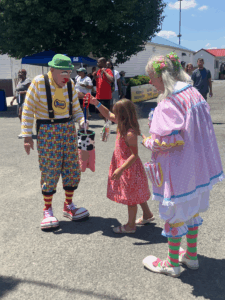
The crowd was diverse in age and race, perhaps because this is one of the well-known annual events in the area. While the majority of festivalgoers were white, many were Black or Asian, and many couples or friend groups were racially mixed. There were families with elementary school-aged children, friend groups and couples in their 20s and 30s, and groups of older adults swaying to the sounds of The Fabulous Hubcaps.
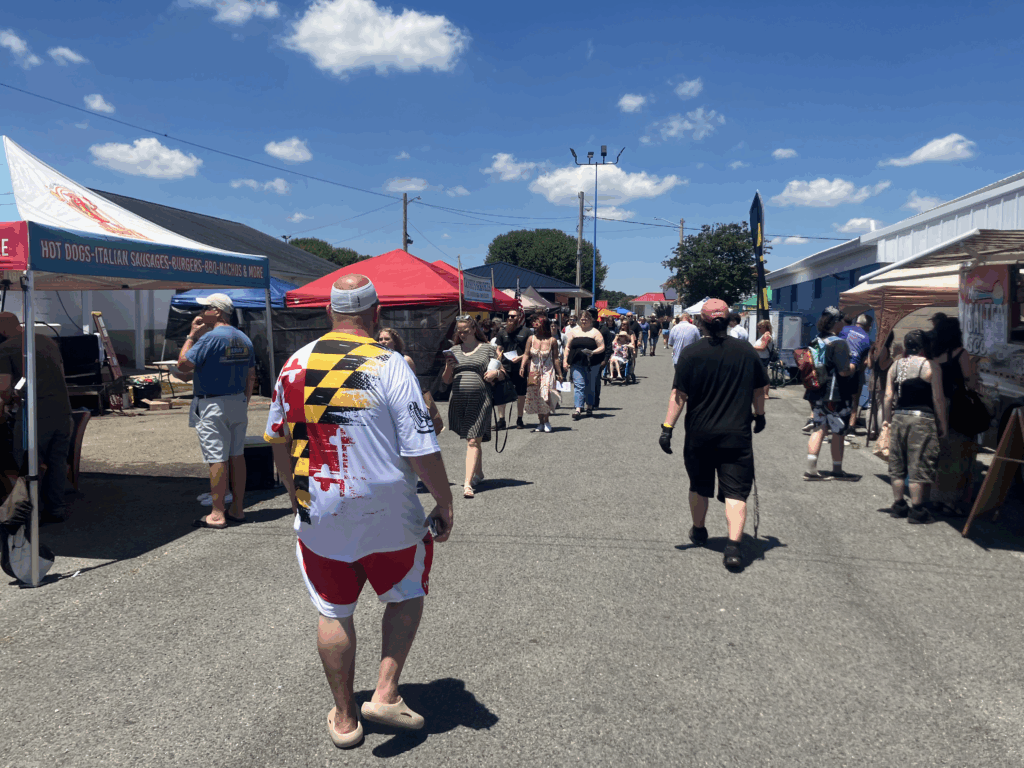
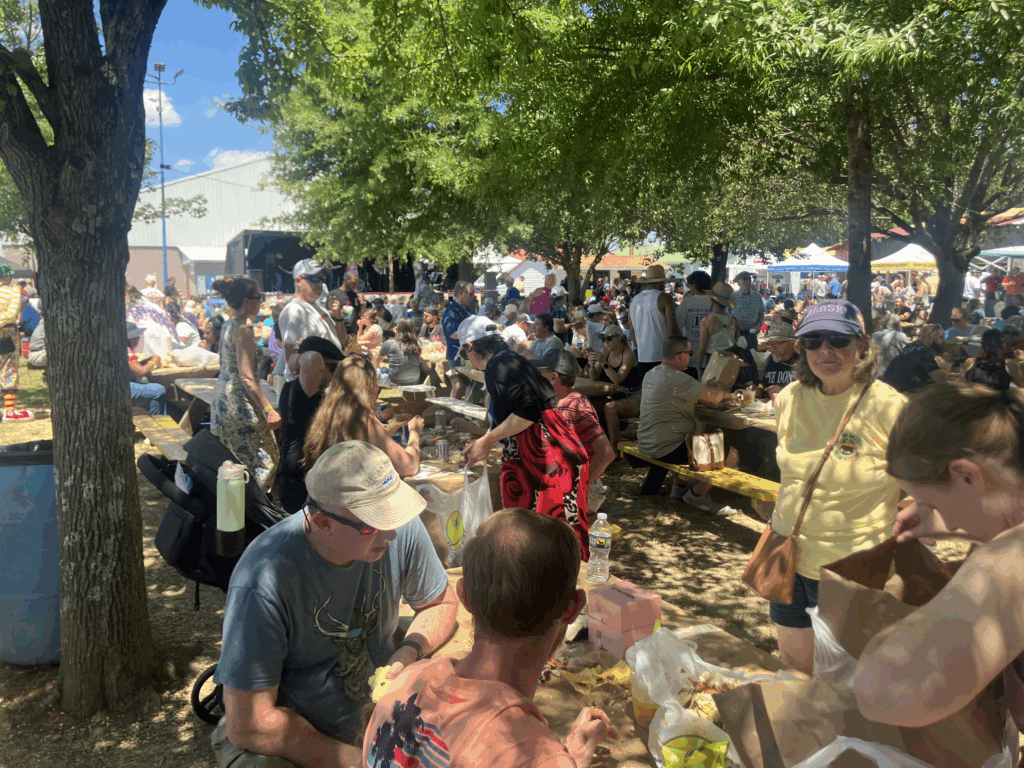
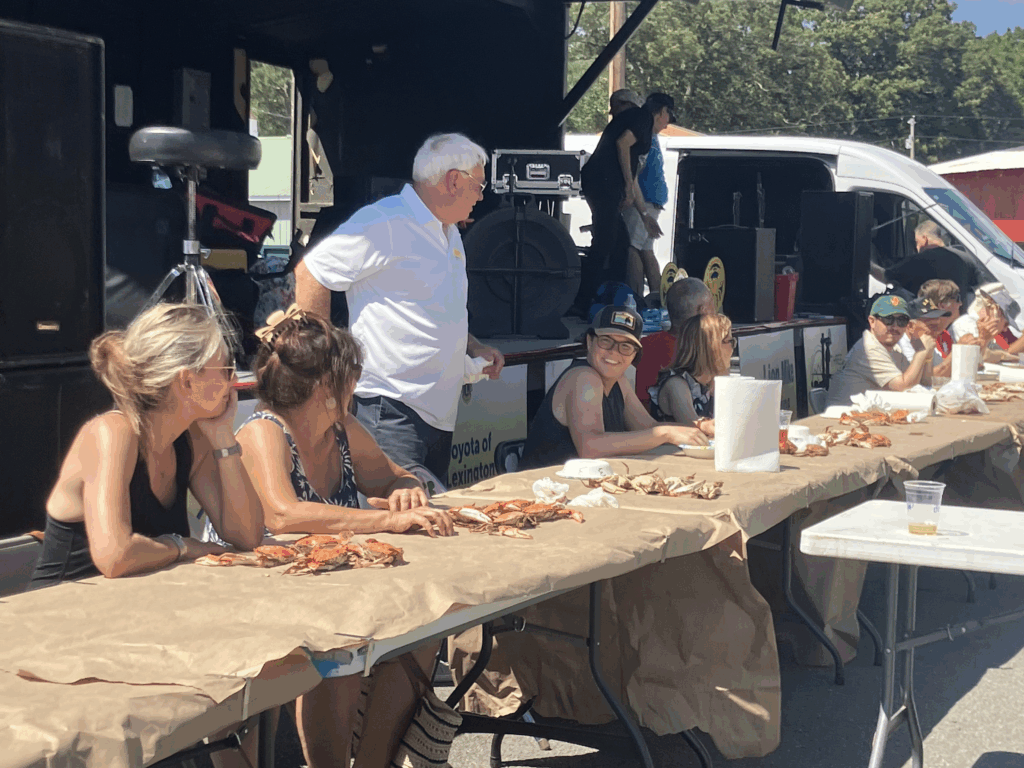
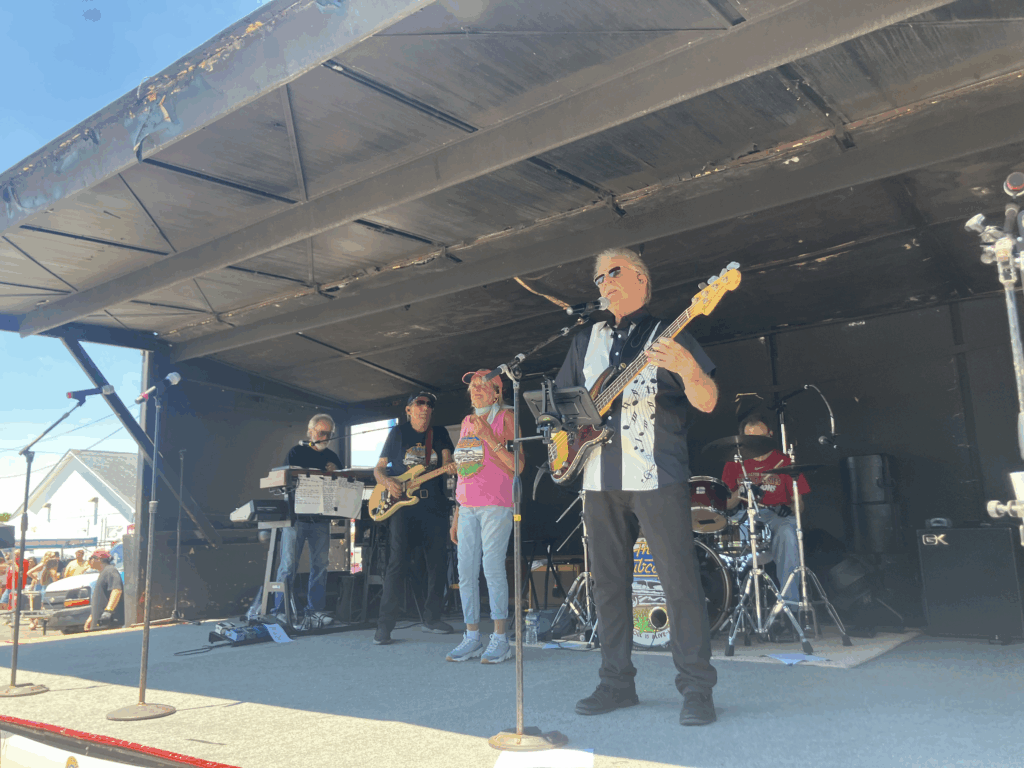
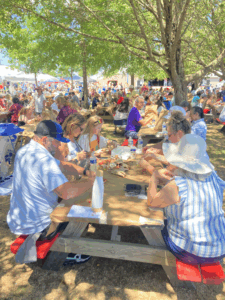
While this diverse crowd was not necessarily socializing with people they didn’t know, most festivalgoers were eating crabs together, and doing so in a purposeful, joyful, and almost ritualistic way. The crab consumption ritual went something like this:
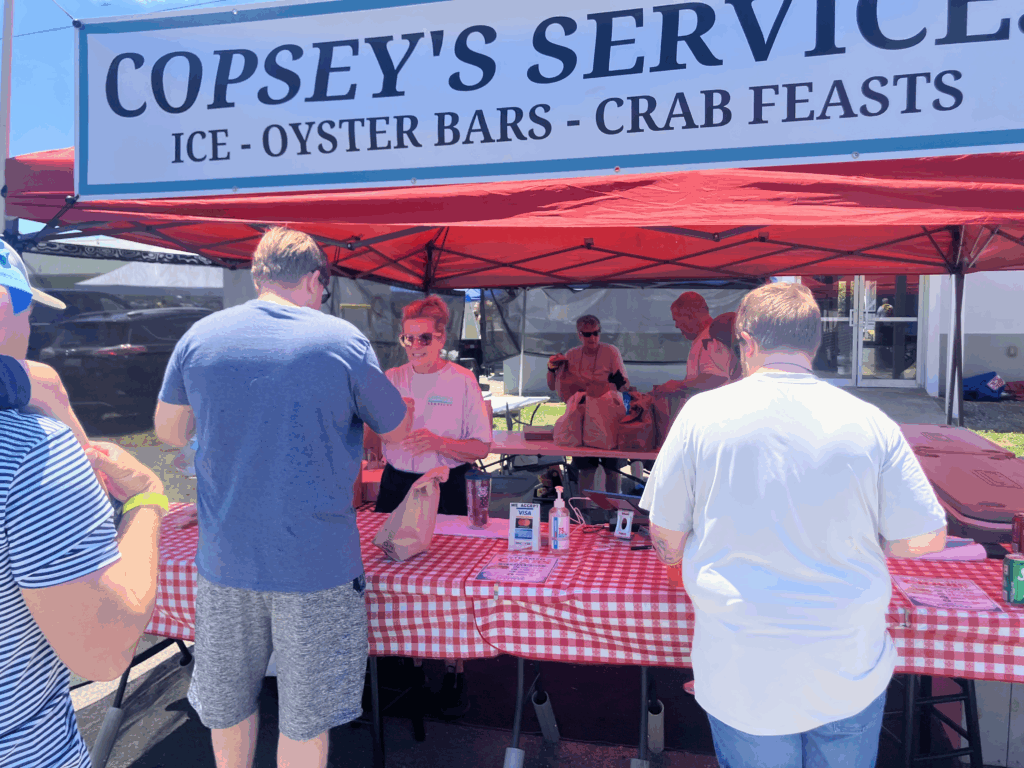
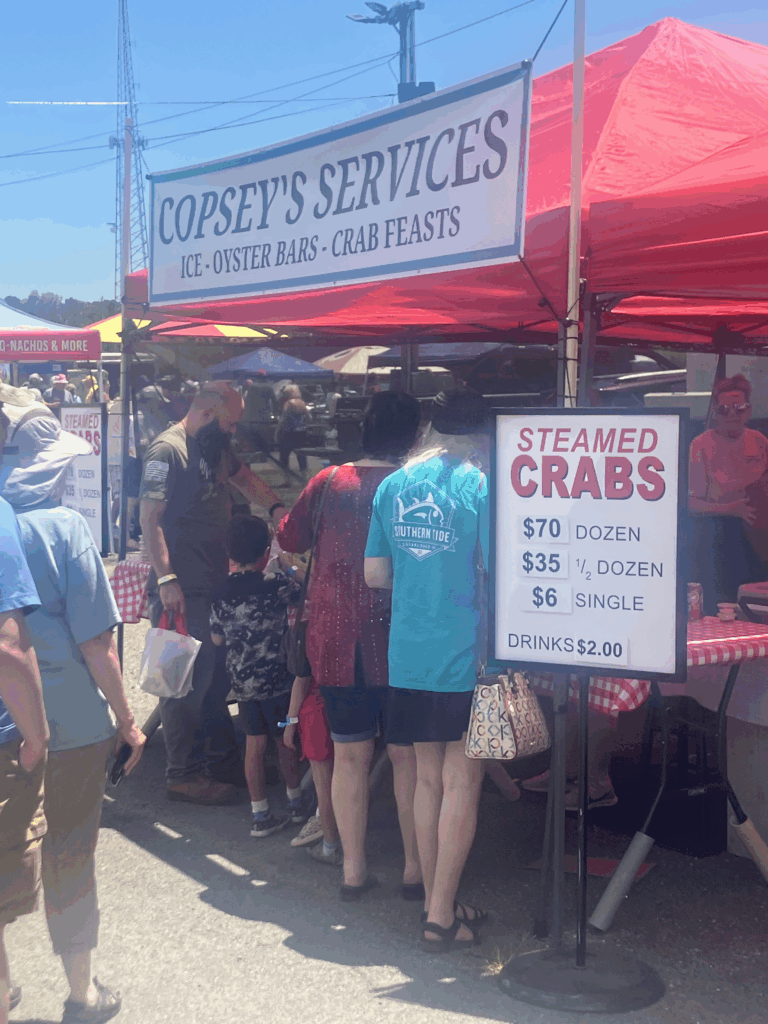
- Purchase from the crab vendor, sold for $6 apiece or $70 a dozen.
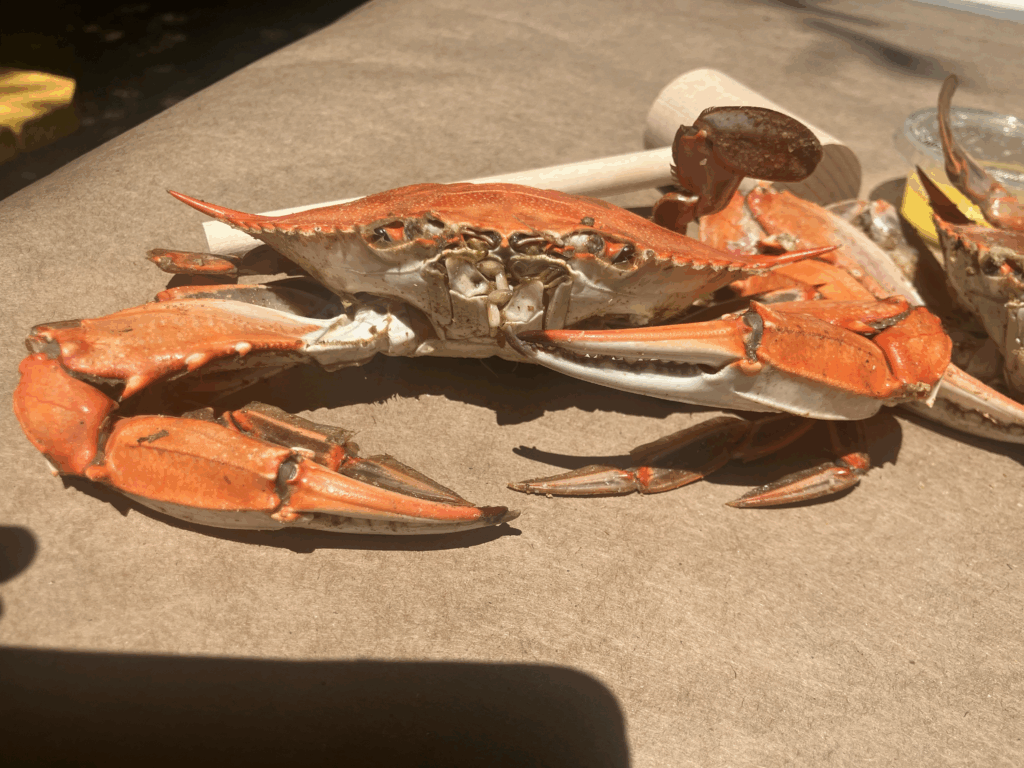
- Grab your complimentary butter, seasoning, lemon wedge, and wooden mallet (assuming you didn’t bring your own crab tools — just remember to return it afterward). Souvenir mallets were $5 apiece.
- Unload your crabs right onto one of the dozens of brown-paper-covered picnic tables in a shaded grove, a true respite from the heat.
- Go to town shamelessly on your crabs, whacking them with your mallet or cracking claws barehanded over the paper-covered tables. Even though discarded shell and guts were strewn about the tables, their presence did not impede pleasant conversations. Festival workers efficiently cleaned up after attendees, scooting a brown-paper-on-wheels-dispenser around the picnic tables.
- Eat crabs (or crabcakes, or BBQ, or New Orleans fare, or an entire sweet potato with crab and shrimp piled on top of it and sold out of a converted motorboat) and listen to the band on stage.
I arrived when The Fabulous Hubcaps were playing the music of Chuck Berry, Elton John, and The Moody Blues, inspiring some half-hearted boozy dancing.
But consuming crabs wasn’t all there was to do. As Kenna, a 27-year-old woman who works at Naval Air Station Patuxent River, noted, “My uncle’s a waterman, so I’m used to having seafood on demand, but it’s still a good event for friends to go to.” Families with young kids were torn between waiting in a long line for lemonade or heading to the surprising number of bounce houses. As attendees strolled through the fairgrounds, breathing in the aroma of seafood and sunscreen, they were checking out the classic car show, visiting local artists’ booths, and chatting with — or avoiding — the local politicians making their final pitches before Maryland’s primary election.
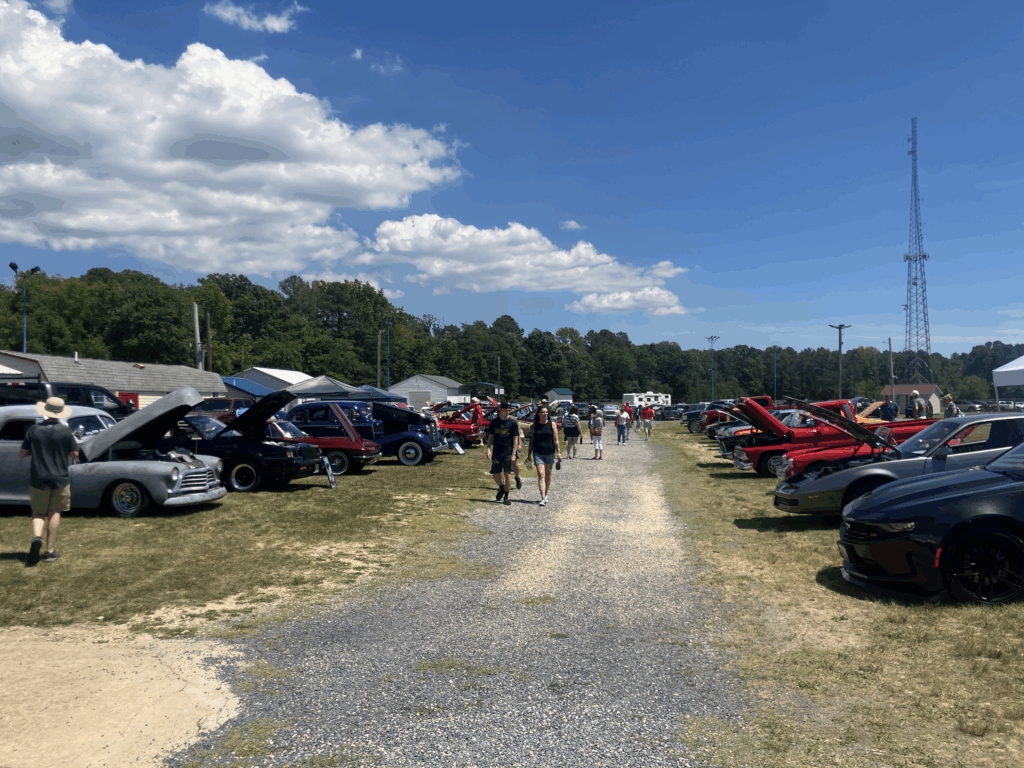
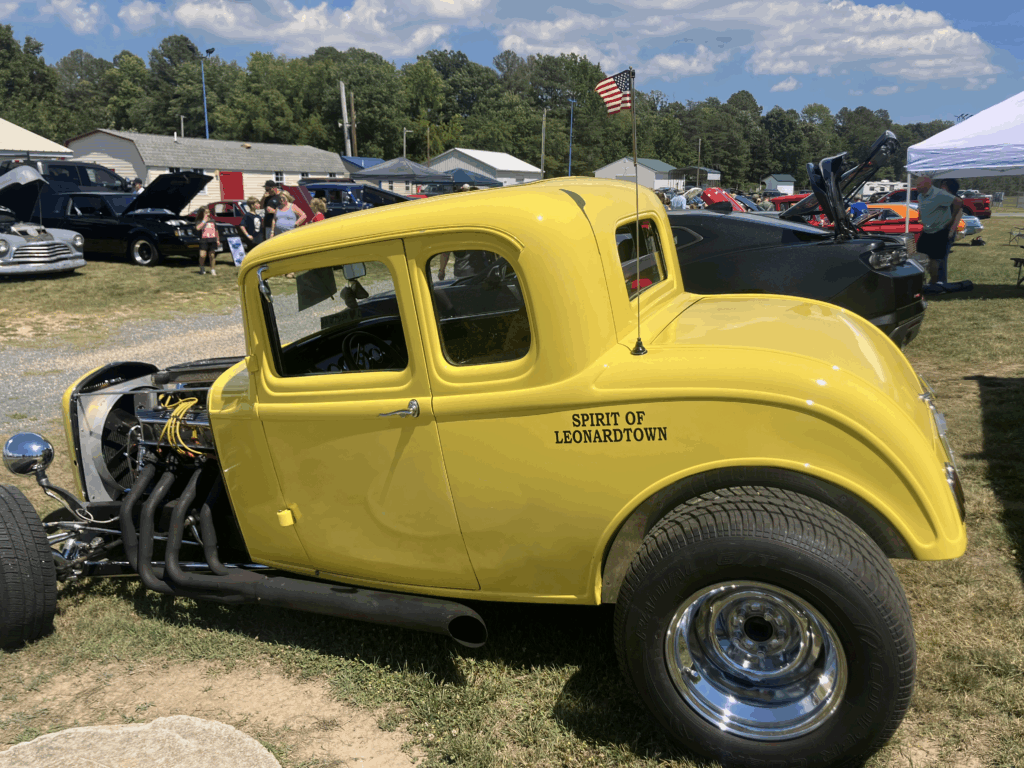
Residents appreciated the chance to support their community. “If you have a local business that does a pop-up here, you get to say hi, but you also get to support them. You know, you’re putting the money back into the county,” Kenna said.
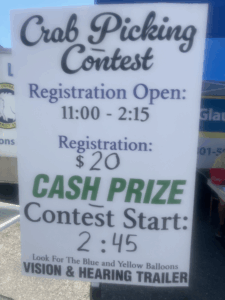
One financial warning sign flashed before the “Crab Picking Contest” to see which festivalgoer could most efficiently remove meat from four crabs without wasting any. Festival organizers couldn’t begin the contest because not enough visitors were putting up the $20 entry fee. An organizer grabbed the mic to solicit new entrants, proclaiming this was the longest organizers had ever taken to launch the contest. One wonders if this local skill is becoming a lost art as generations change over, or if the $20 fee was a barrier to entry in this economy, or both.
This hitch aside, the festival appeared to be a success. Ian said he always enjoys this event because it’s a great way “to get more in touch with the community. Some of these restaurants we may never have visited, and some of the folks we may not have seen, but for them to all come together in one spot, be able to taste, and touch, and talk… that’s what being human is all about.”
Sarasota County, Florida (Graying America)
By Kathleen Majorsky
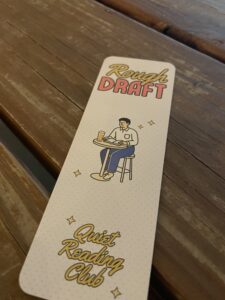
SARASOTA, FLORIDA – A quiet reading event at a noisy brewery? Seems antithetical, but with a reserved private room within the belly of the brewery during busy happy hour time on a Monday, it worked.
The Quiet Reading Club in Sarasota, Florida, has been holding free monthly quiet reading events for a little over a year. Last year, I attended the club’s second event, “Books and Bottles,” held at a sedate wine bar on Main Street in downtown Sarasota.
According to the club’s Instagram account, each event works like this:
- bring a book of your choice
- grab a beverage or snack
- read quietly
- chat (or keep reading!)
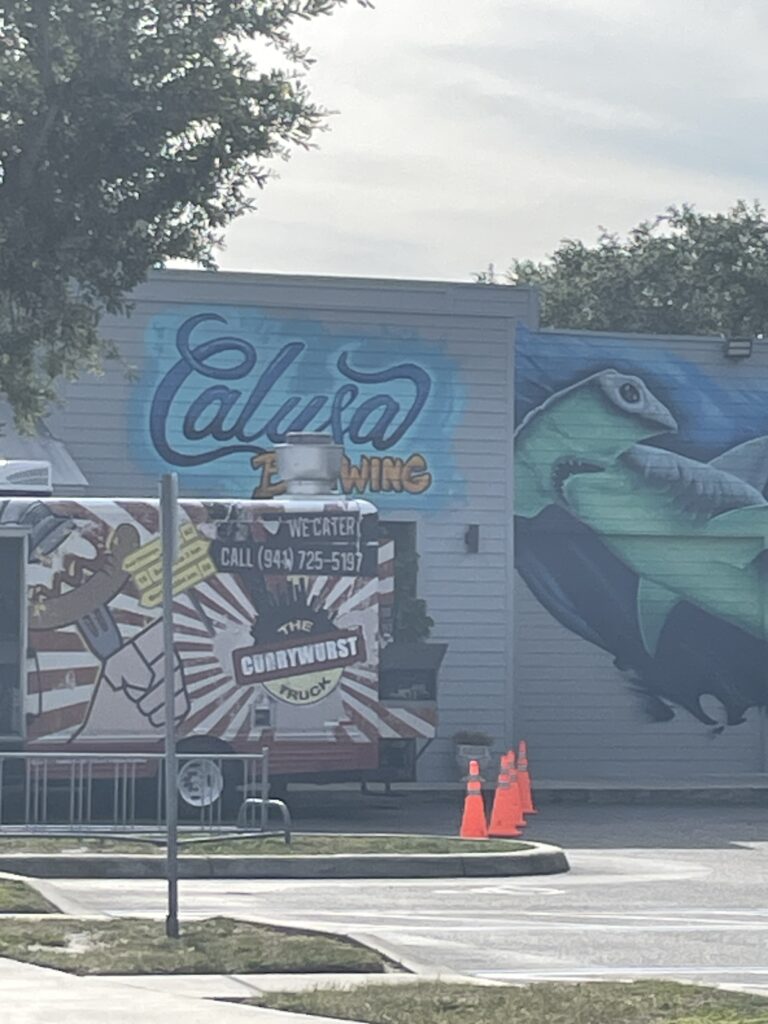
In the recent iteration I attended in June, the structure stayed the same, but the name and location changed. “Rough Draft” took place at Calusa Brewing, a brewery in central Sarasota about eight miles from the original location. On Mondays, the brewery’s parking lot accommodates rotating food truck options. This time, the food truck Currywurst served German food, like brats and sauerkraut. Inside, the beers on tap ranged from $5 for a 6-oz. pour up to $9 for 16 oz.
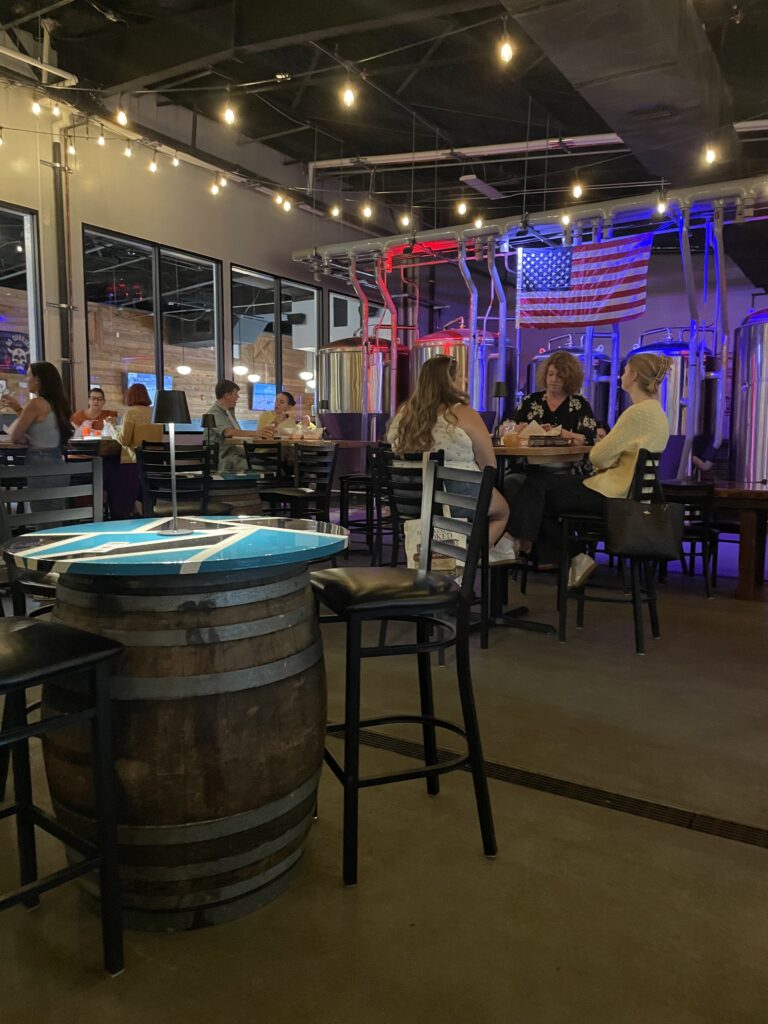
Despite the brewing equipment off to the side in the room, the event coordinators, Isabelle and Kate, made the atmosphere cozy. The Edison-style string lights crisscrossing the ceiling provided a soft glow for reading. The tables were a mix of high-tops and brewery barrels fashioned with mosaic tops and black metal high-top chairs. With tiny black modern reading lamps on each table, the scene was set for reading time.
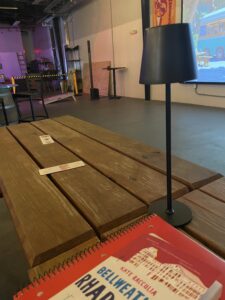
I gravitated to one of the few long picnic tables near the projector screen that featured a cartoonish seaside surfing truck playing ambient elevator tunes. One lone fellow reader waved me over as if we’d been best friends all of our lives. I had never met her before, but Faith, 28, a certified arborist and a Sarasota native, was there by herself like me. Two of her friends had canceled, but she still wanted to come. “I came today because I want to put myself in environments where I can potentially meet new people who have similar interests in my community.” Like me, Faith was attending this Quiet Reading Club for the second time.
We were soon joined at our picnic table by Heather, whose friends had also canceled on her. Heather, 40, a high school theater teacher in Manatee County, 40 minutes from Sarasota, wanted to try something new as well. “I’ve always wanted to do a book club. I love to read. It’s summertime, so honestly, I have the time.”
After exchanging polite conversation, the theme song from the “Reading Rainbow” television show played, indicating it was time to quiet down and read. The 30 attendees — four men, one Black woman, and 25 white women — all around the ages of 30 to 45 did just that. The age range was a surprise because usually the crowd that shows up in Sarasota is 65 and over.
To bring us out of our reading trance, which was about an hour (6:30 to 7:30 p.m.), the “Reading Rainbow” theme song played again to signal that we could talk again. The whole event ran from 6 to 8 p.m.
All three of us agreed that had we not come by ourselves, we wouldn’t have been as open to striking up conversations with new people we’d never met. The other clusters of people seemed to already know each other and didn’t seem friendly to new people joining their tables. They mainly kept to themselves, chatting with those they came with.
“If I had come with my two friends, I would have likely been with just my two friends. I’m not opposed to reaching out or being a smiling face and opening up conversation with people, but also, that has to be received on the other end as well. Because some people don’t want to have conversations,” Faith said.
Heather agreed. “Yeah, I probably wouldn’t have ended up talking if I weren’t here by myself today.”
While Heather and Faith spend ample time socializing online, they are particular about what kind of event would move them to travel and show up, especially for something free.
“I think it’s important to have a good overall vibe,” Faith said. “The overall energy makes the difference. Having good music. Having good food. Air-conditioning. Having an inside/outside dual space is a big thing. I like being able to have my inside time, but then walk out and get fresh air.”
Heather agreed with Faith’s list and felt the Rough Draft event checked all of her boxes. “I’m going to leave here excited. I really enjoyed it. I did not expect to meet two amazing people. I also didn’t expect it to go by so fast. It makes me excited to come back. I thought it was really well organized. I loved how it was simple and short. We had our cues. I would recommend this to anyone who likes to read.”
St. Louis City, Missouri (Big City)
By Jenna Fisher
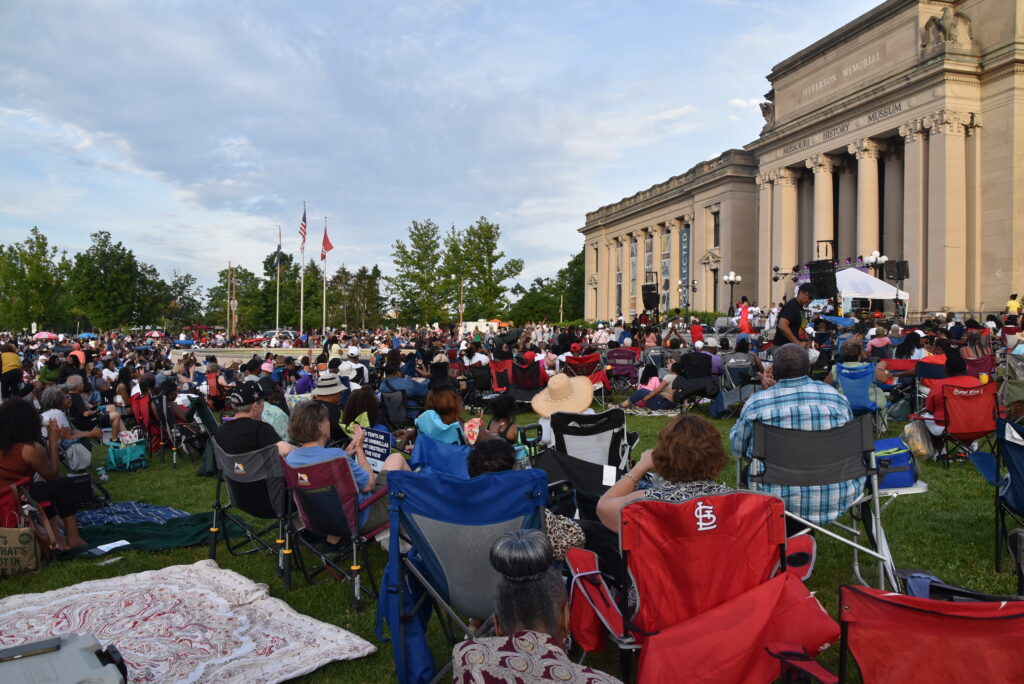
ST. LOUIS, MISSOURI – A sun-soaked evening in late May set the stage for a spring tradition in St. Louis. Men and women tucked collapsable chairs under their arms and slung bags over their shoulders to make the walk from their cars, parked blocks away, to the Missouri History Museum. Temperatures hovered in the low 80s, and many were dressed for the heat in shorts, hats, and sunglasses. The atmosphere carried the rhythm of a special weekend night out, part date night, part neighborhood reunion.
“What I’m finding is during the last year and a half, during this political climate and tensions, having a place where the city is saying ‘I love you. Have a free concert,’ it makes people feel like they have a place where they belong,” said Kemi Awosile, signature events specialist at the Missouri History Museum. That’s especially important, she said, a year after a tornado ripped through the city, killing four people and destroying hundreds of homes in an already vulnerable, largely Black community. Community leaders said residents are still living in cars and mold-damaged homes. “You see a lot of Black people here. I think that’s good. There aren’t a lot of places where people feel like the city has their back,” Awosile said.
Next to the museum, young couples held hands while weaving through a row of food trucks offering everything from cheesecake to chicken wings to vegan burgers. Just beyond, the scene opened into an expanse of people stretching from the museum steps to Lindell Boulevard, which had been closed to regular traffic by park rangers for the event. Blankets, chairs, coolers, and wagons dotted the landscape, extending into nearby fields and the edge of the golf course, evoking the scale and anticipation of a Fourth of July gathering.
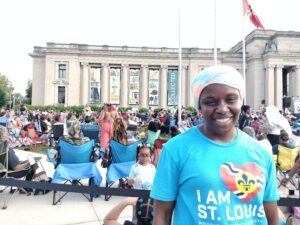
But instead of fireworks, the crowd was here for the season’s final Twilight Concert. In the front yard of the museum located on the edge of the city’s biggest park, children ran, blowing bubbles and darting beneath retractable belt stanchions that separated grassy areas from walkways. Music filled the air as a Diana Ross tribute band performed classics like “Love Child,” “My World Is Empty Without You, Babe,” and “Ain’t No Mountain High Enough,” drawing sing-alongs from the audience.
“The nice weather, the people, the community, the food trucks, and the live music brought me out,” said Sherrie Lathon, 44. The pharmacist at a local hospital said she usually socializes in small group settings with friends from work or the gym and had to rearrange her schedule to attend this, but she’d do it again she said, as a young friend holding a pink stuffy leaned against her chair.
People danced, greeted one another, and settled into the evening. Men in their 50s, 60s, and 70s moved through the gathering like local politicians, clasping hands and exchanging wide smiles as they recognized friends and neighbors. Women with graying hair swayed to the music, shoulders shimmying as they embraced one another in greeting. Families formed circles on blankets, chatting and sharing food, while others posed for photos beside a large “I heart STL” sign at the center of the plaza.
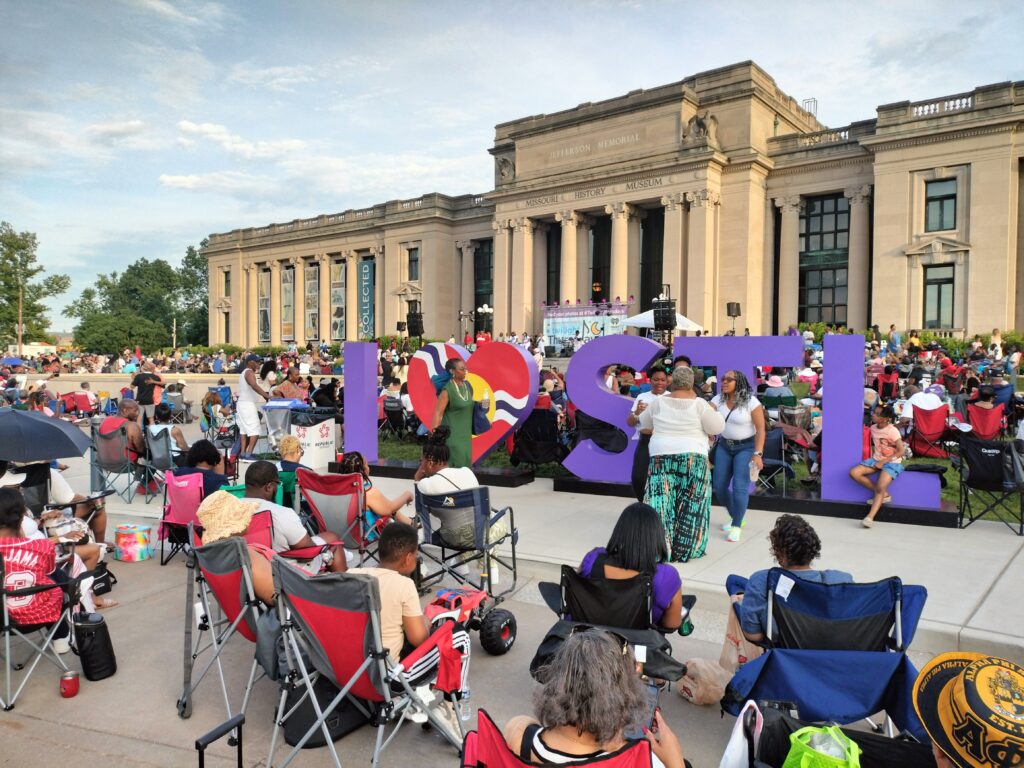
The crowd skewed older and predominantly Black, with many graying attendees alongside smaller groups of families, interracial couples, and some white older couples. While many appeared to know each other from previous events or community ties, there were also moments of spontaneous connection. In one instance, a Black man in his 60s struck up a conversation with a white woman in her 30s seated nearby, the two chatting easily despite appearing to be strangers.
It is this spirit of inclusiveness — providing a space for different generations, ideals, and cultures to spend time enjoying something together — that makes a good community event, said Awosile. As an organizer, she tries to consider what will bring everyone together, she said.
That’s about right, said Stanley Reese, who came with his friend Randall Lang. The two of them grew up in the city about 50 or 60 years ago. They greeted familiar faces from their chairs near the main walkway and pointed out different dancing styles.
Lang said he loves people-watching and seeing how others interact. He tries to be social often and has come to all four of the concerts this season.
“Instead of violence, we have entertainment,” he said. “We have enough violence in this world, we need entertainment. Everyone needs an outlet; this is my outlet. Concerts are the highlight of my summer,” he said, noting he’d travel 25 miles to attend a free concert, though this one was only a few minutes from home.
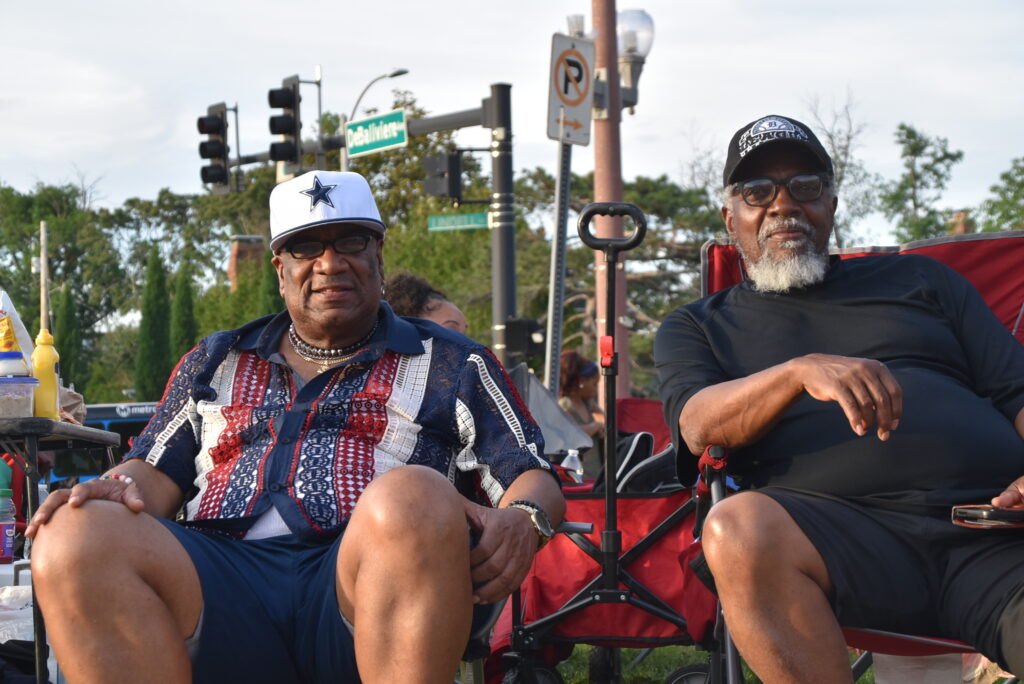
“Free music, good people enjoying themselves,” said Reese, looking around. What makes a good community event is people communicating with people from different walks of life and being able to find out that they’re not so different, he said, adding that it happens at these concerts. “We are proud of our city. It gets a bad rep, but it’s a good city.”
Bernalillo County, New Mexico (Big City)
By Sarah Murphy
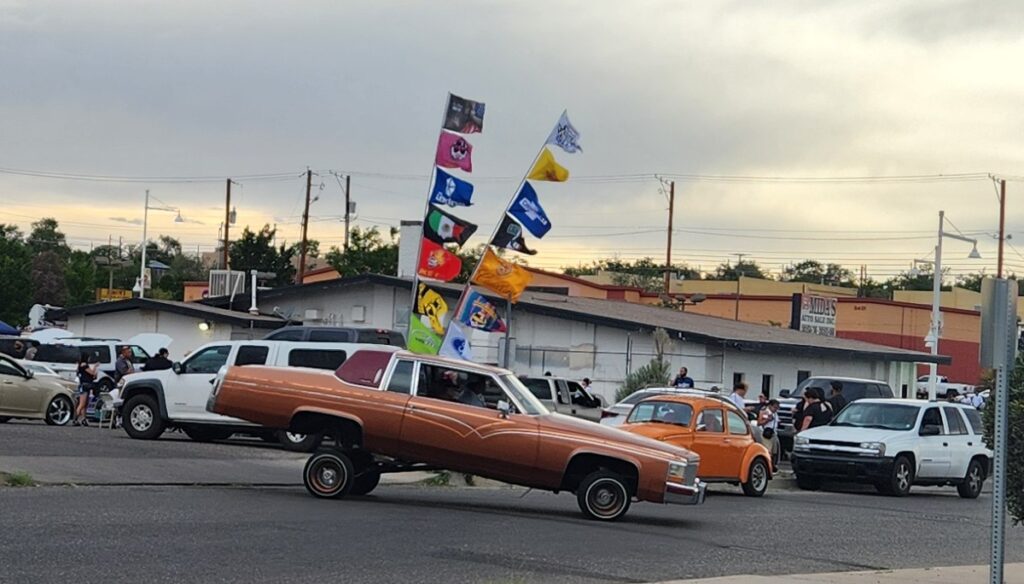
ALBUQUERQUE, NEW MEXICO – On a Sunday night in early June, I pulled into the parking lot of Samon’s, a local hardware store in Albuquerque’s predominantly Hispanic South Valley neighborhood. The crowd adhered to an unofficial dress code — black T-shirts, some signaling local car club affiliations — and spectators pulled icy beverages from their coolers. Dozens of families and friends were gathered in the nearly-full parking lot, having set up lawn chairs facing the road, as they waited for this cruise of pristine candy-painted and chrome lowriders along Route 66.
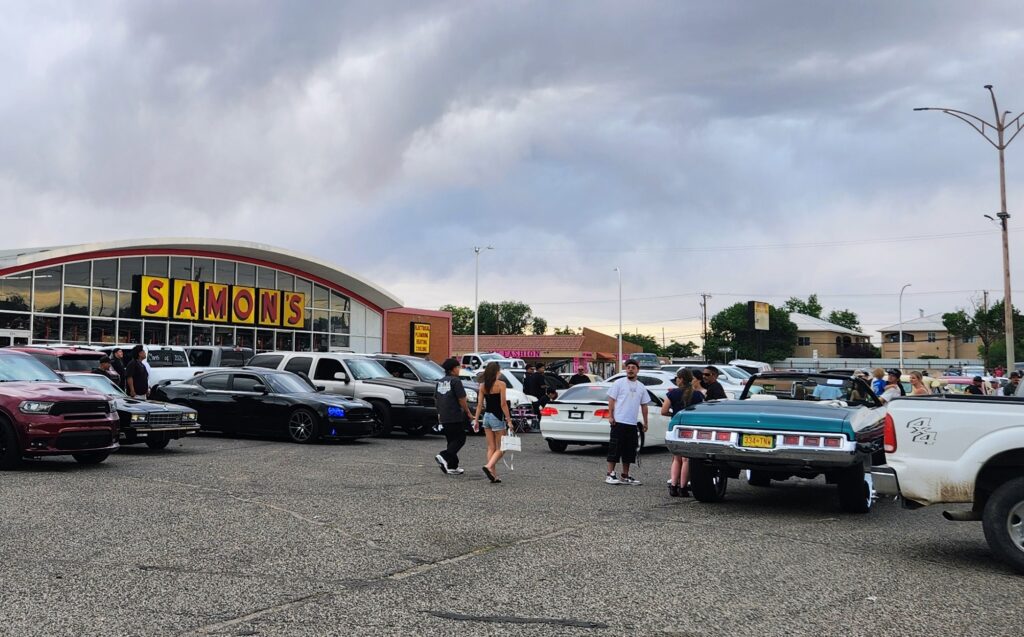
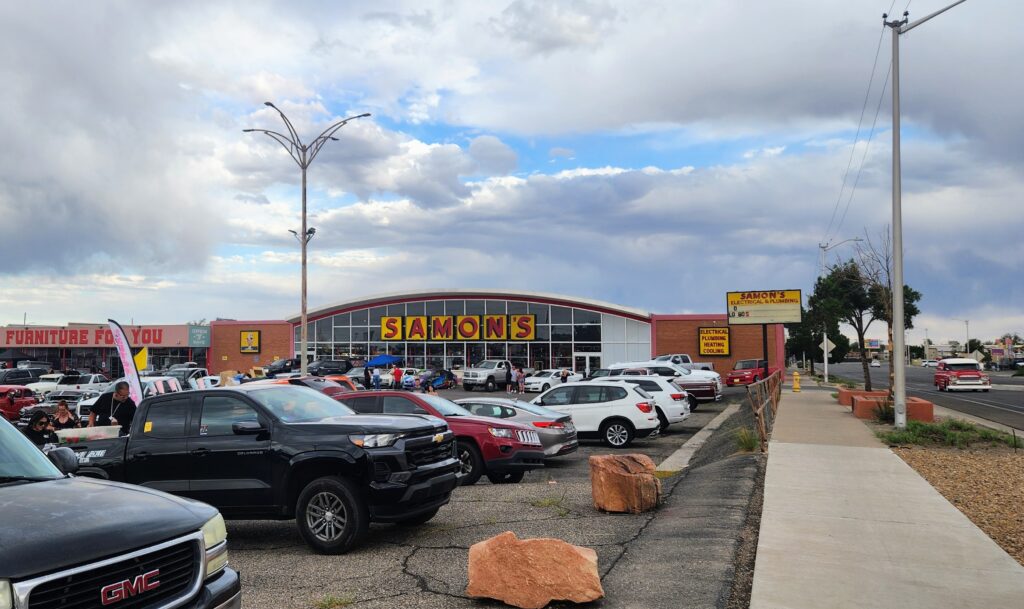
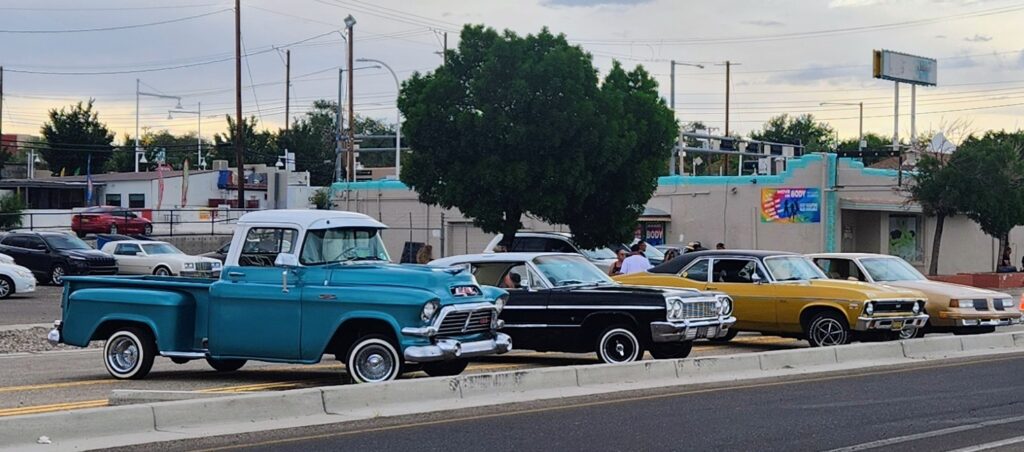
Lowrider cruises have been a tradition in Albuquerque since the 1970s, with Route 66, also known as Central Avenue, serving as a longtime gathering place for the city’s lowrider community. Today, informal cruises and parking lot car shows continue that tradition, bringing local car clubs, families, and lowrider enthusiasts together on Sunday evenings to showcase their cars. Like many pop-up cruises, this free, four-hour “Grill and Chill” at Samon’s wasn’t an event seen on local tourism websites, promoted instead through word-of-mouth and digital flyers on social media. The evening’s cruise also served as the locals’ unofficial afterparty for the annual Lowrider Super Show in town, a ticketed one-day event drawing thousands of lowrider enthusiasts from across the Southwest to Albuquerque.
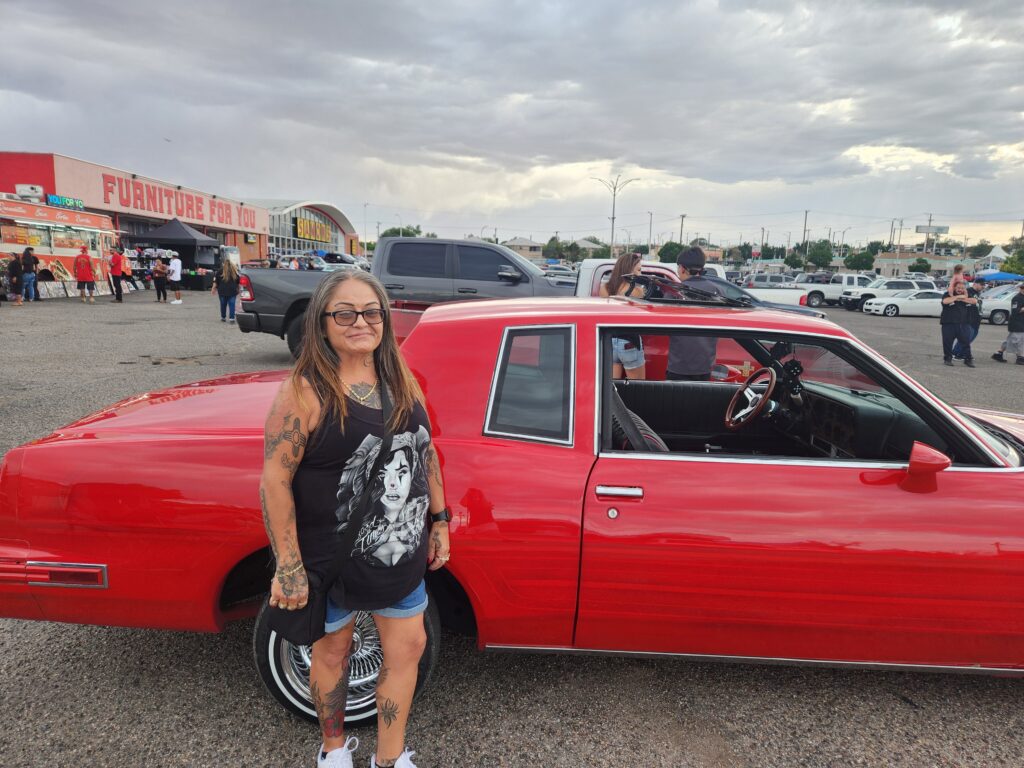
Sitting next to a bright red lowrider coupe were Crystal and her friend. Though the organizer, custom lowrider painter Dom Archuleta, has only hosted this “Grill and Chill” for about four months, Crystal said she’s been attending lowrider cruises like this for years. She shared that her husband works with the host, but that the two men, now in their 40s, have known each other since they were 12.
When I asked what they enjoy most about these gatherings, Crystal exclaimed, “The cars!” and her friend nodded in agreement. Our conversation was interrupted when a lowrider with a stuffed foxtail dangling from the driver’s-side mirror pulled into the lot. “That’s Crystal’s favorite car!” Crystal’s friend said, and they both cheered as the driver wailed his vintage-style ambulance siren and waved back to Crystal’s husband.
Across the parking lot and leaning against the open tailgate of a hunter green, pinstriped truck were a smiling couple, Andrea Gonzales, 48, and Anthony Gonzales, 50. Cars have always been a part of Andrea’s life. The truck they proudly stood next to belongs to her family, though Anthony is the one who painted it. The couple said they drive into Albuquerque almost every Sunday from Grants, New Mexico, more than an hour away, to attend a lowrider cruise, but this was their first time at Samon’s. “There was nothing during Covid, but then [cruises like this] got big since people were looking for somewhere to go,” Andrea said.
While the couple usually attends the city’s official Sunday night lowrider cruise in downtown Albuquerque, they liked this one at Samon’s better. “You can actually see more cars [here],” they said, noting how road closures and difficult parking make the other cruise harder to navigate.
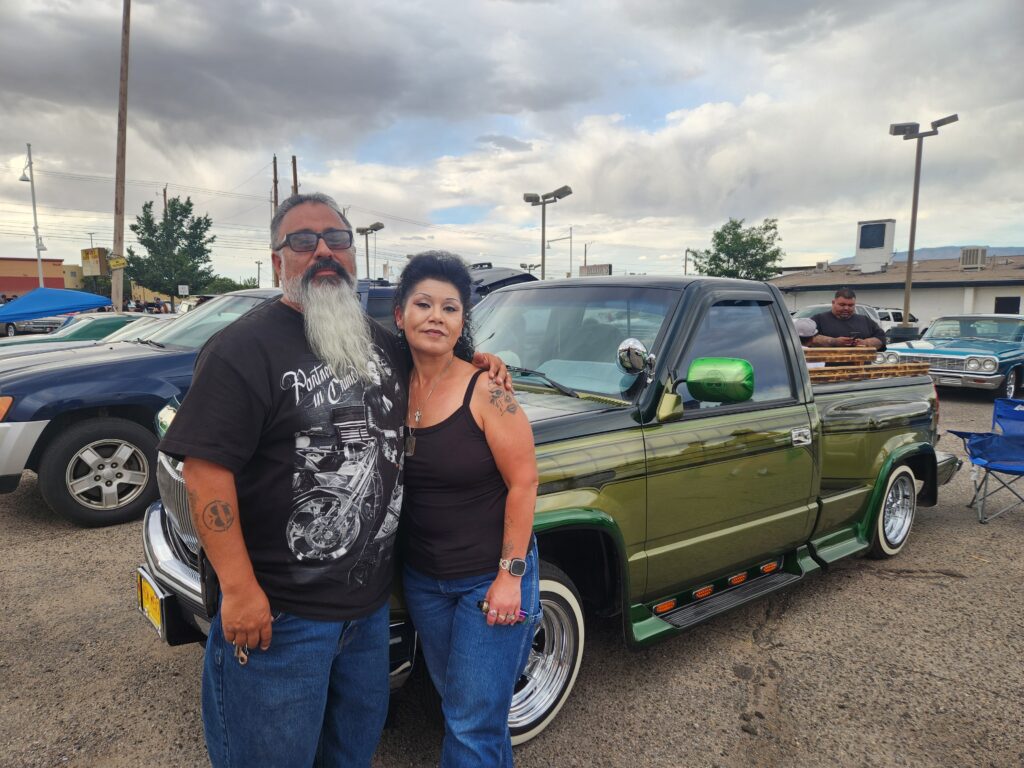
When I asked what keeps them coming back to the cruises in Albuquerque, Andrea said, “The people make it,” and the fact that these cruises are well-attended, unlike others they’ve been to. Despite a recent cruise in Grants, which Andrea said drew more than 200 people, large lowrider gatherings are hard to find in their area.
Anthony shared that his father painted cars, too, but passed away before they had the chance to restore Andrea’s truck together. Attending these cruises has given him the chance to meet other painters and to “get ideas” for painting techniques. This gathering was a way for Anthony to hone his craft in honor of a family legacy. “I hope I’m making my dad proud,” Anthony said, adding that he hopes his own kids will remain a part of the lowrider community in the future. “We’d love to do more Latin dancing!” they replied when I asked if there are other gatherings they wish they could attend. This evening, though, they seemed perfectly content as they watched the parade of lowriders roll down Route 66.
Tillamook County, Oregon (Graying America)
By Sarah Sullivan
NEHALEM, OREGON – On the Fourth of July, volunteers and staff from the Lower Nehalem Community Trust danced down Manzanita’s parade route in vegetable capes and broccoli hats. Speakers blasted everything from Bad Bunny to Marvin Gaye. A sign read, “Love Your Local Land Trust.” Amid patriotic floats, fire trucks, and vintage cars, the Trust’s people-powered brigade offered a whimsical contrast.
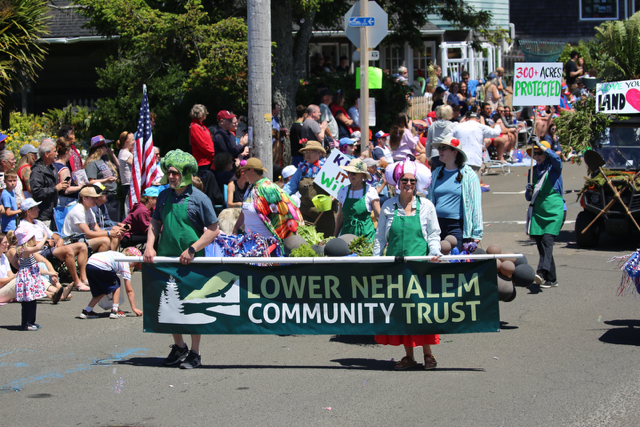
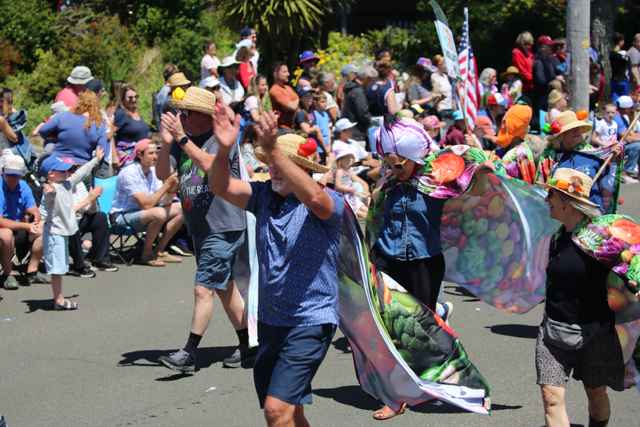
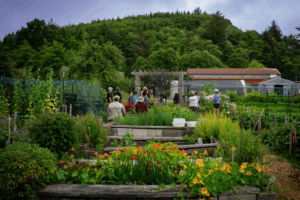
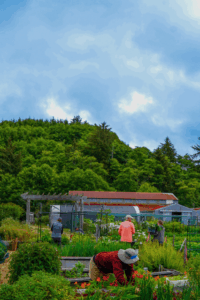
That same spirit carries over to Alder Creek Farm, one of the Lower Nehalem Community Trust’s properties, where more than 50 volunteers gather each week to tend the Trust’s 3.5-acre organic farm. They fan out among rows of vegetables, herbs, berries, flowers, and fruit trees to plant, weed, harvest, and tackle whatever the season requires. Just beyond the fields, elk often wander through the neighboring wildlife sanctuary.
Nestled on Oregon’s north coast, the Lower Nehalem Community Trust preserves land while fostering conservation through community involvement. Since 2003, the Trust has protected more than 300 acres, and last year volunteers contributed 6,813 hours stewarding those lands, including Alder Creek Farm.
The farm’s harvest feeds both the volunteers who grow it and the wider community. Last year, more than 9,000 pounds of food were harvested. After each workday, everyone takes home a share of the produce and the rest is donated to a local food bank and health center. In 2025, the Trust donated 1,222 vegetable plants and 2,900 pounds of produce.
People volunteer for many reasons. In a county with high food insecurity, some value access to fresh produce, while others come to serve their community or cultivate friendships alongside the crops. Some ride the bus from 30 miles away, while others live just down the road. Some are retired, others work full time, and several couples volunteer side by side. Hundreds of students also visit the farm each year, where they learn about farming, food, and conservation.
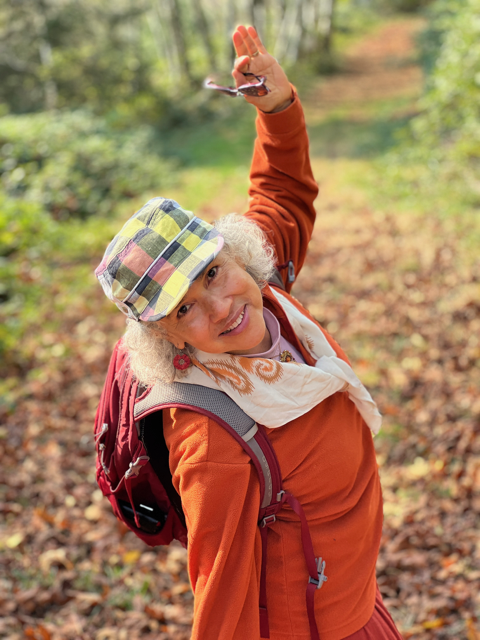
Carmen Sweetman, 71, was born in Puerto Rico and raised in New York City. After an international career in leadership development and team building, she moved from Nashville to the Oregon coast with her husband in 2020.
Carmen joined the farm’s greenhouse team six years ago. Before volunteering, she felt disconnected from where her food came from. She was amazed by the process of planting seeds, nurturing seedlings in the greenhouse, transplanting them into the garden, and eventually harvesting the food she helped grow. Today, she takes pride in pruning the farm’s fruit trees and identifying plants she once knew nothing about.
Outside the farm, Carmen embraces new experiences and opportunities to connect with others. She works out at the local recreation center, takes Cuban salsa classes, and belongs to a Gourmet Club where friends gather regularly to cook and share meals.
Mary Ruhl, 76, has volunteered at Alder Creek Farm for 12 years. After a career as a graphic artist and art director, she earned a master’s degree in interdisciplinary studies at 56 before beginning a second career in Alzheimer’s and aging research.
Outside the garden, Mary enjoys hiking, spiritual gatherings, art exhibits, and thoughtful conversations. She intentionally seeks opportunities to connect with others each day and helps convene a group called “Conscious Aging and Community Connections.”
“Alder Creek Farm provides nearly every aspect of a satisfying activity for me: good people working together to support community needs, sharing knowledge, sharing food and a bit of exercise in a beautiful place,” she said. “The friendships I have developed there are the foundation of my membership in this community.”
 Ari Pinkus is senior editor/writer/researcher and project manager at the American Communities Project.
 Matt Price is the Founder and Principal of Empath Insights. He lives in the Washington, D.C.-metro area with his wife and three children.
 Kathleen Majorsky is a newsletter producer and a newsletter ghostwriter. She spends her spare time going on road trips, reading books for her book club, the Reading Rebel Book Bunch, and looking for the best breakfast spots in Florida.
Jenna Fisher is a journalist and educator. She is currently pursuing a doctoral degree in journalism at the University of Missouri.

Sarah Murphy resides in Albuquerque, New Mexico, and enjoys writing about the intersection of people, place, and community. In her free time, she also writes poetry.

Sarah Sullivan splits her time between the north coast of Oregon and the Columbia River Gorge where she serves as Executive Director of Gorge Grown Food Network, a nonprofit working to build an inclusive, resilient food system that improves the health and well-being of the community.