
A Deeply Competitive Senate Race in Texas Through the Eyes of Three Different Communities
For Democrats, Texas is the land of unpleasant metaphors. Statewide races usually end up being “the one that got away,” or “Lucy with the football,” or “I had it until I didn’t.” It’s the place where Democratic hopes spring eternal only to be crushed by a strong dose of Republican reality.
But to many people the 2026 Senate race looks different. A broadly unpopular Republican president sits in the White House. Voters are anxious and angry about the economy. And the Republican nominee, state Attorney General Ken Paxton, is deeply flawed — once impeached for corruption and accused of multiple extramarital affairs.
On top of that, the Democratic nominee for the seat, James Talarico, seems to be a good fit for the state. He’s a Texas state representative and faith-forward Democrat, who graduated from the University of Texas and Harvard. He also earned a Master of Arts in Theological Studies from Austin Presbyterian Theological Seminary.
Any statewide race anywhere is a complicated matter, but Texas is a different animal — a diverse population of 32 million spread across 254 counties living with different issues and motivated by different concerns.
To understand some of those differences and voting blocs, the American Communities Project visited three key counties in September:
- Travis, the Big City home of Austin;
- Williamson, the growing Urban Suburb to its north, and;
- Caldwell, a rural Hispanic Center to the southeast.
The counties’ outcomes will look different on Election Day. Travis is poised to go heavily for Talarico. Williamson is a swing county where the race should be close. And Caldwell, long Republican despite being a majority Hispanic county, is expected to continue that rightward lean.
But the degree to which those places follow form (or don’t) in November will dictate much of what the final results look like.
Caldwell County, The Hispanic Center
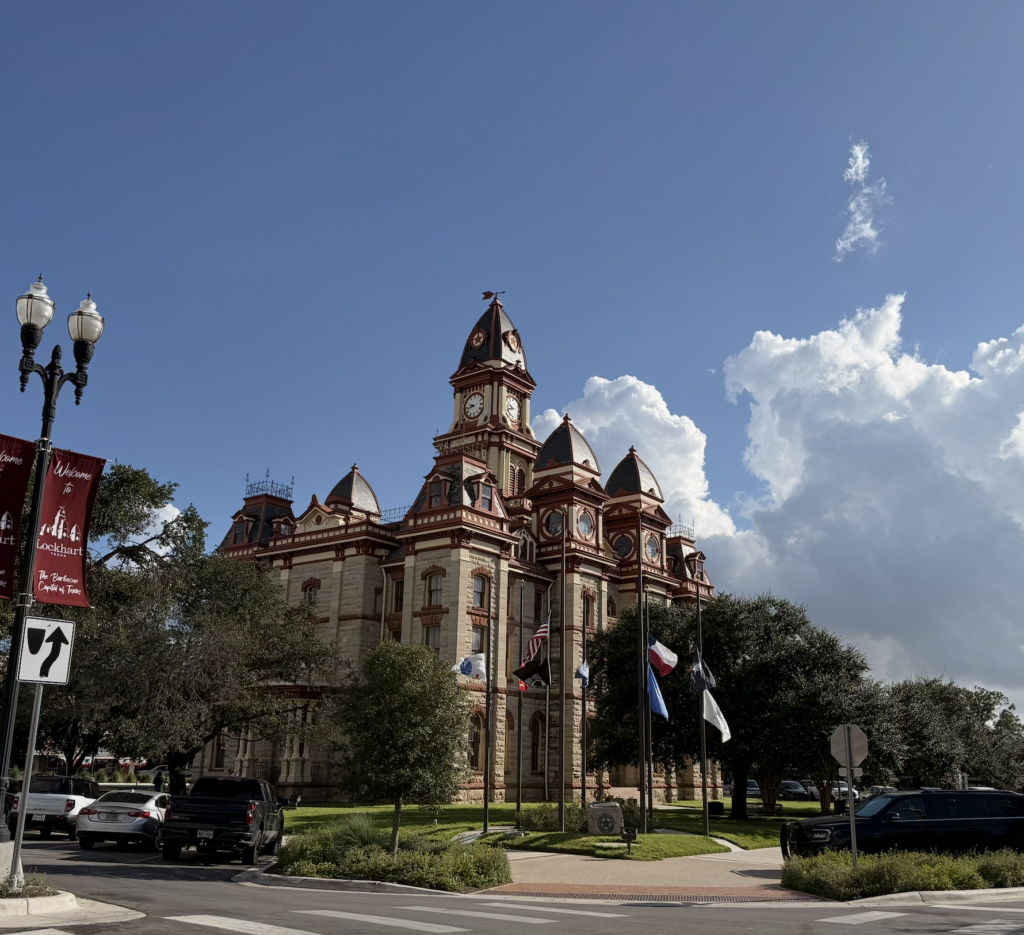
The drive to Caldwell County is a reminder of how quickly urban places can turn rural and how nearby communities can function very differently. Driving 40 minutes from Austin to Lockhart, Caldwell’s county seat, is like driving through a wormhole and emerging in a different time period.
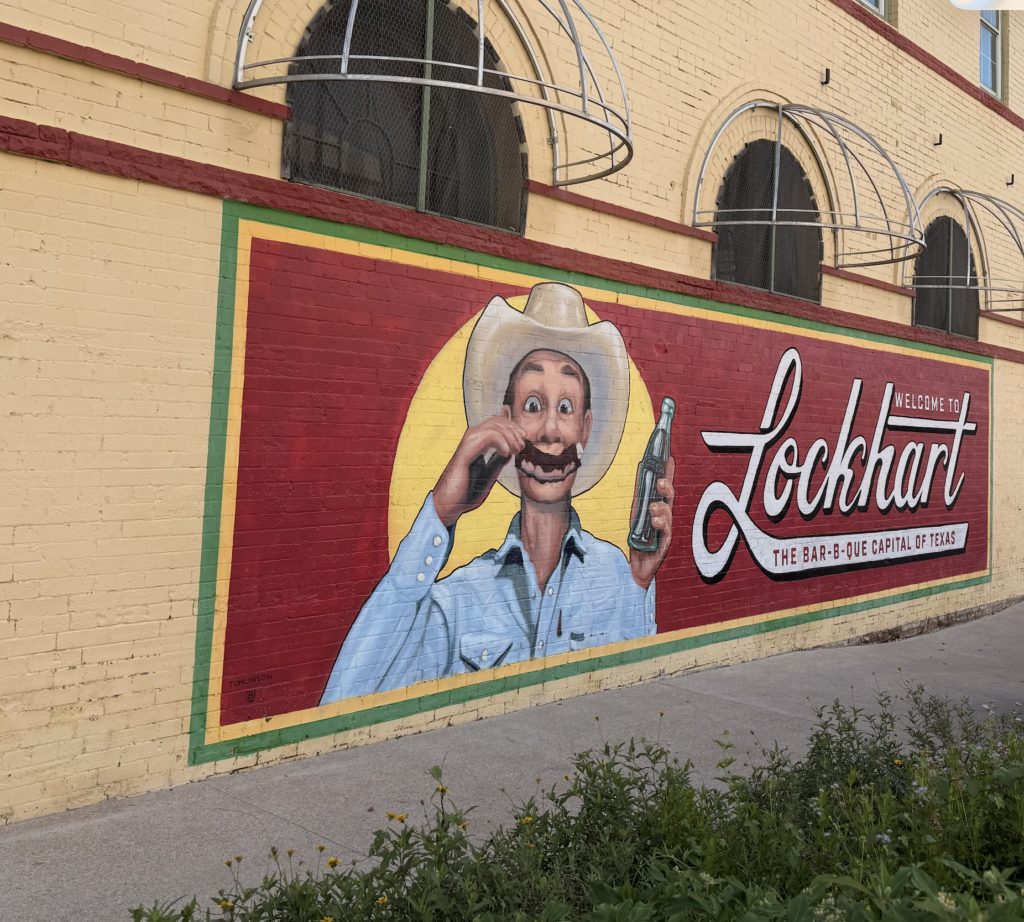
Lockhart is defined by a small town square and the county courthouse. Pickup trucks line the street, and people tend to know each other and say “hi” as they pass in the self-proclaimed “bar-b-que capital of Texas.” But for the most part, people drive a lot here.
“I’m working on an article right now on diesel prices because diesel is important here,” said Anthony Collins, editor of the Lockhart Post Register. “It’s like $5.40 [a gallon] now. And you know it depends on who you talk to, but a lot will say, you know, ‘it’s all Trump’s fault.’ ” Collins argues that’s not really fair if you understand the global market for diesel, but voters think what they think and they are unhappy, even angry, about prices.
Immigration is not a big issue in the county, according to people here. There are not major businesses to raid here. What’s more, agricultural businesses may not be top targets for raids, something we saw in an Iowan Hispanic Center earlier this year. Furthermore, the county population may be majority Hispanic, but it is also overwhelmingly native born. Only 13% were born in another country.
One topic that is a big campaign issue in Caldwell: data centers. The story that’s popping up everywhere in 2026 has emerged here as well. (Last week, Texas Gov. Greg Abbott ordered regulators to pause the permitting of data centers in the state.)
Much of Caldwell is farmland, which offers something builders of data centers have been seeking: acreage. Some county officials who owned land tried to get in on the gold rush by selling their properties, including local County Judge Hoppy Haden. Haden, the county executive, signed a land pre-sale agreement with a data center firm — after expressing concerns about the growth of data centers in the area weeks earlier.
Haden, a Republican, is on the ballot in November, and Democrats see an issue they can campaign on.
Kaily Stewart, the head of the Caldwell County Democratic Party, believes data centers can be used to cleave Republican voters from the party, and bring out rural voters and Hispanic voters in particular to vote for Talarico and other Democratic candidates.
“They love fishing and hunting and the environment,” she said. “They moved out here to get away from all the noise, right? And now they’re bringing in these data centers. That’s not what they want at all.”
The abundance of available land is obvious when driving around the county.
Lockhart, with a population of less than 20,000, is far from a big city, but it is the most populous place in the county. Outside of town the scenery quickly turns into big empty stretches of land and cotton fields. Hispanic Centers with these characteristics tend to be culturally conservative and lean Republican.
Stewart hopes Talarico can flip this community with the combination of factors working for him in 2026, but that may be a difficult task. Even in 2018, the last time a Democrat was thought to have a chance in a Senate race, incumbent U.S. Sen. Ted Cruz beat then-U.S. Rep. Beto O’Rourke (D) here by eight percentage points.
Caldwell has changed a lot since then, of course. It’s grown by about 25%, with people from Austin moving in and changing the place. And the Talarico team may well understand these demographic changes. He visited Lockhart in July and created a stir, packing voters into the local Lions Club.
Williamson County, The Urban Suburb
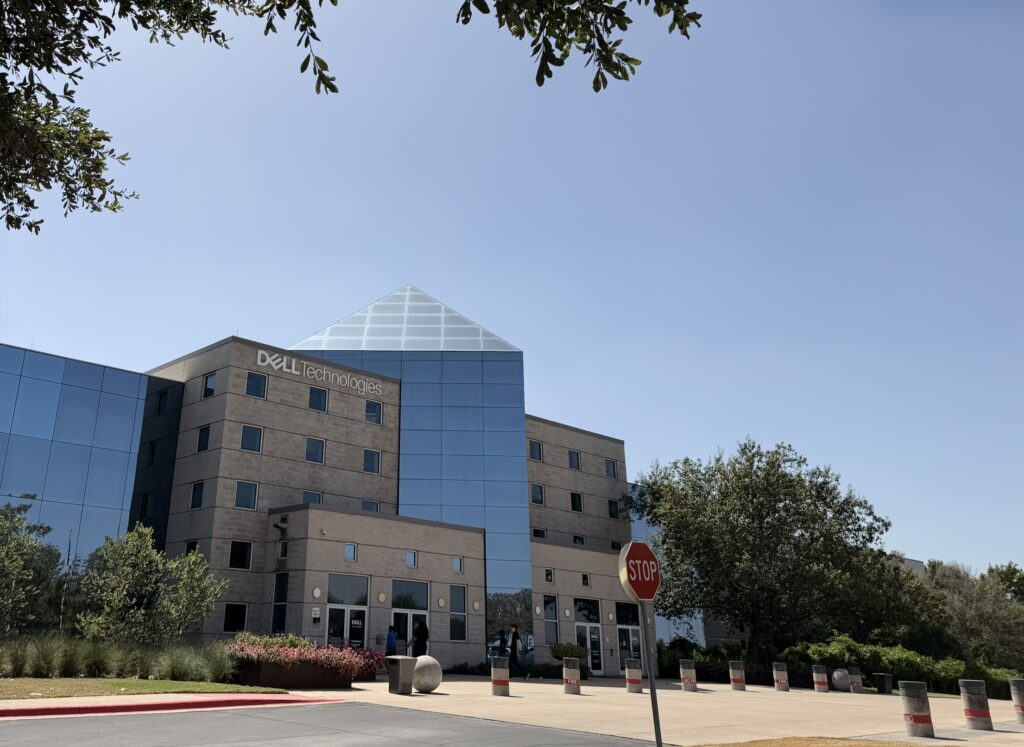
Sitting to the north of Travis County, Williamson isn’t just a suburb of Austin; the city boundary actually bleeds over into it. The city sprawl is a blob marching north with retail, apartment buildings, and industry filling the landscape. But there are differences between the county and its southern neighbor. Williamson is where the blue liberalism of Travis begins to redden, and in November, where that blue-purple boundary sits will be crucial to the county’s outcome.
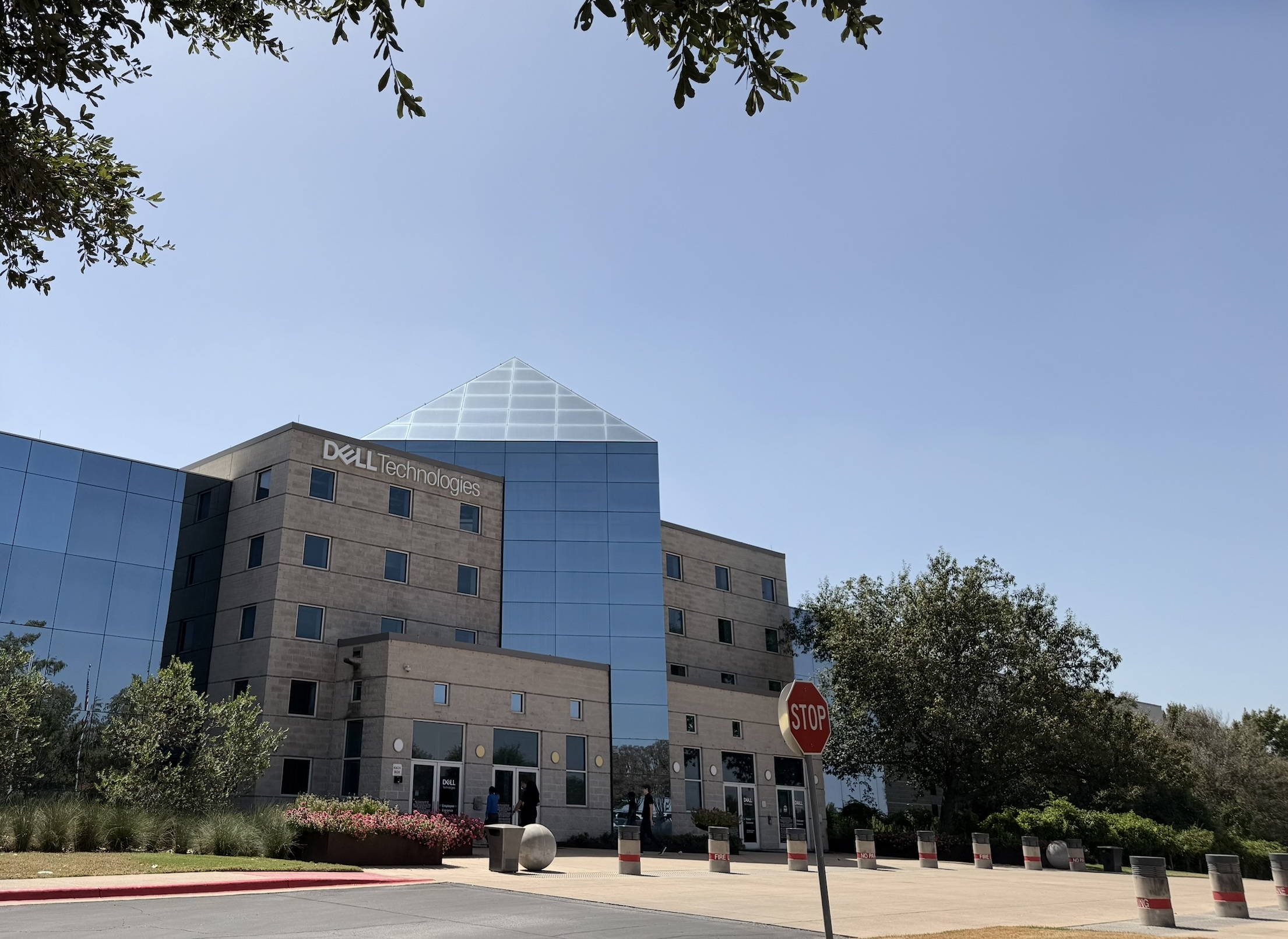
Williamson, like many Urban Suburbs in Texas, becomes much more conservative as the population thins out. However, the place has changed a lot in recent years as tech companies and people have flowed in. Dell is based on a massive campus here in Round Rock, and more firms are coming.
“There’s a lot of tech there. Samsung is opening in Taylor. That was a 2021 announcement, and just ever since that, it’s grown and grown,” said Nick Cicale, managing editor of the Williamson County Sun. “With all those things come new jobs, and then you get people from California, from Silicon Valley, coming in. People from out of the country flying in for these higher-paying tech jobs or tech-related industries.”
That influx of people may have slowed political changes in Williamson, however. As Cicale notes those new tech workers arriving are wealthy, educated, and increasingly hard to read politically — once they were thought to be left-leaning, but much less so now. Generally, Williamson has the kind of incomes that insulate people from hard times. As we wrote about in Delaware County, Ohio, people may not like inflation here, but it is not hitting them same way. The bigger issue in this Senate race may be Paxton himself and his personal baggage.
“I’ve been here talking to people for six years, and I haven’t met anyone who likes Ken Paxton in town,” Cicale said. He noted that he has seen the largely Republican voters in the community vote out a Republican sheriff who was involved in a local cover-up. “So, seeing that they were willing to go against who I would say is a bad candidate for somebody who had like a better moral compass, I think is telling that something like that could happen here.”
It’s worth noting that Paxton underperformed in his Republican primary runoff race against current U.S. Sen. John Cornyn in Williamson County by about four percentage points compared to his statewide total — suggesting the county is not deep Paxton country. And looking at previous results for the county, voters can switch party allegiances based on the candidate. In 2024, President Trump narrowly won Williamson by about 3 points, but Republican U.S. Sen. Ted Cruz lost the county then by about 2 points.
The specific candidate seems to matter more than their party here, which gives Talarico another edge in Williamson — he lives here in Round Rock.
Turnout will be a key battle here. Like other areas around Austin, Williamson has grown in recent years, adding about 150,000 people since 2020.
Felicia Miyakawa, president of the local League of Women Voters chapter in Williamson, says she sees a lot of energy on the ground, with voters stopping by booths to make sure they are registered for November. She says the enthusiasm matches what she saw in the county before the 2018 midterms and is stronger than what she saw in 2022.
If voters move between counties, they need to change their address with the county before Election Day. People often cross the county line between Williamson and Travis, and they move in and out of Austin, according to Miyakawa.
Many residents believe Talarico will win Williamson. (The Democratic Senate candidate won here in 2024 even when Trump carried the county’s presidential vote.) The question is what the margin will be. Beto O’Rourke carried Williamson by about 3 points in 2018 and, of course, still lost the state. Considering Talarico’s advantages in 2026, and Paxton’s weaknesses, Talarico would probably need to double O’Rourke’s edge here, at the very least, to have a chance in the state.
“If the Republicans don’t show up and the Democrats are active, then you can flip multiple offices. But I think Talarico is the best chance that they have this cycle to get someone in,” Cicale said.
Travis County, The Big City
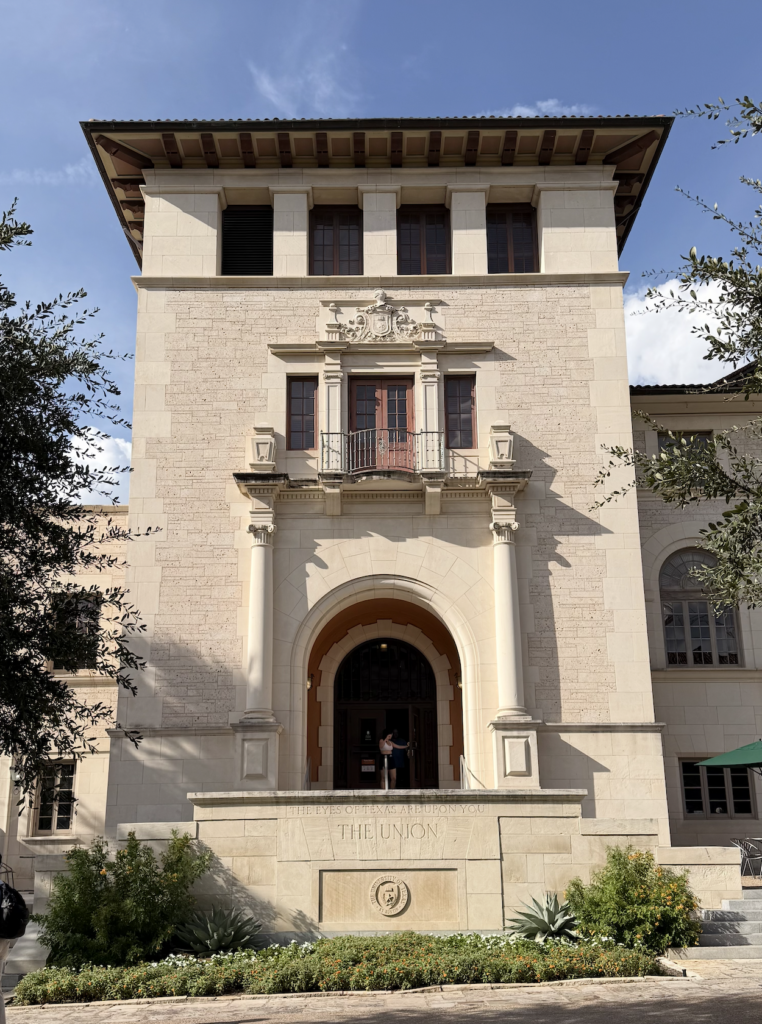
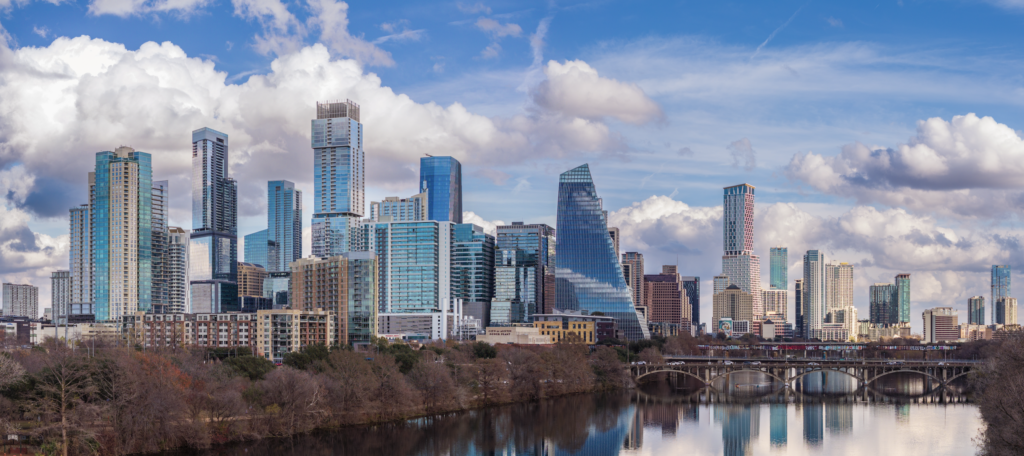
Ask most people here and they will tell you that the days of the slogan “keep Austin weird” are long gone. The tech money and people who have flowed in over the past 10 to 15 years have fundamentally changed the place, making it feel more like Los Angeles and less like the city featured in Richard Linklater’s “Slacker.” There is a small glitzy downtown defined by glass towers reshaping the skyline, surrounded by a lot of sprawl, all on the street grid that was not designed for this buildup. It is clearly a “Big City.”
That’s not to say that Travis is Los Angeles. Great barbeque and Tex-Mex spots still abound. You can still hear live music pouring out of bars big and small, provided it’s cool enough to leave the doors open. And the University of Texas and the Texas Capitol Building still create a distinctly Lone Star feel.
There is little doubt about how Travis will vote in November. It produced the highest percentage for Democratic presidential candidate Kamala Harris in the state in 2024 — 68%. Instead, the key question might be whether James Talarico is the right kind of Democrat for a liberal bastion full of college students in 2026. In many states, the more liberal Democratic Socialist-leaning candidates have been favored by such voters this election cycle. That is not likely to dampen enthusiasm here, according to those who know the place. There are plenty of reasons more liberal voters will be eager to vote Democratic.
First, the Trump administration’s immigration crackdown is a real issue here — for instance, a Venezuelan man was shot in Austin a little more than a week ago — creating anger and frustration.
“You have this consistent drumbeat of stories, Texas and elsewhere, but you know, I see the Texas stories when there are arrests. And people are saying, I knew you were coming for them, but he’s a good guy,” said Ross Ramsey, a longtime journalist and co-founder of The Texas Tribune. “And then the second thing, and this is not missed by people on the street: That is construction, hospitality, agriculture are hit. It’s like I can’t get a house built. The lettuce costs too much. I can’t get it out of the field.”
And there are other challenges for Republicans in Travis.
In September, the Republican nominee for railroad commissioner, sparked anger when he posted a photo of a group of Asian students celebrating at a University of Texas (UT) football game and said that the “problem” with the number of non-white students at the school was “obviously far worse than anyone imagined.” (State rules require that 90% of incoming undergraduate students be Texas residents.)
The incident was not directly tied to the Senate race, but it will not help Republicans win over voters in Travis County.
Talarico may not be a perfect fit for the young Democrats on the UT campus. For instance, the Student Democrats have invited controversial left-wing speaker Hasan Piker (whose positions and confrontational approach to politics are very different than Talarico’s) to visit campus. But that’s not likely to matter much in November, according to UT Political Science Professor Jim Henson.
“You know, when I was here for grad school, I would have gone. I’d have been curious,” Henson said. “But look, they want to win, and you know if you rewind six or seven months ago, Talarico was the more progressive candidate [in the Democratic primary].”
And for some students, Talarico’s religious background is a real plus.
Noelia Frias, a sophomore at the University of Texas, says she gets a lot of her political information from scrolling on social media and follows Talarico, but not Paxton.
“I think he’s very well-spoken,” Frias said. “I am religious myself, and so I like the way he’s able to apply like religion to everything in a non-conservative way. I feel like he’s more open, and that’s how I view myself as someone who is religious.”
That kind of view, and the targeted way younger voters gather political information is likely a big asset for Talarico here. This media landscape allows for microtargeting messages to reach particular voters.
November Looms

Does all of that add up to a Democratic win in Texas? We’ll know in a little more than a month. But what’s clear from talking to people in these three very different central Texan communities is that a Democratic win is indeed possible in 2026. Add in the big-picture elements — a very unpopular president, a war that most Americans oppose, and an unsettled economy — and the odds increase.
Residents in the region are skeptical, but tuned in. Many said they’d need to see it to believe it. More than a few people said the race was close enough that the last few weeks of campaigning would be determinative. And the outpouring or GOP money into the state — hundreds of millions — will play a big role.
When comparing this race with the one in 2018, however, there is one big point of departure. In 2018, Democrats were excited about Beto O’Rourke, but he trailed in almost every major poll right up to Election Day. The opposite has been true for Talarico. Since July, he has led in almost every major poll in the state.
Phoebe Yi, a graduate student at the University of Texas, contributed to this story.