How the Changing Exurbs Will Impact Key Races in Ohio and Nationwide
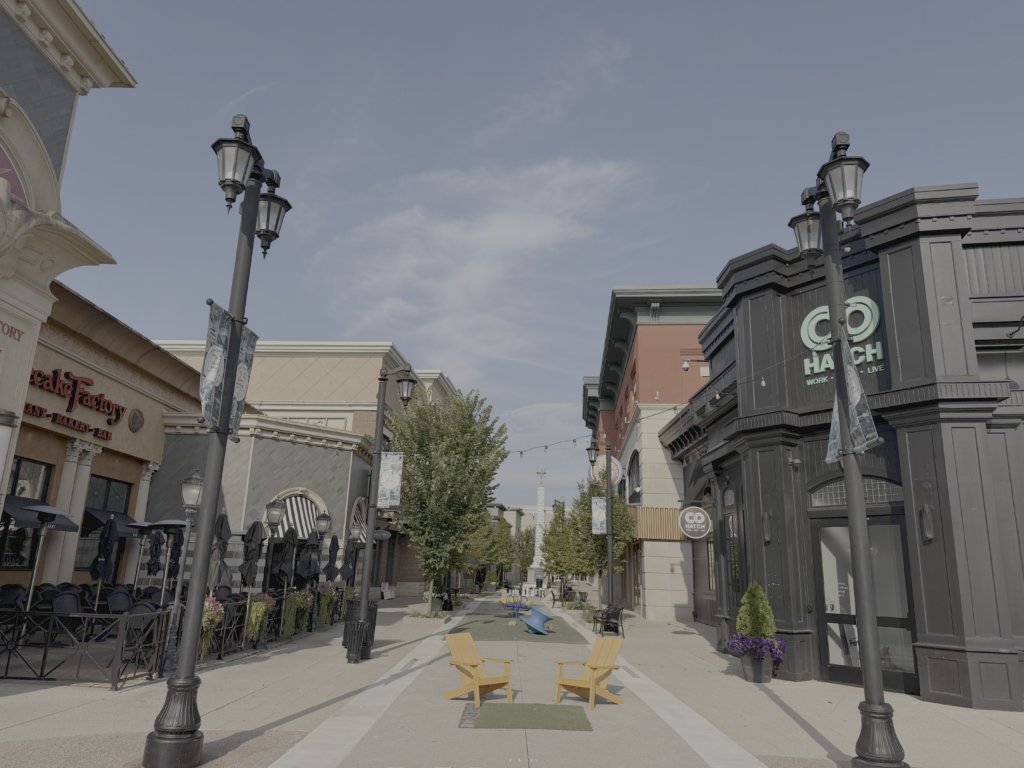
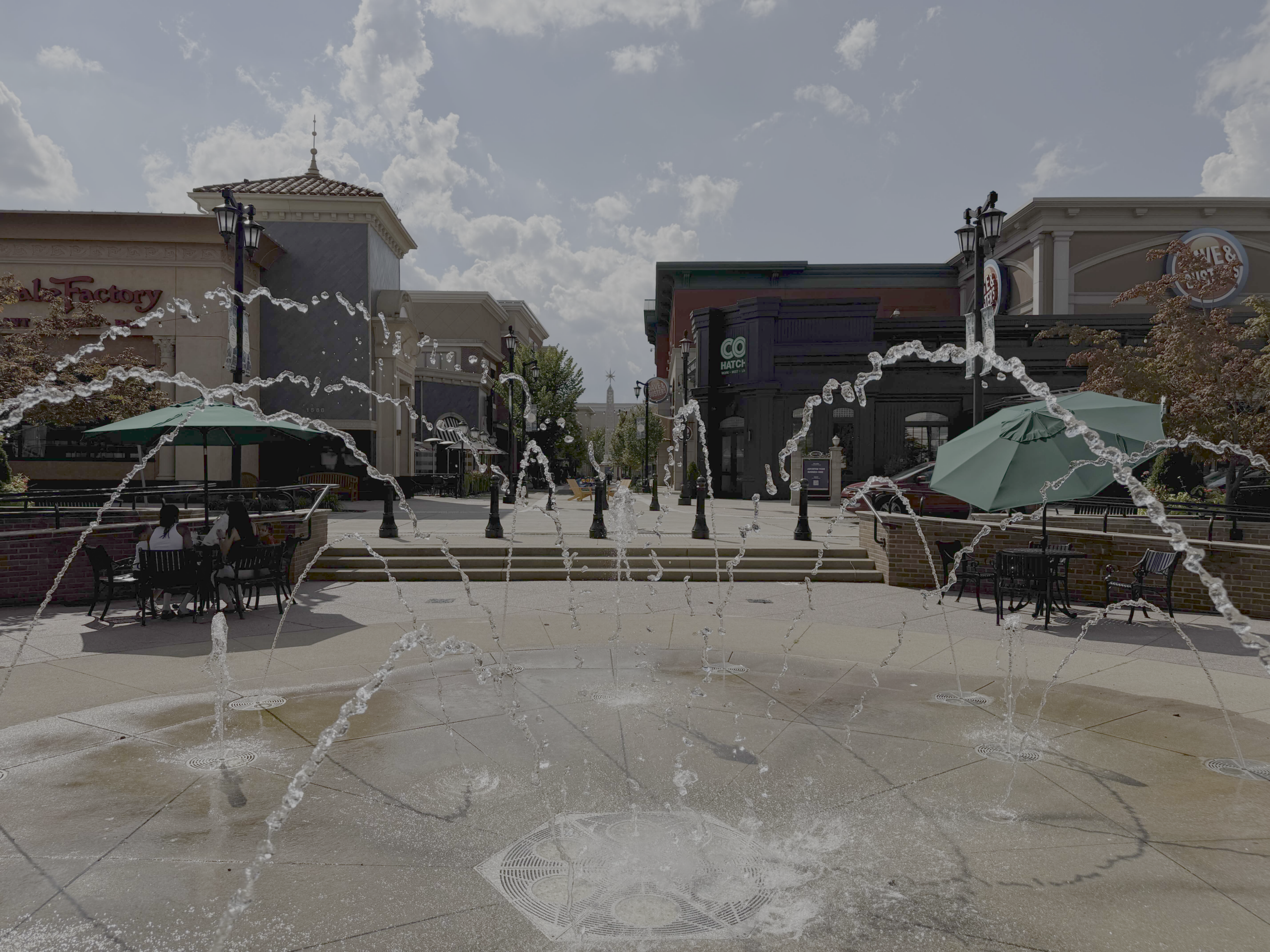
DELAWARE COUNTY, OHIO – The Polaris Fashion Place here is not just a mall, it is a small city unto itself. It’s an upscale indoor/outdoor retail city with scores of retail options as well as fast-casual chain restaurants, hotels, a movie theater, and “the world’s biggest bounce park.”
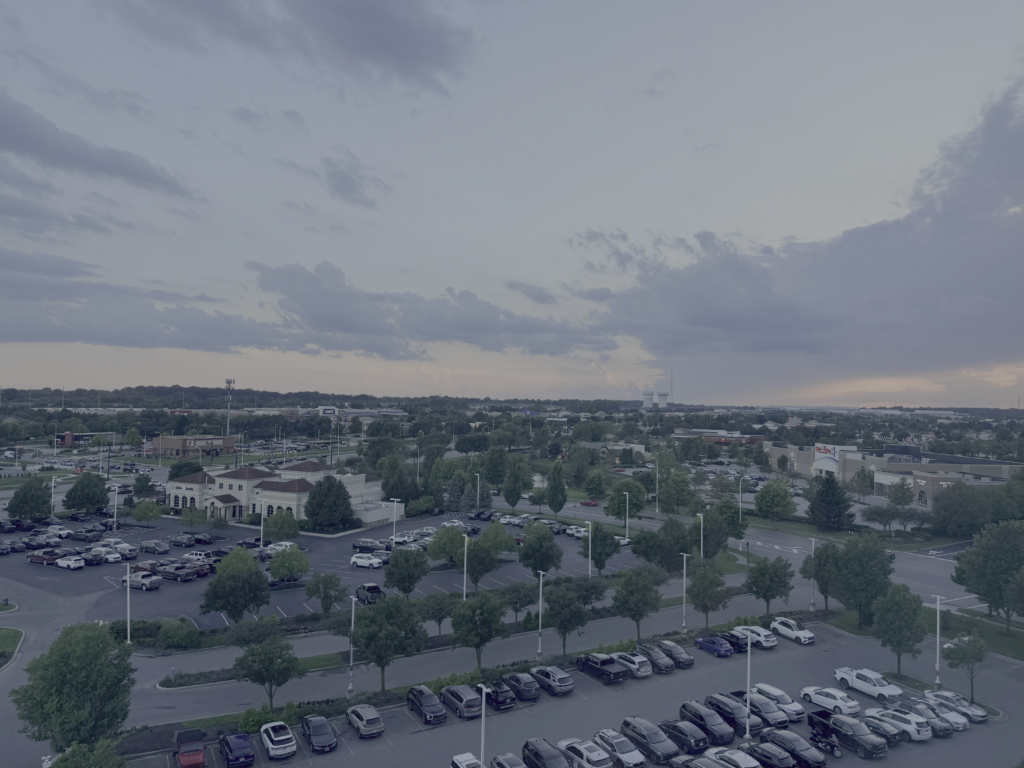
The area around it, however, has become something else, a symbol of the shifting fault lines that define American society, politics, and culture.
Back when Ohio was considered a swing state in the years before 2016, Delaware County, sitting just north of Columbus, was a political outlier. Wealthy, educated, and deeply “red,” it was a community where Republican candidates would run up huge margins to offset losses elsewhere in the state.
That’s no longer the case. As the GOP has increasingly become the party of blue-collar and working-class Americans, Delaware County has moved in the other direction, becoming more purple. It is a story the American Communities Project has been following intently in Exurb communities over the past decade.
Delaware County has morphed into a place to watch as the state of Ohio finds itself with two big statewide races that are viewed as toss-ups. Running for governor are Republican Vivek Ramaswamy, a Trump ally and businessman, and Democrat Amy Acton, the former head of the Ohio Department of Health. In the Senate race, U.S. Sen. John Husted (R) faces former U.S. Sen. Sherrod Brown (D).
The political realignment remaking the country is about a lot more than politics; it is about culture and community. Exurbs like Delaware County in some ways seem ripe for “flipping” in big statewide races everyone will be watching in November. Besides Ohio, there are competitive statewide races in Iowa, Texas, and North Carolina this fall. Yet there are some big roadblocks in the way of that change.
The Moving Exurbs?
As the political landscape has shifted, the Exurbs have long seemed ripe for movement. In many ways, they represent a big part of the “old GOP” with higher incomes, housing values, and college degrees. The Exurbs have their share of cultural conservativism, but they are also full of people that are the “winners” in free trade agreements, and people who tend to want a president who is less flamboyant than President Donald Trump. The kind of people who spend money at Polaris.
You can see that in the American Communities Project’s chart of the presidential vote since 2000 at the bottom of the site’s Exurb page. In 2020, Trump won the Exurbs by about 10 percentage points, the lowest margin of victory since Barack Obama’s big win in 2008. And the numbers are even more noticeable in Delaware County.
When George W. Bush ran for president in 2000 and 2004, he did 30 percentage points better in Delaware County than he did statewide. Barack Obama actually won Ohio in 2008 and 2012, but he lost Delaware County by 15 percentage points in 2008 and 20 percentage points in 2012. Then things changed with Donald Trump on the ballot in 2016, 2020, and 2024. Trump won Delaware County by eight more points than he did the state overall in 2016. But in 2020 and 2024, Trump actually did worse in the county than he did in the state.
Why? Some of that is almost certainly about population shifts. Delaware County has grown by about 40% since 2010, adding some 68,000 people. Many of these newcomers are younger, more liberal voters flowing in from Columbus. The area around Polaris, for instance, has grown sharply in the last decade and moved to the left politically. But much of the county is still fairly rural or marked by small towns, and some vote shifts are about broader changes in the Republican Party that have pushed away some GOP voters.
Not My Party Anymore
Karl Gebhardt is a primary example of the changes among Republicans here. A former GOP chair for the county, he has since stepped down from that post and shifted to become more of an independent. He’s still registered as a Republican, but he strongly dislikes the direction of the party under Trump — so much so that he has contacted the local Democratic Party to offer them advice on the best candidates to run to win seats in the area.
“I started reaching out to some of the Democrats, saying, ‘Look, you don’t like where the Republicans are at. A lot of the Republicans don’t like where the Republicans are at.’ I said, ‘The only way we’re going to change this is to get a stronger Democratic Party. You’ve got to start building your bench,’” Gebhardt said.
The outreach from a former local Republican chair to the local Democrats has not been easy, he says, but he thinks the party has made some inroads.
He talks to a lot of registered Republicans in the county who have deep concerns with Trump’s second term. “You know, he’s not doing what he said he was going to do,” Gebhardt said. “The economy is one issue. The war is one. You know, the tariffs. I mean, you know, it’s his approach. … I think there is that lack of competence and lack of listening to people who probably are competent, unless they’re saying what he wants them to say.”
Delaware County residents George and Brindi Hellinger are two more former Republicans who left the party — albeit for slightly different reasons. George developed concerns about the direction of the party after he served on the council for the city of Delaware, the county seat. Brindi says her turn away from the GOP happened when she began working for the city’s schools and saw a lack of resources and funding.
Brindi says she voted for Trump in 2016 and regretted it soon after. “I can’t really pinpoint when I changed. It was kind of gradual, but I know that the definite tipping point was Trump’s first term,” she said. “You know, [George] got on city council, and you know a lot of the discussions that we had, and working for the schools, and I think it was more eye-opening for me, and that is how my evolution came about.”
“I really don’t understand the lemming mentality of the people who are following him,” Brindi said. “It’s kind of like, man, these people really drank the Kool-Aid. I just don’t get it.”
Hard to Change
Gebhardt and the Hellingers are not the norm in Delaware County, however. The county still leans Republican because there are many more voters who may be disheartened about some parts of the GOP, but not ready to leave it. Sitting at Anne’s Kitchen in nearby Powell, Ohio, Jon Bennehoof has convened a group of locals who largely fall into that camp.
Bennehoof, a Navy veteran, was mayor of Powell from 2018 to 2020 and has developed a dislike for the powers controlling his local party, and the Democrats, he says. “I’m really well-connected with the party, and I have a huge distaste for the party these days. They’ve been taken over by their extremists, and the far left, in my opinion, is as bad as the far right, at times worse,” Bennehoof said. “I’m still a conservative. I’m not a Trump or else, however, I’m very much in favor of most of the stuff he does, and I find a lot of humor when he says I’m going to run for a third turn. He’s just trolling.”
But the broader distrust of politics and politicians echoed across the entire group.
Tim Funk, a Marine veteran, who co-founded a group that uses horses to give people therapy, shared similar views. “My thoughts on politics, both sides of the aisle, and including within the Republican Party is, I find it very difficult to believe in what they’re saying because it seems honestly like most of them are out for themselves versus out for the people.”
Chip Vance, who runs a specialty auto services company, carried that attitude further. “I think that a majority of the American people, are fed up with most of our politicians on both sides of the aisle, and their self-serving nature, their rules for thee, not for me,” Vance said. “If we want to solve healthcare issues, then perhaps these worthless Washington POSs should create a healthcare system that they’re on. Not that they have their own program.”
But for all the resentment around the table, most everyone said they had voted for Trump in 2024 and would do so again because they could never have voted for Kamala Harris. And there was no real support for the 2026 statewide Democratic candidates, Brown or Acton.
The Issues That Don’t Hit
The broad political unhappiness in Delaware County and in the Exurbs in general, combined with the GOP’s move toward becoming more of a blue-collar party raises a question: Why do the Exurbs seem to be changing so slowly in their politics?
One answer is political identities are hard to overcome. Once someone identifies as a Democrat or a Republican, they find it hard to change. And the Exurbs have their fair share of deeper cultural conservativism. They are the kinds of communities where megachurches tend to pop up, full of young families that have moved from somewhere else looking for a slightly bigger home and a more quasi-rural lifestyle.
But it’s also important to remember that Exurbs like Delaware County are more protected from the economic strains that many Americans are feeling. These households tend to be wealthier and have higher incomes in general. Retail companies don’t locate a massive upscale shopping mall in a poor community.
For the 2025 American Communities Project survey, we asked, “What type of impact is inflation or rising prices having on you or your family, if any?” In the Exurbs, 30% of those surveyed said they were feeling a large or major impact from inflation. That number was tied with the Urban Suburbs for the lowest among the 15 community types we study. Nationally, 37% of those surveyed said they were experiencing a large or major impact from rising prices, and in some communities, the figures reached the 40s.
In short, among the issues on most voters’ minds in 2026, the economy and inflation do not hit as hard in the Exurbs.
“I think people are more pissed off that the economy is growing so much in Delaware County,” Karl Gebhardt said. “You have more traffic, you have more data centers. My wife squawks about pricey groceries, sure, but she still brings home a truckload.”
Despite the general disapproval with politics and both parties, inflation and economic unease are not disrupting life on the ground in communities like this — or at least less so.
What does that mean for Delaware and the Exurbs this fall? Some electoral movement — maybe even enough to swing a few close races. But deep Republican roots, cultural conservatism, and economic insulation will prevent any big shift.