In Iowa, a Hispanic Center Rumbles with Immigration and Tariff Impacts
DENISON, IOWA – You have to zoom in pretty close on a map of Iowa before this town of 8,300 pops into view. Denison, the seat of rural Crawford County, sits amid rolling hills about 70 miles northeast of Omaha, Nebraska, at the intersection of the U.S. highways 30 and 59.
But in a larger sense, this community sits at the intersection of two of the biggest issues of the 2026 midterms: tariffs and immigration.
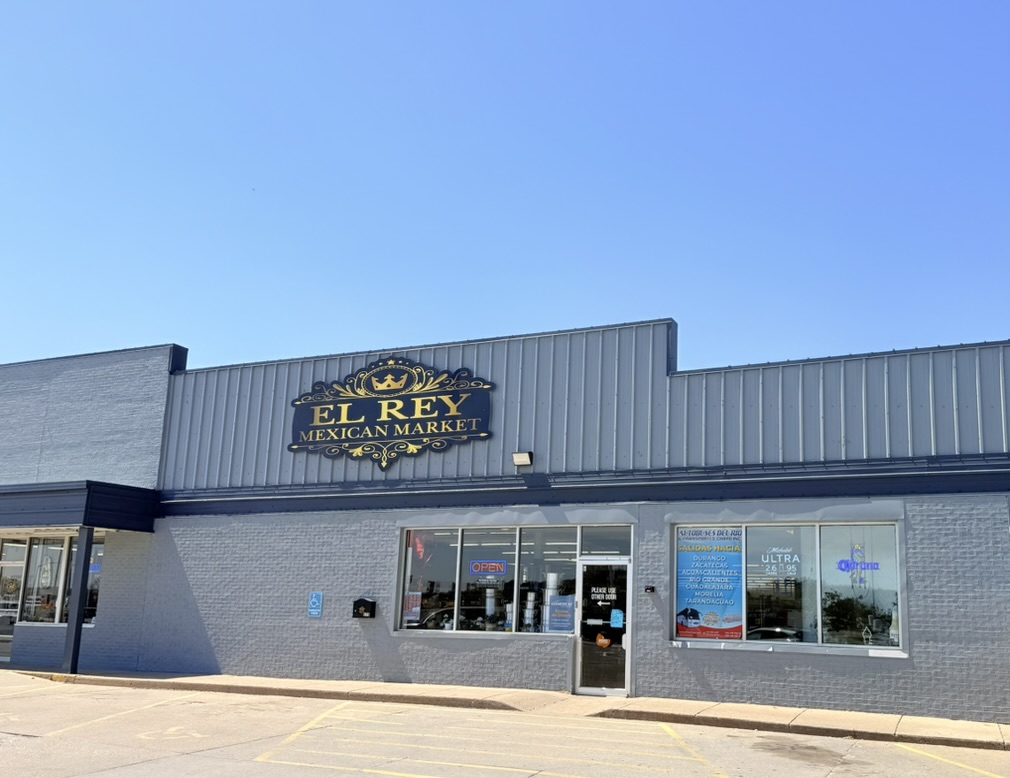
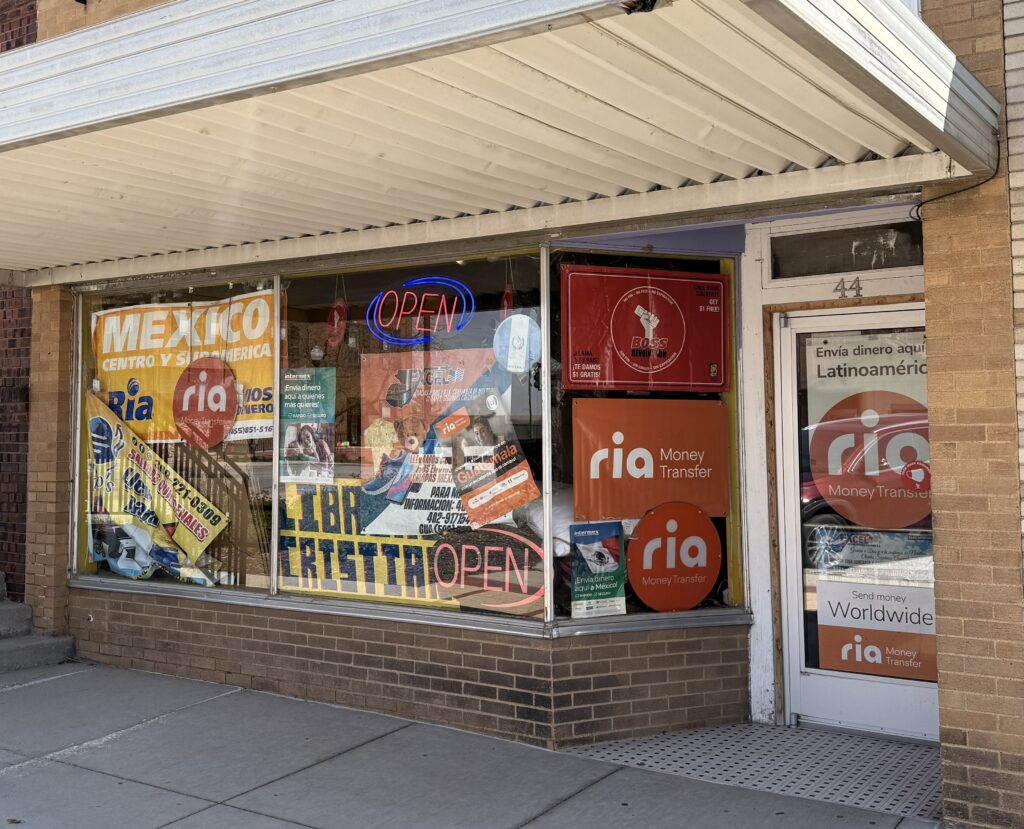
You see a lot of tractors working the fields and rolling down country roads here, but you also see a lot of signs in Spanish. Crawford occupies a special place in the United States, a deeply agricultural county in the rural Midwest that is one-third Hispanic or Latino.
It’s classified as a Hispanic Center in the American Communities Project rubric. In the ACP’s 2025 survey, residents in Hispanic Centers were more likely than the nation as a whole to think recent changes on immigration and tariffs were net negatives for their community.
But in talking to the residents here, the turbulence coming out of Washington feels different. Concerns about immigration enforcement hang in the air, but they feel somewhat removed. And while the farmers are not happy with their economic situations, their deep support for the Trump administration has them cutting the president slack.
Some of these feelings stem from the way policies are playing out here, but some are about the nature of the place itself. This deep red county, one that President Trump carried by 43 percentage points in 2024, is an interesting study in contrasts.
‘It’s a Wonderful Life’ With Two Communities
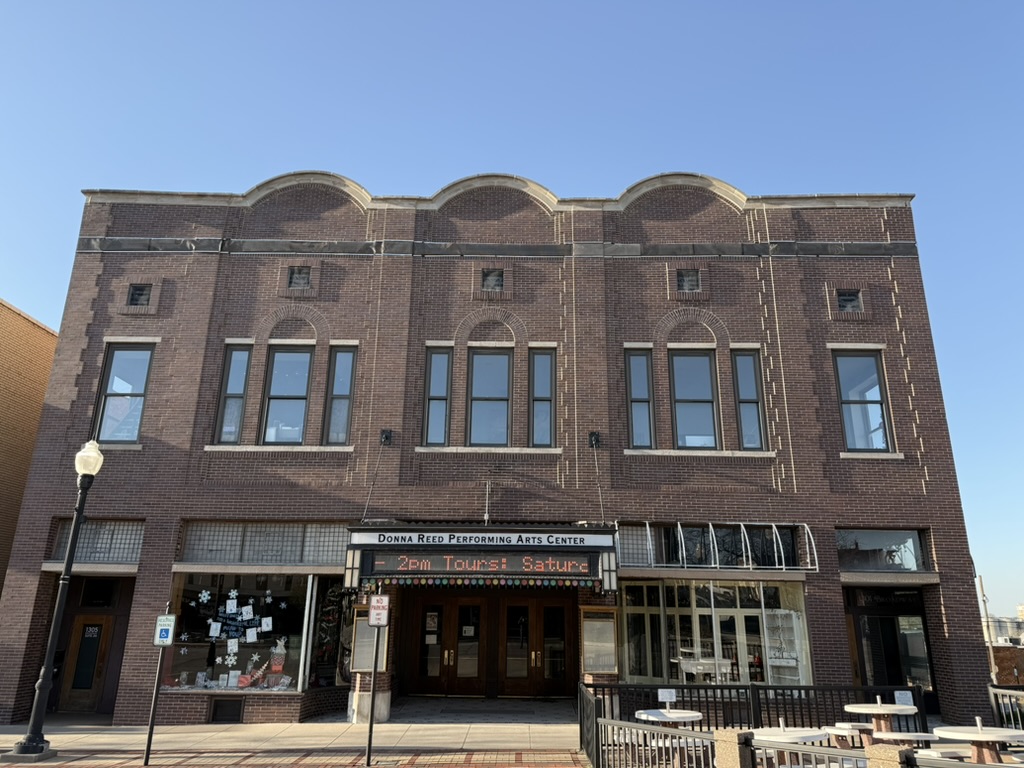
In many ways, Denison is exactly the place you imagine when someone talks about rural Iowa. It’s full of pick-up trucks, Carhartt shirts, and John Deere hats. There’s a farm coop on the edge of town and an old theater on Main Street.
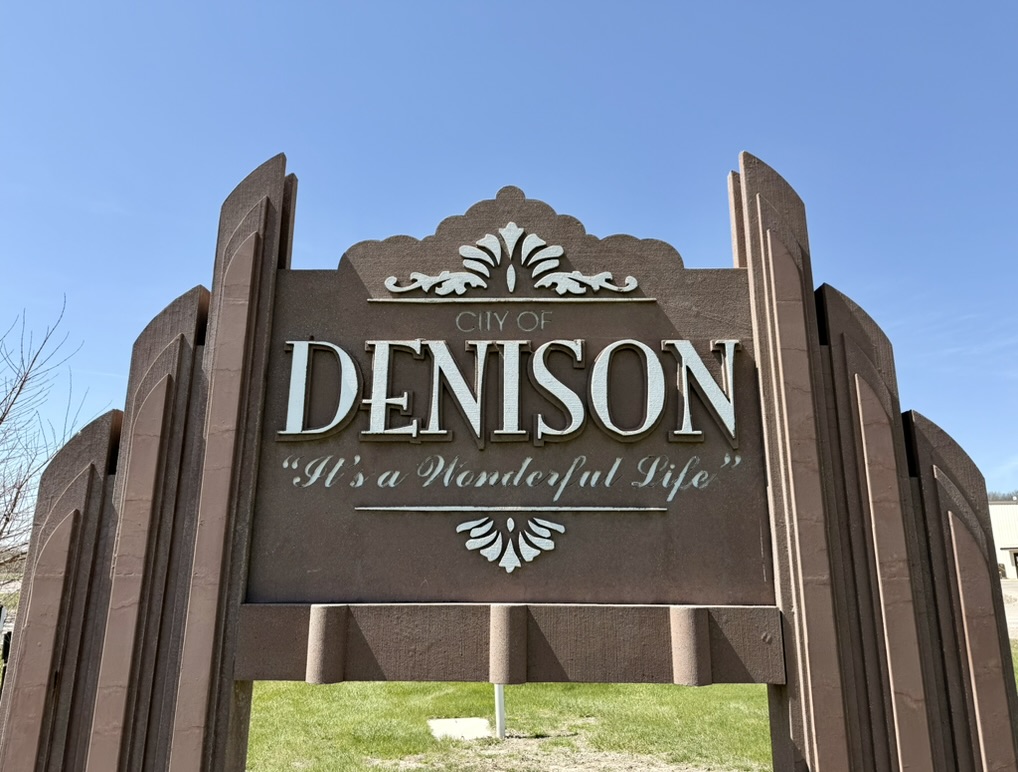
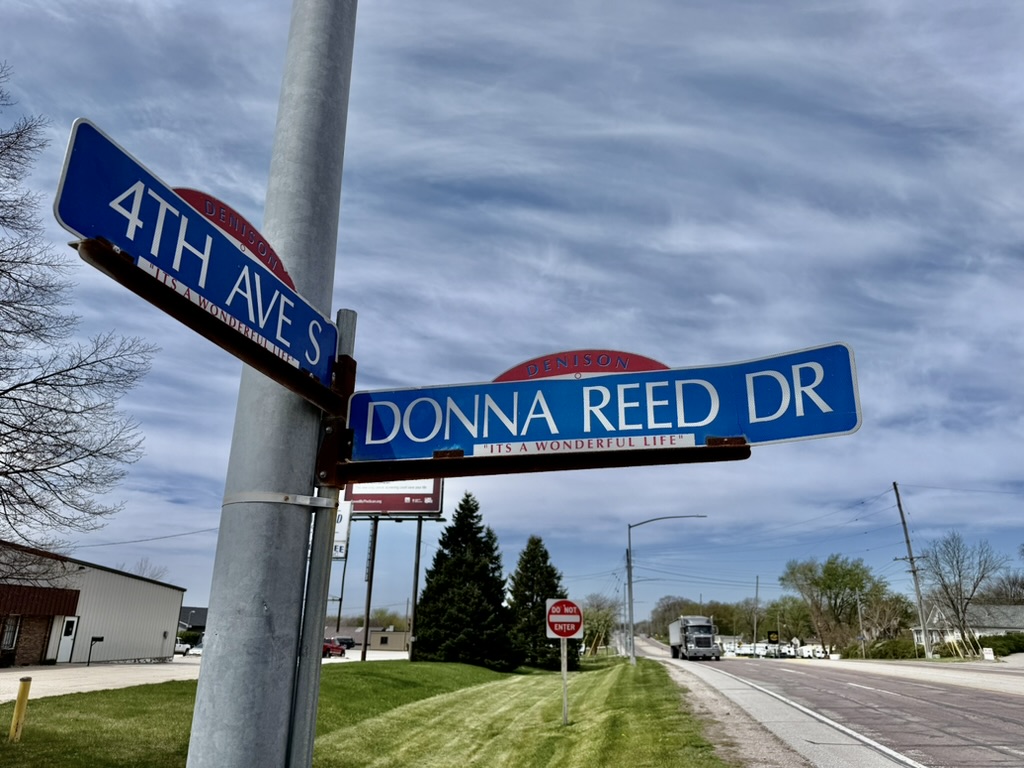
That theater is now the Donna Reed Performing Arts Center, named for the actress who was born here and who starred in Frank Capra’s legendary 1946 film “It’s a Wonderful Life.” Denison has adopted the title as the town’s slogan and there’s a Bedford Falls feel in the old brick facades.
But just across the street from the theater is La Cantina Steakhouse and Mexican Grill, which is just around the corner from La Michoacana Krazy Delights. They are family places where you are just as likely to hear the staff speak Spanish as English.
Crawford County and Denison are essentially home to two very different populations. One is white and non-Hispanic, with a median age of about 50 years old. It is about 61% of the county’s population. Another is Hispanic, with a median age of about 25, which makes up about 33% of the county’s residents.
The Hispanic population started growing in the 1990s and took off after 2000 in part due to an expansion of the Smithfield pork processing facility located just within Denison limits.
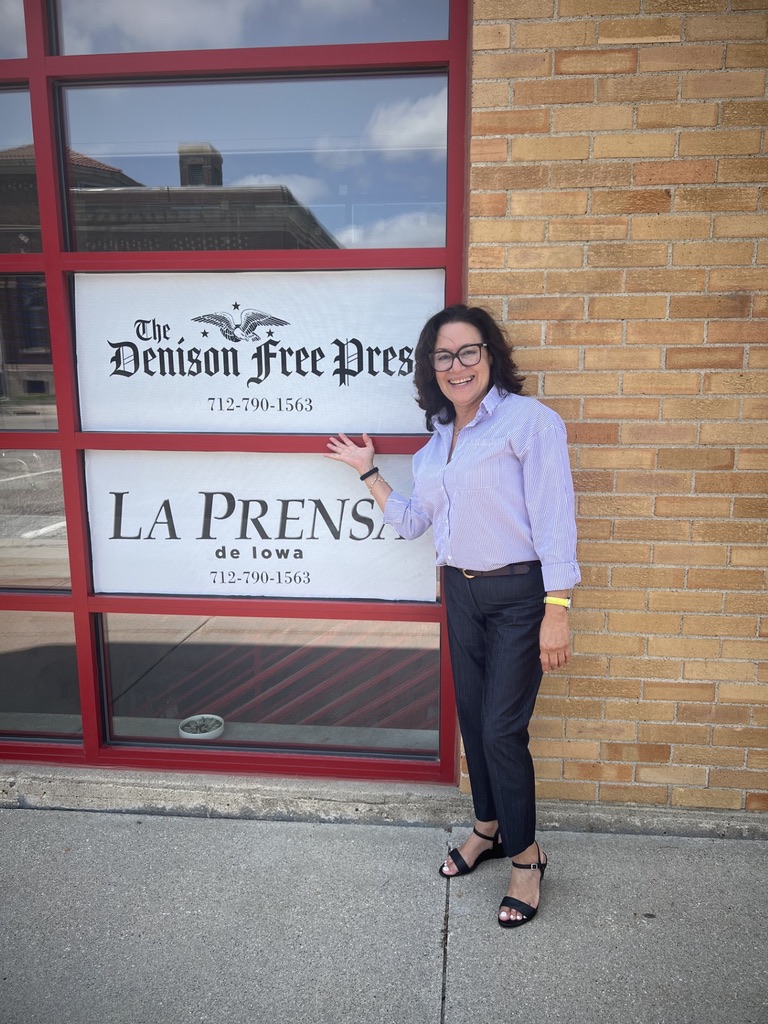
The two ethnic groups are crucial to the county’s economic success and survival, and for the most part, they have found a way to work together, said Lorena Lopez, publisher of La Prensa de Iowa, the local Spanish-language newspaper. But Lopez acknowledged there were some bumpy years in the early 21st century.
“Maybe early in the 2000s, it was a lot of like, umm, North American people, they rejected the diversity, you know, talking specifically about Latinos,” Lopez said. “And they didn’t like to get along too much. But this was silent. It was everybody just kind of did their own thing.”
“But now I think it changed so much, because now we celebrate activities together. You know, like big things for North American culture, like the, what is the name, St. Patrick [’s Day], you know. You can see in those cars [during the parade], a lot of Latinos, you know.”
The tensions have dissipated and the two groups have become more commingled, in part out of need. Someone needs to work the jobs in the Smithfield plant. As the Latino population has increased, it has seen its wealth grow. (The median household income for Hispanics in Crawford County was about $49,500 in 2010 and is more than $75,000 today, according to the U.S. Census.) And Latino residents’ integration has helped Crawford in other ways.
Like most rural Iowa counties, Crawford County is still shrinking, but the declines have been small (about 800 people over the last 15 years) because of the growth among the Hispanic population. The younger Hispanic families are having children and changing the face of the schools. The student population of the local Denison Community School District is 64% Hispanic. This past fall, a local elementary school cut the ribbon on a two-story 33,000-foot addition to accommodate more students. It’s the first major addition in many decades.
One might think such numbers would attract the attention of Immigration and Customs Enforcement agents looking to enforce the Trump administration’s stringent immigration policies. But that has not been the case, residents said. The immigration raids and clashes that have driven a lot of news coverage in the last year have not happened here — and residents have noticed.
“In the beginning, like probably five, six months ago, it was a lot of fear in town, a lot of pressure, a lot of stress,” Lopez said. “For Latinos, it was horrible, because if they hear something that’s happening in Omaha, that is just an hour and a half from here. … But they haven’t come.”
Leo Kanne, president of the local United Food and Commercial Workers union, said, for the most part, the meat packing facilities have avoided immigration hassles. Immigration agents have been to the Smithfield plant multiple times over Trump’s time in the White House but have not conducted any large-scale sweeps of local facilities. It’s a different pattern than immigration enforcement in big cities around the country, such as Minneapolis.
“Just a couple weeks ago, there were some ICE agents that went into this plant here, but they were looking for one person. You know, it was a targeted thing,” Kanne said. The worker allegedly physically abused his girlfriend, and she likely tipped off ICE that he was undocumented. But that was the end of the action at the plant.
That kind of immigration enforcement helps Trump with Latino voters here. Like other blue-collar workers, many of Kanne’s union members support Trump. “A lot of our members, particularly Latino members, I believe, are, you know, Republican,” he said. And the way immigration is now being enforced in Crawford County hasn’t done anything to shake their political leanings. “They don’t think it affects them personally. They think, get rid of the bad seeds. Now we’re safe, because it’s not going to come down on them.”
The belief among many in the community is a big immigration sweep of the meat processing facilities would all but close them down and disrupt an important part of the food production chain in the United States when voters are already complaining about food costs.
In a sense, that means the Hispanic population in Crawford is free to focus on issues besides immigration, and they do, according to residents. The Hispanic vote in Crawford is also a rural vote, with deeply held culturally conservative values. Lorena Lopez said that at a recent baby shower in the local Latino community, the talk was all about abortion and transgender issues.
“A lot of people were confused or believed that Latinos are just about immigration,” Lopez said. “But especially in this area with Latinos, they didn’t understand why the Democrat Party was favoring abortion and favoring transgender rights. … That was part of why a lot of Latinos voted for Trump.”
Of course, the Latino population is not a monolith, and other voices in the community, younger voices, see things differently, voices like that of “Isabell.”
Isabell asked that her real name not be used because she is a “dreamer,” born in another country but a resident of the United States for decades. She has gone on to get bachelor’s and master’s degrees and works at the local college, Western Iowa Tech.
Isabell said the tensions between the white and Hispanic populations are not boiling in Denison and Crawford County, but she feels they still exist on a low simmer. And she believes the area has come accept the population mostly out of need. “I really do think that’s the case, especially because of the workers in meat packing plants, those are the largest employers, and without those, as a community, we would die off.”
Isabell, a graduate of the local high school, said the dual-language program in the local schools has helped smooth over some tensions in the community as more people are learning Spanish. And the schools have made a mariachi band, consisting of white and Latino students, part of the school band experience.
But problems remain, she said. “For one thing, we don’t have any Latino representation on the school board or the city council. Nothing.” And she thinks the politics in the community for Latinos have settled into a something of a shoulder shrug. “They’re like, ‘Oh yeah, immigration is going to be bad, even if it’s a Republican or a Democratic president,’” she said.
That can make it hard to fire up voters who see do not see representation that looks like them in their community. But, in the end, she feels the area’s future belongs to the Hispanic/Latino population. It is made up of younger people and families who are still having children and the tight-knit families mean children tend to stay.
Agricultural Inputs and Outputs
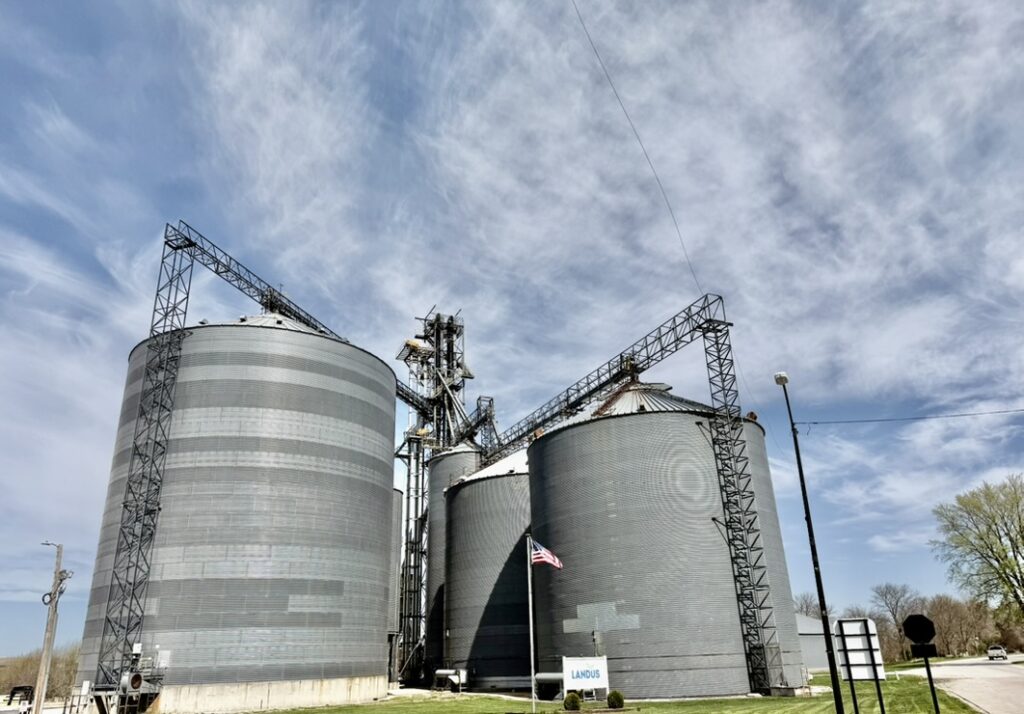
Regardless of who lives here, however, agriculture (in one form or another) is likely to be the prime driver of the city and county for the foreseeable future. And times have not been good for farmers in the area, particularly in recent years.
Talk to farmers in Crawford and you’ll hear a lot about how their economic lives are determined by outputs and inputs. Outputs are matters such as crop yields and market prices. Inputs are items that include fuel, fertilizer, and seed. Right now, many farmers here are getting hit on both ends of the equation.
Tariffs and buying practices from other countries have driven down the prices farmers are getting for their crops because markets have constricted. Those are outputs. Meanwhile, a seed market, dominated by a few big players and rising oil prices, has hit them hard on the side of inputs. It’s not just the fuel used in tractors that has become more expensive. Most fertilizers are derived from the petrochemical products, the prices for which have skyrocketed as the war in Iran drags on.

Doug Gronau, a farmer growing corn and soybeans in Crawford County and working the land since 1974, said he feels the pain and believes much of it is coming from economic policy made in Washington. Gronau, who sits on the Crawford County Republican Committee, said he is not a “radical conservative,” but believes the Trump administration’s approach on tariffs is flawed.
“Yeah, I have never been fond of tariffs. You can use retaliatory tariffs or reciprocal tariffs, or whatever, right, but tariffs to raise money that just … distorts your economy,” he said. “[Trump] promised more markets. Well, where are they, you know? And all of a sudden, you got all your inputs have tariffs put on them, raises your costs, but your income doesn’t go up. You know that can’t go on forever. You know you got to be able to make money at some point.”
You might think that would make Gronau, who voted for Trump three times, unhappy with his decision in 2024, but you’d be wrong. While he is not pleased with everything Trump has done, he likes other things, particularly around crime and immigration. He said Congress is to blame for a lot of the problems in agriculture, such as the inability to produce a new farm bill.
“On the whole, I would say, there’s positive things and negative things. And agriculture right now tends to be a little bit on the negative side. But taken as a whole, it’s just that he’s done so much stuff that the Democrats just don’t know what to do.” And Gronau likes a lot of the actions the administration has taken. Voting for the Democrats was never an option for him, he said, calling former President Biden and former Vice President Harris incompetent. He doesn’t expect his attitude to change. “The only reason I wouldn’t vote for a Democrat is because it’s the radicals have control of the party. It’s not like the old Democratic Party. I mean, it’s, it’s, it’s the lunatic fringe that, that is wagging the dog, you know,” he said.
And even with the current “negative” circumstances for agriculture under Trump, Gronau brings an attitude you hear from many farmers here, a stoicism ingrained in him through years of working in farming. Ups and downs are part of the business of agriculture. Marginal years are common in farming — there are years of treading water. The secret to success is being to ride out those years while you wait for the big home-run year. Also, as bad as things are now, it was so much worse in the farm crisis of the 1980s, he said.
The 1980s farm crisis casts a long shadow over Crawford County, and there are some concerns about the long-term prospects for farmers in general, because times are pretty tough right now, said Brian Ettleman, vice president at Bank Iowa in Denison. Again, the mix of higher input costs and lower prices per bushel has them worried.
“You can kind of sense it in farmers when they come in. I don’t want to say they’re hanging their heads, but they’re just like, ‘Man, it’s going to be a sad year,’ you know. Like we’re going to be lucky to break even. If prices go up by 30 cents [a bushel], we’ll be okay. But right now, we’re looking at even losing money,” Ettleman said.
However, that does not mean they blame Trump or tariffs, he said, something he attributes to the largely Republican tilt of the area and to other cultural issues where voters see themselves more in line with the GOP. “Some say, well, could you imagine if Biden or Kamala was in there, you know?”
But whoever is to blame for the current situation in agriculture, the current economic conditions have raised serious concerns about the future of Crawford County’s farmers — or about a large section of them, said Nick Schechinger, general manager of the Farm Service Coop in Denison.
“I always say we have a tale of two growers here, really, … and I think this is how ag is in general, in a lot of ways. You have a lot of farmers that own land and have owned it for decades and those guys, you know, they’re almost recession proof when you don’t have land costs,” Schechinger said. “But the other half, there’s another big herd of guys that rent a lot of land, yeah, and rent is high. And that’s where they’re working on pretty thin margins most of the time.”
Land has become very expensive, and it’s hard to make the math work for farmers who must pay rent on top of everything else. Add in the impact of tariffs and fuel and fertilizer prices, and it’s not hard to envision very hard times to come. Schechinger said he sees the impacts showing up in accounts receivable already. People are late to pay their bills, mostly from the group of farmers that rents the land they work. If those farmers can no longer afford to rent and have to get out of the agriculture business, that will have massive consequences, because, as Schechinger noted, everything is reliant on farming here, from car dealerships to the hardware store. There won’t be a lot holding people in the community any longer.
All the hurdles and challenges are enough to make one wonder: Why do people even try to get into such a difficult game? Tradition and personal history, said Schechinger. “It gets in their blood, if they’re truly farm kids,” he said. “I’m a good example. I bought my first 40 acres in October of last year. I grew up farming. I still help my dad all the time, but you know, on paper it doesn’t make any sense.”
There are other challenges for the farmers of Crawford County, Iowa — and for farmers across the country. The size of farms keeps growing, as big farms with lots of land acquire smaller parcels when they come available. There are concerns that it is simply too hard for young people to get into farming now — the barriers to entry are too high, particularly around land costs. And the cost of farm machinery keeps rising. A modern combine can run anywhere from $800,000 to $1 million, and farmers regularly trade them for the latest models, which have new technologies to help them work.

The tariffs put in place by the Trump administration have hit that farm machinery market explicitly, said Ryan Morgan, a manager at Van Wall Equipment in Denison, a John Deere dealer. How explicitly? When you buy a piece of equipment from them — anything from a combine to a replacement part — a line in the receipt denotes the tariff cost. Farm machines can be massive with parts manufactured all around the world. “So, you’ll get a bill. Let’s say that you go get a bearing, and the bearing costs $75, you pay the $75 for your part, right? But you also pay the $65 tariff fee that they’re attaching to that,” Morgan said.
How do the customers react, beyond shock and dismay? Morgan said he thinks there is an understanding that “it has to get worse before it gets better. Especially in farming that’s a pretty common theme.” He added, “You know, you’re not always going to have bumper crops every year, so you’re going to hit some bumps on the road. Nothing’s going to ever be smooth. Did we think maybe it would be this extreme? You know, that’s debatable.”
November Looms
In some ways, that attitude sums up a lot of thoughts in Crawford County for the two big population groups and around the big issues that define this place. Are the people who voted for Trump by massive margins completely happy with what he has done? No. They have concerns.
So far, the Latino/Hispanic community feels mostly untouched by the Trump administration’s immigration crackdown, but people said there is still unease. When Iowa Gov. Kim Reynolds and U.S. Secretary of Education Linda McMahon visited the schools in Denison in January, many of the district’s Latino students reportedly stayed home out of fear that an immigration enforcement action was coming. (The two officials were there to announce the state regaining control over federal education money with a new waiver.)
Meanwhile, farmers have absorbed the tariff and petroleum pain that this economy has brought so far, but there is plenty of talk about how sustainable the current situation is. What happens if the people who are behind in their payments for farm equipment, fertilizer, and land must endure another year in which the prices per bushel on various commodities aren’t what they need?
There are other issues and attitudes in the air, including the whiff of populism when farmers talk about the corporate control of seeds or fertilizer. Some openly said government needs to allow more competition or break up the big agricultural firms. And one wonders how Denison and Crawford County might change as the Hispanic population grows and, eventually, gets more representation in local government.
But for now, the general theme in Crawford County is the same as it is in many rural agricultural communities as the 2026 midterms approach. Times are not great, but they could be worse. That’s life in the world of agriculture. And cultural issues and attitudes, not programs and policies, set the tone here.