
The Far-Reaching Effects of Increased Immigration Enforcement in LA
As I noted at the beginning of this look back at a wrenching year for Los Angeles, the dramatic, destructive, and expensive fires were not the only big events of 2025. President Trump had railed against Los Angeles and other cities as dirty, and dangerous. Soon after his January inauguration, the President activated National Guard troops, and sent them into American cities on patrol. Los Angeles was, if you will, a demonstration project. When 4,000 Guardsmen and -women, and 700 U.S. Marines hit the streets in the spring, they were met with weeks of protests, lawsuits, and steady opposition from state and local politicians.
President Trump sent the Guard over the objection of California Governor Gavin Newsom, who took him to court. Los Angeles Mayor Karen Bass tried to lower the temperature on the streets by imposing a curfew. Newsom prevailed in lower appellate courts, and lost his cases higher up the federal ladder. The courts left the California Guard in federal control.
After 60 days, marked by heated and occasionally physical confrontations between uniformed soldiers and demonstrators, the deployment was over. The Marines were withdrawn, some of the Guards diverted to wildfire suppression, and the rest stood down by September. While local politicians insisted the National Guard had done nothing to prevent crime, Newsom going so far as to call Guards “nothing but political pawns for the president,” President Trump said crime was way down in Los Angeles, and his initiative had worked.
Serious Crime Continuing to Decline
The Los Angeles Police Department’s own data confirms that by the end of the National Guard deployment, there had been a 7.3% reduction in the most serious crimes (murder, rape, assault, grand larceny) over the previous September. By the end of 2025, a sharp decline in murder had been tabulated, dropping to 230 killings overall, a 19% decrease. In 2025, the City of Los Angeles also experienced 22,000 fewer crimes overall. However, if you take crime rates from early in 2025, before the Guard deployment and compare them to a comparable time the year before, a clear trend was already under way, making 2025 one of the safest years in decades.
The furious response to soldiers on city streets was also extended to Los Angeles’ angry resistance to Immigration and Customs Enforcement (ICE), and Customs and Border Patrol (CBP) teams blanketing Los Angeles neighborhoods. Roughly a third of Los Angeles County’s population, more than 3 million people, were born outside the United States. Of that number, an estimated 900,000, roughly equivalent to the size of Columbus, Ohio, or Austin, Texas, are living undocumented in the United States. These numbers give Los Angeles, along with New York, the largest groups of undocumented people anywhere in America.
‘A Metropolis of the Unequal’
Los Angeles’ longtime reliance on immigrant labor, particularly from Latin America and Asia for its productivity and affluence is something “that just went on decade after decade,” said Professor Anastasia Loukaitou-Sideris, Dean of the UCLA Luskin School of Public Affairs and a Distinguished Professor of Urban Planning and Urban Design at the university. “Everybody knew, but nobody talked about it.” An immigrant herself, and now in Los Angeles for well over half her life, Loukaitou-Sideris called Los Angeles “a metropolis of the unequal.” She said there has always been racism, going back to California’s earliest days, when Yankee settlers from back east pushed their way in during the mid-19th century. In its modern form, the professor noted, it might take the form of small cities with growing Asian populations abruptly deciding, in the 1990s and 2000s, to impose a design language on all new construction, “kind of nostalgically looking into a kind of a Mediterranean past, requiring that you have tiles and stucco. It’s very interesting to see how the guidelines changed. So, very consciously not wanting it to look like a Chinese city.”
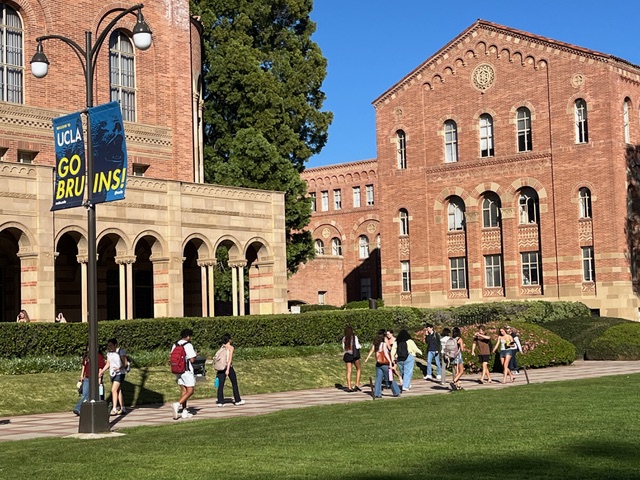
Along with keeping an eye on developments as a scholar who has devoted a career to studying the ways urban areas work, rise, and fall, Loukaitou-Sideris is also an administrator at a university enrolling almost 50,000 students. “This school has about 40% first-generation college students. And we have a lot of Latino students that, if they are not terrified for themselves, they are terrified for their families. Someone in their family would be likely undocumented. So, there is a lot of fear. There has been fear by international students, too, because they were also under the gun. Some of them are afraid to leave the country because they may not be able to come back.” She noted that UCLA, like many American colleges and universities, saw a large drop in overseas applicants as the new administration’s enforcement priorities became clearer.
As ICE enforcement continued into early 2026, Mayor Bass signed Executive Directive 17, which barred the various federal immigration enforcement agencies from using Los Angeles city property as staging areas, for processing people picked up in raids, or as bases of operation. Bass, finishing her first term as mayor, said of the directive, “Immigration raids across L.A. have not stopped, and neither has our resolve to protect Angelenos from ICE’s campaign of terror.” The immigration agency responded, dismissing the mayoral order as “legally illiterate.” ICE vowed to continue its efforts in Los Angeles. Both regional representatives for ICE, and leaders in Washington were harshly critical of California’s elected officials, stressing throughout the summer and into 2026 that the law is clear: Responsibility for enforcing immigration law lies with the federal government.
Contractors rebuilding homes in Altadena and Pacific Heights said immigration officers have not been patrolling or making stops the way they have in other parts of Los Angeles County. Marcus Stark confirmed he had seen their marked vehicles on major streets in the San Gabriel Valley, but he had not seen any arrests. Contractor Ernest Payne told me he and his partners are already having trouble finding enough skilled and experienced workers, with only a fraction of the houses destroyed in the area under active reconstruction. “When we get to 50%, there’ll be real problems.”
When the smoke cleared and the ashes cooled in Altadena and Pacific Heights, it was largely immigrant labor that poured in to do the work of clearing and salvage. After months of dangerous, dirty work, many of those workers are afraid to return to the same blocks to rebuild. The heightened wariness of the past year made it no surprise that Mexican- and Central American-born workers were not interested in talking to a reporter from Washington, in any language.
For now, even while insisting from Washington that raids, apprehensions, and detentions will continue apace, ICE and CPB appear to be leaving Southern California’s jobsites alone. “ICE and CBP have NOT targeted any construction sites in Altadena and the Palisades,” Tricia McLaughlin, a spokeswoman for the Department of Homeland Security, confirmed in a statement. “We will continue to work to get the worst of the worst criminal illegal aliens off of America’s streets.”
Bringing Accountability
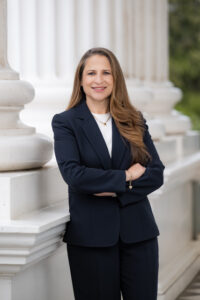
State Assemblymember Anamarie Avila Farias is preparing a salvo of her own in the legislature in Sacramento. The Northern California freshman is drafting legislation and attracting co-sponsors for a state measure that would bar any ICE agents found to have exceeded their authority, participated in abuse or improper detention from any future employment in law enforcement or education in the State of California. The granddaughter of a Mexican farmhand who came north with the postwar Bracero Program, Avila said she is consulting lawyers in and out of state government to make sure her bill is constitutional. “These positions require authority, and respect of constitutional rights. Californians deserve professionals who will uphold, not undermine, the rule of the law. I think my message to ICE is: Californians expect the highest standards.”
The kind of accountability the assemblymember wants to bring with her bill waits way down the road. Today, documented and undocumented Angelenos alike have to figure out what to do right now. “To be honest and frank, it’s been terrifying. It’s been absolute fear.” Oscar Zarate came to California with his parents when he was a baby, and is now a DACA recipient. That is, under the Obama-era policy renewed in subsequent presidential terms, he is, though undocumented, considered to be a low priority for enforcement. U.S.-educated, fully bilingual, and certainly someone who might be assumed by appearance to be Latino, he had plunged into the world of immigrant aid as an organizer and activist. He said the ICE raids have put such pressure on immigrant communities that he knows many people have just decided to head home, even if it’s a “home” they haven’t seen in decades.
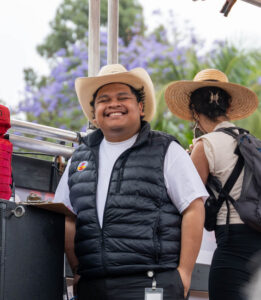
Zarate works with CHIRLA, the Coalition for Humane Immigrant Rights of Los Angeles, one of the most prominent immigrant rights agencies in California. Begun during the Reagan administration, CHIRLA has helped thousands of undocumented legalize their status in the U.S., helping with paperwork, legal advice, language instruction, and training for citizenship exams. Zarate said he understands the fear, and the rising feeling of risk just in accomplishing the tasks of everyday life. And while careful to remind me he is not a lawyer, he still would encourage people “in the process” to keep pushing to get documented. “I don’t think we’ve scaled back. We’re still doing those things here. Obviously, with less resources, because the federal government has called back some of their money. But I think if people have legitimate, qualifying cases for legalizations, they should still do it.”
Zarate said his staff, and the undocumented themselves, are well aware of the support of many Americans not directly connected to or threatened by immigrant enforcement. Watching people of all races come off the sidewalk and join rallies and marches, seeing the people of Minneapolis on the streets day after day is encouraging, as is the prominent support of the churches and organized labor. The same week as the cathedral prayer service, thousands of schoolkids began walkouts and marches in Orange County and Los Angeles County to oppose the ICE raids, even under threat of suspension.
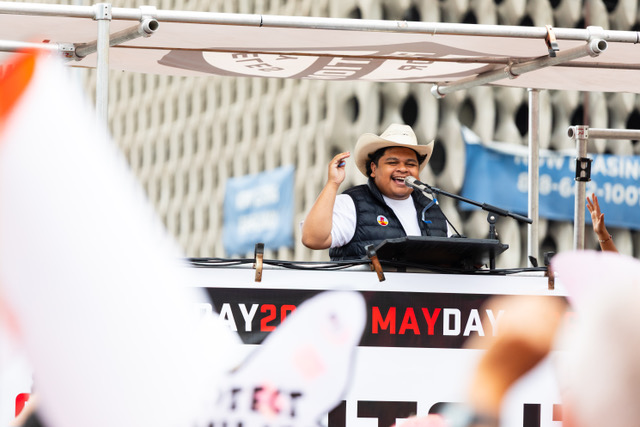
One of Zarate’s labor allies is Felipe Caceres, an organizer with the Service Employees International Union. Caceres said his union, which counts large numbers of immigrants among its members, without regard to immigration status, has jumped into this fight with both feet. The union played a prominent role in the response networks that took to the streets to confront the National Guard, the Marines, and the heightening tempo of ICE enforcement.
“California is the engine of the entire U.S. economy. And immigrants are the backbone of that economy,” Caceres said. “Not just the tourism industry, but the entire economy has taken a huge hit as a result of these unconstitutional raids. It’s not just un-American, it’s not good for the economy. The tariffs and the terror from this administration has to stop.”
Restoring Faith
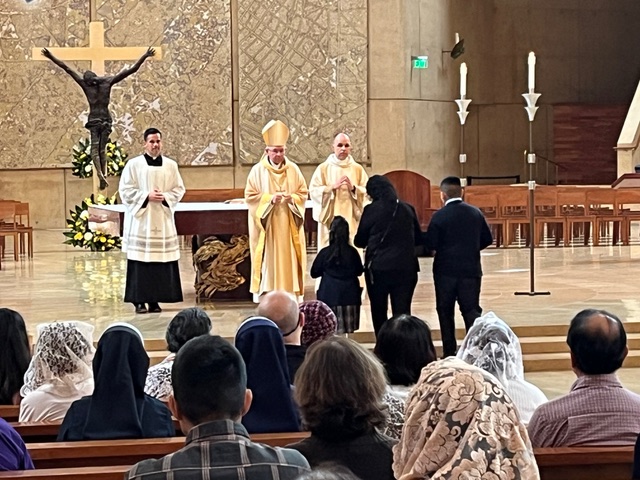
In the aftermath of the killings of Renee Good and Alex Pretti in Minneapolis, the Los Angeles Roman Catholic Archdiocese, the largest in the U.S., held a special mass at the Cathedral of Our Lady of the Angels as part of a special Day of Prayer and Holy Hour of Peace. Archbishop José Gomez, the highest-ranking Latino in the American Catholic Church, is an immigrant from Mexico who came to Texas to work as a priest. A citizen for 30 years, the leader of the largest archdiocese in the U.S. deplored the violence on American streets, praying for law enforcement officials and the protestors opposing their efforts. In his homily, he said, “We’re in a moment when it seems like many have lost faith in America’s promise and her founders’ vision.
“And it is sad that this is happening this year, when we are celebrating our nation’s 250th birthday. This should be a time for renewal, not a time for retreat.” The Catholic Church’s history has been entwined in the history of Los Angeles, since 1781, when a group of 44 settlers up from Mexico founded a town they named for Mary, Queen of the Angels. For the two and a half centuries since, Catholic Los Angeles has been multicultural, multinational, multiracial, and multilingual.
Moving from Rights- to Risk-Based Model
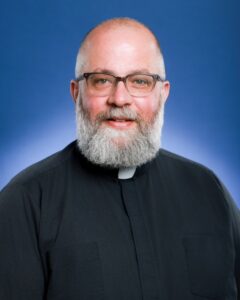
The century-old Mission Dolores is a pillar of the Catholic outreach to the city’s poor. Its Pastor, Fr. Brendan Busse, S.J., said his community is always vulnerable to immigration enforcement, but the past year has been “particularly intense.” Fr. Busse said once it was clear the new administration in Washington planned to ramp up enforcement, ongoing conversations between schools, places of worship, and social service providers prepared for what was coming.
The Jesuit cleric said the first Trump administration saw Catholic Los Angeles educating people about their rights under the law. Now there has been a shift from a rights-based model to a risk-based model. “Enforcement officials show up without warrants, or detain people without cause. And then what they know of their rights doesn’t seem to help much. So that creates a lot of fear, right? People feel like they thought that they could do something or they knew something and now they’re in a place of chaos or unpredictability.
“So, in that place of fear, then I think we switched to also knowing your risks so that you can make decisions with a sense of, you know, what is, what’s at stake, you know, within the realm of possibility.” It had been immigration enforcement policy to avoid schools, medical offices, and places of worship for apprehensions, but early in 2026 the Department of Homeland Security announced that policy was done. The pastor said you see it, and feel it, in his working-class, Latino neighborhood. “There’s a heightened anxiety and fear across the board. Beyond that there are other effects. People staying at home or not working or, adapting their day-to-day lives in ways that puts pressure on them in all kinds of other ways. You know, it’s harder to pay rent.”
From the President, through Homeland Security Secretaries Noem and Markwayne Mullin, to so-called “border czar” Tom Homan, down to the greenest new ICE trainee heading to an American street, the message is clear: As President Trump said in the recent State of the Union address, “After four years in which millions and millions of illegal aliens poured across our borders totally unfettered and unchecked, we now have the strongest and most secure border in American history, by far. In the past nine months, zero illegal aliens have been admitted to the United States. But we will always allow people to come in legally, people that will love our country and will work hard to maintain our country.”
Rejecting Separation
In the remaining years of the Trump presidency, the “unstoppable force” of federal power may run smack into the “immoveable object” of grassroots resistance. Oscar Zarate would agree that people who love the country should be allowed to remain here. He parts company with the President when insisting the humanity of undocumented people should not be discarded. “There’s this intentional narrative to have the American people lose all empathy and commonality with immigrant families, when that’s just so far from the truth, there’s so much commonality because we’re all families. We all care about our mothers, we all care about our fathers. We all want the best for our children. And I think that’s really what needs to ground us moving forward. We have to reject these notions that we’re separate, and there are some people that deserve less, less care, and we can discard and understand that we all have a commonality, and that we all share values.”