
LA Looks Back on a Year for the History Books
From early 2025 into early 2026, the Los Angeles basin has lived through a year locals may never forget. It began with devastating fires that destroyed most of two big communities: Pacific Palisades and Altadena. It continued with National Guard on the streets of Los Angeles, sent by the new Trump administration to respond to what it said was an ongoing emergency. Then communities throughout the metropolitan area felt the rising impact of the U.S. Immigration and Customs Enforcement agency.
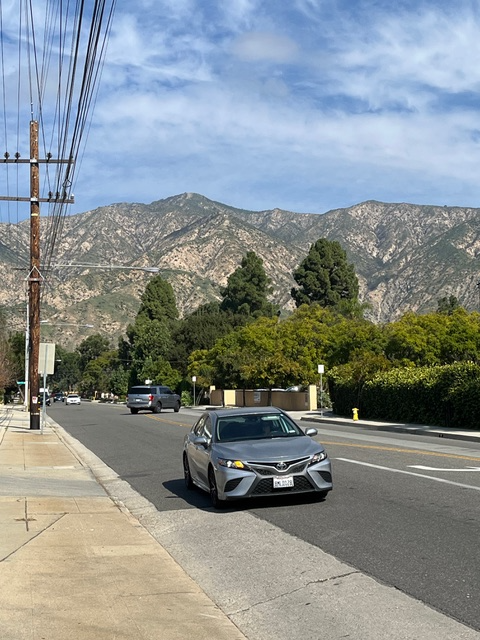
You have to scratch a little to see the various impacts, because the enormity of the region can easily obscure the enormity of the challenges. Sitting in bumper-to-bumper freeway traffic, a commuter, or a reporter, sees another rolling hill, or low-slung buildings marching to the horizon, drenched in sunshine. It is green in the winter, and dried to the color of sand in the long, dry summer. In the distance you can make out the next interchange and the tall single mast of a gas station nestled among rolling hills.
One of those hills is scribbled with a narrow road snaking up to a commanding view, ending in a lone home. You are driving slowly enough to look away from traffic for a moment to admire the architecture, wonder how a fire engine would get up there, before checking the GPS for just how long it is before you reach your exit lane, and the next interchange.
The American Communities Project looks at the country using the twin lenses of county lines and demographics. In the years I have reported for the ACP, from Yellowstone County in Montana to Clayton County, Georgia to Westmoreland County, Pennsylvania to Ozark County, Missouri, American counties often end up having more in common with a community a thousand miles away than they do with the county next door.
Los Angeles County’s Serious Concerns
But Los Angeles County is a different scene altogether. More than 4,000 square miles. Ten million residents. A population greater than 40 states of the Union. Home to a quarter of all the residents living in the superstate of California. Its sheer size and complexity in some ways make it the epitome of the ACP’s “Big City” type. But it’s also home to 88 cities and more than 100 unincorporated communities, some of which have the feel of Urban Suburbs or Exurbs. Its Hispanic population alone, 4.7 million, can give Los Angeles the character of a “Hispanic Center.” And within LA County’s borders are more than 100 colleges and universities enrolling almost a million students, giving it aspects of a “College Town” in some areas.
Big Cities
Of course, all that diversity is what makes LA County a Big City in the ACP and what gives it the complicated issue tableau that defines it. The issues that ranked high for Big Cities in the 2025 ACP survey — housing insecurity, gun violence, immigration — are clearly top of mind here. But housing has become a special kind of challenge because of the fires that swept through here last year.
This “country in a county” makes it possible for a resident to be only vaguely aware that something terrible is going on far from where you are, in a part of the county you might only see on television. The toll of the last year, however, is hard to ignore: First, in January 2025, the Eaton Fire burned more than 14,000 acres, engulfing Altadena, an unincorporated area nestled up against the San Gabriel Mountains in the county’s northeast. The community of just over 41,000 residents lost more than 6,000 homes, more than 9,000 buildings in total.
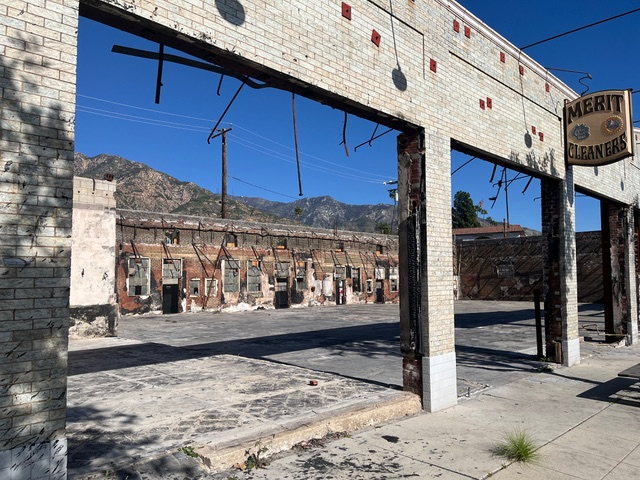
Then, in February 2025, in the City of Los Angeles, fire ravaged the Pacific Palisades neighborhood, overlooking the Pacific Ocean. More than 20,000 acres burned in the neighborhoods nestled in the canyons pressed up against the Santa Monica Mountains and a chain of state parks. Pacific Palisades lost 12 lives, and an astonishing 13,000 homes in the fires.
In the two communities, the rubble is cleared, earth-moving machines are grading lots, piles of shingles sit neatly stacked on newly built roofs, waiting to be pounded into place, and the staccato pop of nail guns fixing sheets of plywood into place, caroms from multiple directions. But it’s not nearly enough. A year after the two fires were completely vanquished, and the smoke cleared, nearly two thirds of the families who lived in Pacific Palisades and Altadena have not even begun to rebuild.
Homeowners Trying to Rebuild
I found Marvin Steinberg standing in the empty lot where his home of 40 years once sat. “Sometimes I stand here and cry, even after all this time,” Steinberg said. He and his wife were talking over their options with a contractor right near the base of the San Gabriels.
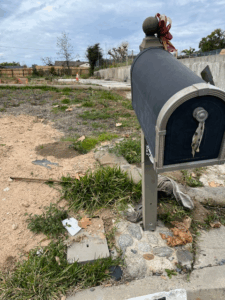
His insurance settlement requires that he build a rough equivalent to his old house, with some required changes. “Fire-resistant materials. Double-paned windows. Some of these things are actually good. We’re in a fire zone now. We weren’t before on this particular street. So we want double-paned windows, we didn’t have it before. We have to put sprinklers in. We didn’t have to before. A good thing, but it’s more expensive. But it’ll cost more.” The use of natural gas is now restricted for the rebuild, disappointing Steinberg. “So we may not be able to use gas for some things, like our heating units. All electric for cooking and we’ll be using heat pumps for water, but that requires electricity. It’s not as efficient as gas, not as cheap as gas.” The houses on Steinberg’s street are just about all gone. Most sit ready for the rebuild, often marked by a driveway to nowhere, or a mailbox standing in place as the only reminder a home once stood here.
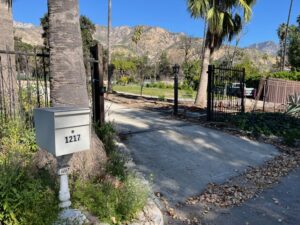
When a house burns down, a homeowner might haggle with insurance adjusters, consult an architect, hire a contractor, and get started. The whole process has little potential to roil markets for raw and built materials in the region or the whole country. When 15,000 houses burn, at a time when the federal government is also reshaping policies that may upend the marketplace for both labor and material, the challenges rise with the prices.
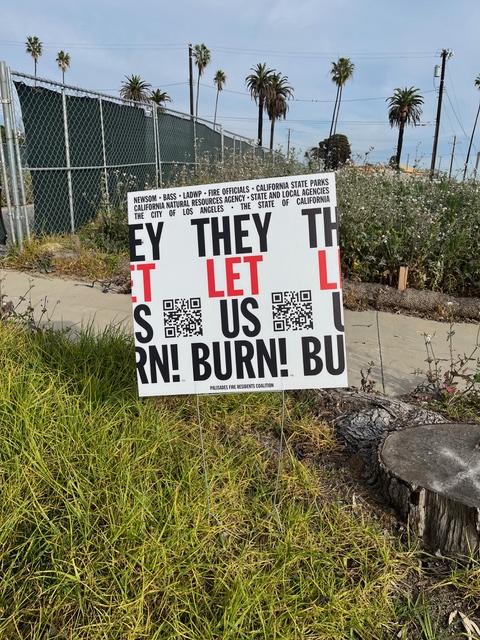
Ernest Payne talked to me after walking through the Steinbergs’ lot with Marvin’s wife, Carol. He has built houses in this part of the county for years. He said the scale, and demand, in every part of the chain of events ending in a family walking through the front door of a new home is without precedent. “We have seven jobs going right now, right in Altadena. We think we can max out at about 14.” If he could get bigger and take on more jobs, he would. “We can only do so much. Right now, there’s no talent. I can’t. I’d end up hiring the wrong guys.” He notes that even a year after the fire, only about 10% of the houses lost are in active reconstruction. “When we get up to 50%, I think there’ll be real problems.”
Payne uses the supply of windows as a handy barometer for the problems building in the Southern California market. He said the top supplier of high-end wood windows back East had a lead time of eight weeks a year ago. If he called in an order today? “Two and a half months. Once everybody’s rebuilding at once, I expect that will go up to 20 weeks,” Payne said, adding, “That’s only one product. Think about refrigerators or washers and dryers. Those are gonna become limited supply items, too. When we need 6,000 refrigerators in Altadena, that’s gonna be a problem. They don’t make them that fast.”
Facing Higher Building Costs
So far, Payne said, he is not seeing supply problems in building materials like concrete. He said delays would inevitably drive up prices, though he was not yet sure about the impact of the Trump administration’s tariff policies. The President targeted materials critical to the homebuilding industry in the U.S., like lumber, kitchen cabinets, and aluminum. The industry association, the National Association of Home Builders, said tariffs could add some $11,000 to the cost of a new home. The NAHB said tariffs only accentuated the rising costs of material, up more than a third just since 2020. The legal fate of the trade costs inject uncertainty into both cost and supply at a time when Los Angeles County must build many years’ worth of new houses in an unusually short time frame.
Along with softwood lumber and kitchen components, current tariffs target steel, marble, granite, gypsum, and copper. The federal levies fall especially heavily on exporters into the U.S. market, like Canada, Mexico, and China. Tariffs are not only imposed on raw materials, but on finished products like doors, door frames, windows, cabinets, and furniture. An estimate from the Brookings Institution said such tariffs could worsen the housing shortage by making new structures more expensive at every size and price point, and in the aggregate impose an extra $30 billion in costs for residential construction in 2026. While NAHB members are finding the price of energy rising and falling in response to events and seasonal demand, the price of materials continues to grow, if more slowly. The homebuilder’s group noted Canadian lumber’s added tariffs amounting to 45% as one cost-driving sore spot.
The National Association of Home Builders surveyed its members in late 2025, and report 60% of association members are seeing higher prices for construction materials. However, the industry group also reports that the prices of inputs for residential construction were showing slower rates of growth in early 2026. Cost pressure only makes an already challenging situation worse. In March, analysis from the Los Angeles Times found the largest concentration of high home price zip codes had shifted from the notoriously challenging Bay Area/Silicon Valley to the Los Angeles metro, which now has 7 of the 10 most expensive zip codes.
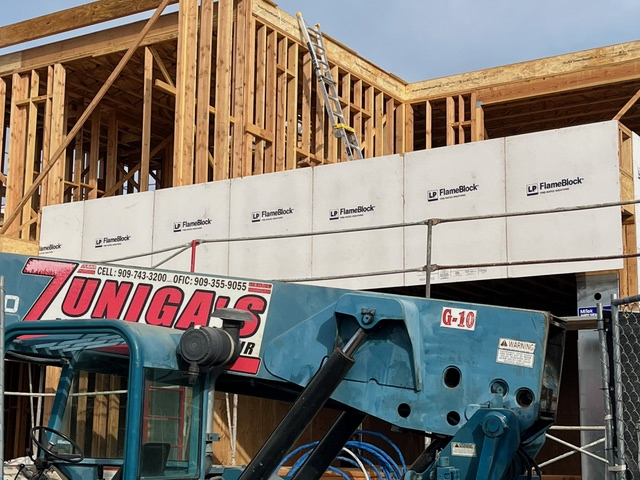
Contractor Marcus Stark has built homes in the area for decades. He told me rising costs have created an added incentive for high-tech innovation in crime. “When you drive around here, you can see materials left on the construction site, right? People are sending drones to see what’s on job sites, and stealing. Thousands of dollars’ worth of lumber can disappear overnight.” Stark pointed out streets nearby left with few inhabitants, and a lot of job sites. More expensive materials will create more temptation for theft, and require new ways of handling material on site.
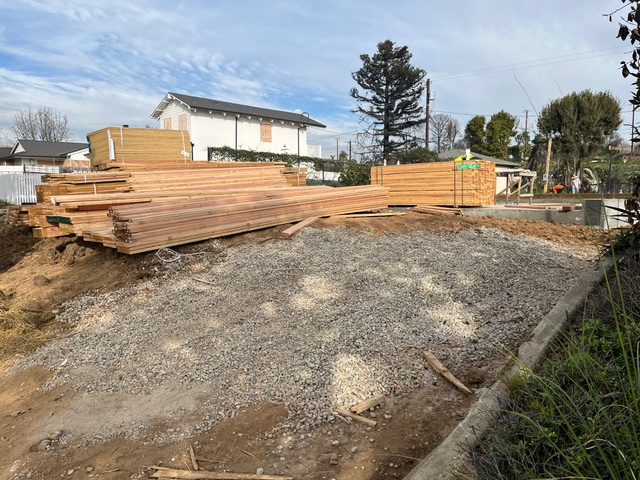
Payne credited the County with moving five times faster with approvals as it did before the fire. Right now, he said, the holdup is also coming from customers who were slow and methodical about choosing appliances and finishes for a bathroom remodel. Now they are faced with rebuilding a 4,000-square-foot home. Payne said concrete and lumber are currently in sufficient supply at a steady price, but he does worry about the costs that tariffs could impose on some building materials. Add supply chain uncertainty to unprecedented demand, cautious clients, governmental delays, and threats to a labor force which includes undocumented workers, and the price of rebuilding these two shattered communities will rise steadily.
Fighting to Be Made Whole
A completely destroyed house, and the empty lot that follows it are, at least, unambiguous. For all the heartache and loss, one thing is clear: You will need a new house. Angela Giacchetti’s house survived when almost all the houses burned down on her street, which ends at the foot of a mountain. Your first impression might be that she was much better off than her neighbors. But the Eaton Fire left Giacchetti in an insurance netherworld.
As her neighborhood, and the mountains at the end of the street burned for days, her house was marinated in thick smoke. Embers, ash, and dust from the burning environment settled in a thick blanket on her intact house. Falling debris, still alight, badly damaged her roof, which opened the interior to the elements.
Before the fire, she and her husband took the instructions about landscaping seriously, in the selection of plants, the maintenance of vegetation around the property, and keeping trees and shrubs a safe distance from the structure. After the Eaton fire, though damage stretched for blocks in every direction, Giacchetti’s house stood.
It’s a “good news/bad news” story. She found her troubles began with the first call to her insurer. The company “tried to get us to move back into the house without even sending an adjuster to look at it,” she said. “It smelled acrid, and it was clear there was something going on. So, we independently hired a certified industrial hygienist, and had him come and test the ash. He tested our soil, and that’s when we got the results back that our house was, contaminated. The ash contained lead. And at the levels that we had, it’s not safe for you to clean yourself.” Water poured through the damaged roof, bringing more dust and mold inside. The couple, parents to a toddler, hired a remediation company certified to remove lead from residential buildings, and her insurers refused to pay. She has been fighting with them ever since.
Helping Heal Their Community
In another part of Altadena, farther from the coveted mountainside lots, sits the emptied streets of much of West Altadena. The historic Black community was pushed to an unincorporated part of the county by redlining and exclusionary covenants elsewhere. In this century, freeways and changing residential and commuting patterns found Black homeowners sitting on more and more valuable property. After the fire, the challenge is holding on.
Pastor LaKeith Kenebrew and his wife and co-pastor, Jericka, were relieved when their church escaped the fire with reparable damage. But a few minutes away, the couple had lost a lifetime’s possessions. It was the house his wife had grown up in, “kind of a museum of life,” said Kenebrew. When it was finally safe to head to his block, “all I saw was my weight bench and the stove, sitting there in that yard. When we went around the corner to my mother-in-law’s house, and my father-in-law’s house. It was gone. We went to where my cousin, Robert, and his wife, Briana, lived. It was gone. We looked at our brother’s house, brother Nick, who stayed behind the church. It was gone. We went by Brother Barnett’s house. It was gone.”
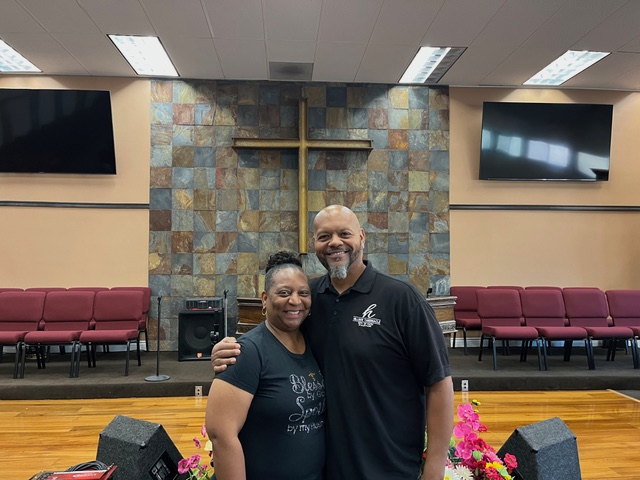
The pastor said the only thing that kept him from falling into depression was losing himself in a blur of activity. His congregation, his neighbors, and his friends and family had lost most of what they had. He and his wife’s Hillside Tabernacle City of Faith became a clearinghouse for donated food and clothing, and emergency aid and information from government and private voluntary agencies like WorldVision. “Even though I lost everything myself. In that moment, I had no other choice in my opinion than to do everything I possibly could do to heal my community.”
The pastor also saw it as an historic responsibility, created by the peculiar mix of economics and exclusion that pushed Black homebuyers to this corner of Los Angeles County. But he is also clear-eyed and hard-nosed about what he sees as the assignment today. Unless he can get Black Altadenans back into their homes, the opportunity will be lost permanently. Overwhelmed by loss, some will sell their unimproved, emptied lots. Others, he worries, might find the hurdles to difficult to navigate, and lose their land to tax sales and eminent domain. “If we lose our property, most of the people that are of color will not have an opportunity to get back in. Because we got in at a low rate. And it was passed down from one generation to another. Now, you need an annual salary of at least $200,000 coming into that household. In order not only to buy, but to maintain a property in Altadena, or Pasadena. So that’s the reason why it’s so important.” The median Black household income in Los Angeles County is under $60,000, compared with around $90,000 for the County overall. Kenebrew’s tone explains the defiant home signs about land grabs, and posters proclaiming Altadena “not for sale.”
“Because if we aren’t careful, this will be a property grab. An opportunity to get those that are marginalized, underrated, and oftentimes, devalued… out, and recreate this community and restructure our economic base.”
Factoring in Building Parameters and Pace
Elsewhere in West Altadena, just off a broad commercial street, several building sites are sprouting small one-family homes. A contractor who’ll only tell me his first name, Bruce, from Glow-Tek Contractors, said in this particular case, the job moved along with no hold-ups; soil prep, environmental checks, county sign-off on the new home’s design. The insurance company might require a homeowner to build essentially the same house, the new structure will not really be “the same,” Bruce said. “The California Green Code Initiatives change things, so you cannot build from the codes that were. You have to build to the current codes. And that costs more. And it requires, several people… engineering, chemical engineering, civil engineering, and architecture to make sure you meet the current standards, so people are safe. Can’t build what was.” And once your financing is acquired, your site is prepared, and your drawings are submitted, how long is the wait? Bruce, who has been rebuilding West Altadena homes as quickly as he can get approved, said three to five months.
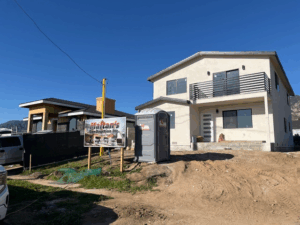
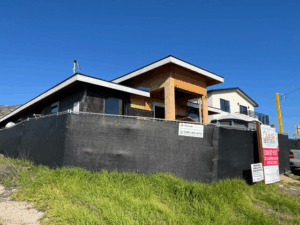
Because no one, Black or white, knew how long the process of being made whole might take, it became a struggle to decide what to do in the near term. Should you try to stay nearby in Pasadena, though rents are sky-high? Should you grab your settlement and just head to a different part of the county? Should you impose on family and friends, couch-surfing until the situation becomes clearer?
Renters’ Perspectives
Katie Clark of the Altadena Tenants Union, formed after the fire, complicated the recovery story even more by reminding me how heavily news media coverage of California’s catastrophic fires is geared toward owners, not tenants. Think of a reporter standing in charred ruins and talking to a building owner about rebuilding. “I think that’s also true of the recovery landscape, of the way that recovery dollars and resources and state and philanthropic assistance was. I mean it is very much as something that is geared towards homeowners.”
Clark, who had lived in Altadena for 16 years, grabbed her dog and her laptop and headed away from the fires out of caution, only to find she had lost everything. She recounts both ends of conversation repeated many times over the last year. “I’ve had people say this to my face. They’ll say, ‘Oh, it’s so terrible you lost your home. I’m so sorry.’ ‘Yeah, thank you very much, it’s been a difficult year.’ ‘Well, you’re going to rebuild? ‘Well, I don’t know what that’s going to look like because I’m a renter.’ ‘Oh, well that’s fine, you can live anywhere.’”
Clark said it was clear overwhelmed local governments were not thinking of her needs when “nobody from LA County said the word ‘renter’ or ‘tenant’ for months. It was just like we weren’t even a part of the community for months. Much of the work we’ve been doing over the past year has been to say, ‘Hey, guess what? There are somewhere between 10 and 15,000 of us. In fact, we are a quarter to a third of the community. And that baseline visibility has to happen before anything starts to transpire.” Clark said she is still fighting her insurers for the renters’ coverage she thinks she’s owed. At the same time, she is aware of the thousands who had no insurance, or were underinsured, and considers herself lucky in comparison. “There are people who are still, more than a year later, living in tents, living in cars, and on their 15th, 18th, 25th couch. They have no path back and that’s an absolute tragedy. It’s an abandonment by the government. By the state. By the county. As well as by philanthropy.”
Some Solace in Bright Spots
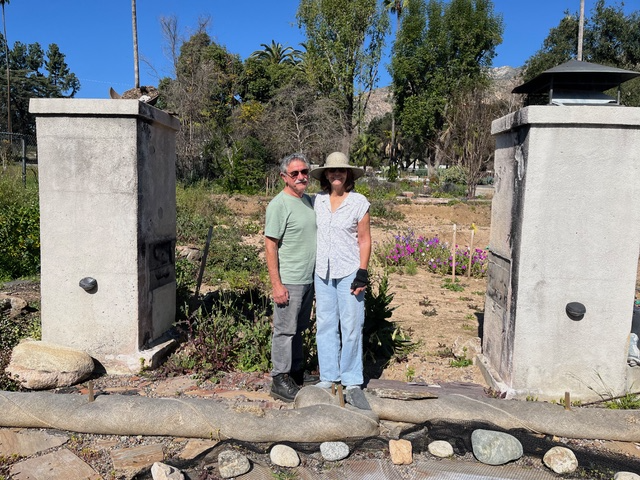
Back on their now-empty street, the Steinbergs found not everything had been destroyed. An archway that led into the garden still stands, now leading from nothing, to nothing. In their fishpond, miraculously, the ornamental carp not only survived, but bred even when the water was black with ash, and today the pond swarms with life. An orange tree burned to a stump is throwing out new branches, now covered in bright green leaves. As we stood over the fishpond, I reminded Steinberg of the Roman poet Horace, who wrote in the first century BCE, “You can drive out nature with a pitchfork, but she keeps coming back.”
“Maybe that’ll be a metaphor for this house,” he said. Steinberg has even begun stocking neighbors’ ponds with his new bounty, “So this is one bright spot for me.” And the tree? “My oldest kid is 42 years old. We planted it when she was born. It was a beautiful orange tree. Every year, we had wonderful oranges, and it burnt. There was nothing on it, but now, it’s got some growth, and I’m hoping I can maybe, bring it back. You know, these two things? Help me get through without crying.”


Ray Suarez is the author of the book We Are Home: Becoming American in the 21st Century.