
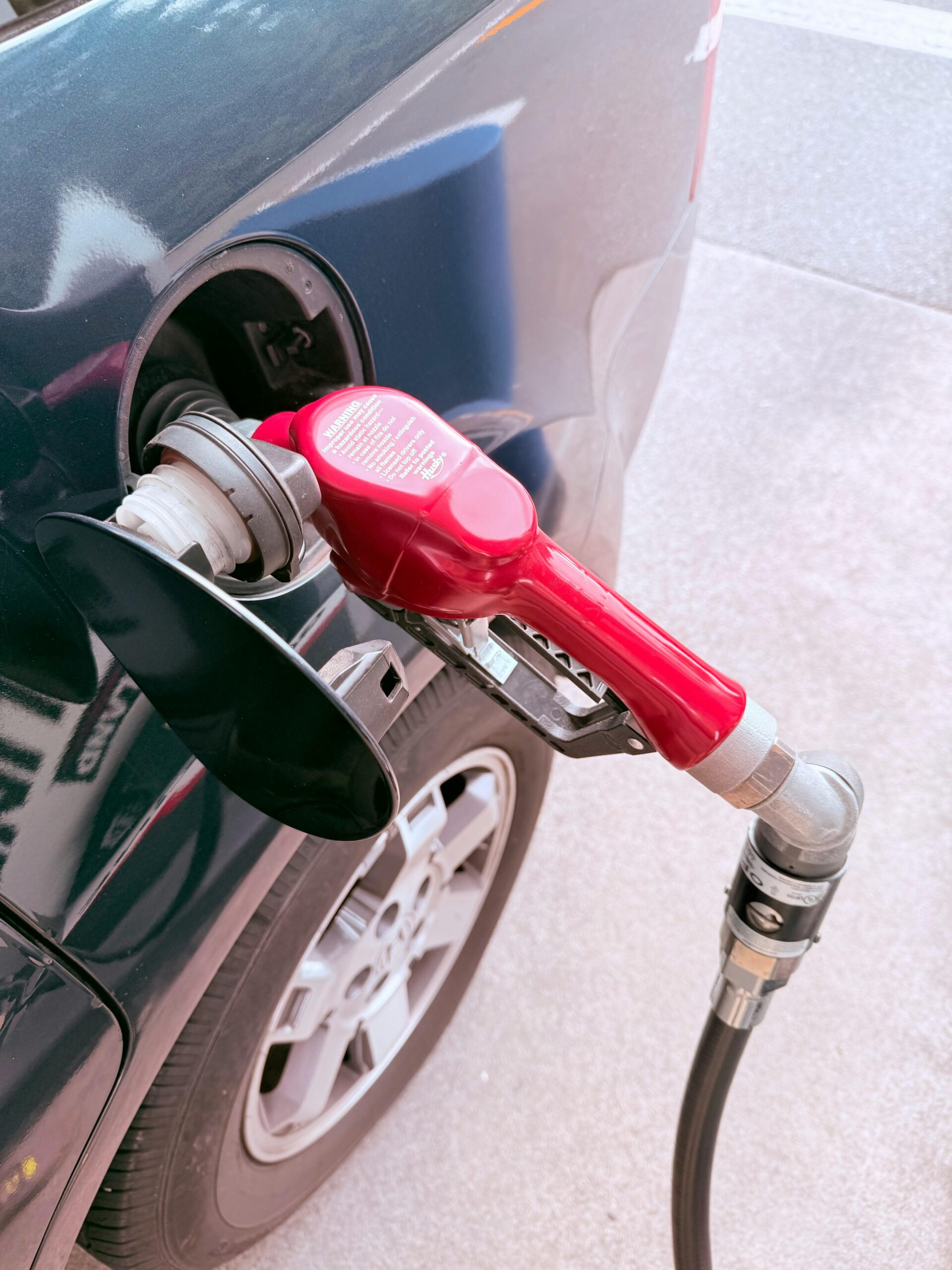
How High Gas Prices Are Affecting Everyday Americans Across Communities
As the conflict with Iran continues, skyrocketing gas prices in United States are the topic of conversation — and consternation — for Americans of all backgrounds and geographies. After prices jumped more than 30 cents last week, a Wall Street Journal headline blared: “Americans Spent $125 Million More on Gas Friday Than They Did a Week Ago.” And this is before the summer travel season starts in earnest.
To understand how escalating gas prices are hitting everyday Americans, the American Communities Project reached out to residents around the country and found they are coping by strategic planning and fill-ups with varying levels of anxiety, trying to balance their pocketbooks with what matters most to them.
The national average for a gallon of gas was $4.46 on May 4, according to AAA. (AAA updates average gas prices nationwide and by county daily around 3 a.m. ET.)
Florida’s Gulf Coast (Sarasota, Jefferson, Bay, Escambia, and Levy counties)
Kathleen Majorsky, a writer and entrepreneur in Sarasota, Florida, part of Graying America, started The Reading Rebel Substack newsletter in January and promised herself that she would take an independent bookstore tour of Florida’s Gulf Coast this year. Before the spike in fuel prices, she marked her calendar for late April to coincide with Independent Bookstore Day, a nationwide event since 2015. “I knew going in that gas was going to be tricky while on the road, but I didn’t want that to stress me out. My love of a road trip means more to me than not going because of higher gas prices.”
Majorsky drives a 2022 Toyota Corolla, which takes about 10 gallons of unleaded regular gas for a full tank. “This trip I only used my debit card. I have noticed at gas stations that if you pay cash, it is slightly less than if you pay with credit or debit.”
Over five days, she traveled from Sarasota to Monticello to Panama City to Pensacola to Chiefland and back home, spending a total of $139. “I think the biggest behavior change I noticed for myself on this trip was stopping to get gas at about half a tank. I paid attention to general prices as I drove, and when I saw prices that were significantly less than $4, I stopped whether or not I needed it since it was at a half tank,” she said, adding that she noticed gas prices were cheaper along Florida’s panhandle and on back roads compared with gas stations that were off highways like 10 or 75.
Majorsky’s return home coincided with even higher gas prices — it’s been an ongoing source of anxiety and commentary in her Sarasota community. “I was surprised by how high prices jumped. Closer to $4.50. The volatility and unpredictability of how gas prices are determined is stressful,” she said.
Majorsky keeps a budget of $20 a week for gas regardless of prices. “Sometimes that’s enough to get me through the week,” she said. “When I don’t have a trip planned, that’s fine since the main place I go is my part-time job at Whole Foods, which is about 25 minutes from where I live.”
Cook County, Illinois (Big City)
Paula Benzo, a project manager living in the Chicago suburbs, notes how her immigrant background shapes her views of the current gas crisis in the U.S. “I’m from the Dominican Republic, where gas prices have always been higher than in the USA, but for the past 8 to 10 years, I’ve been living in Chicago, and other than the 2021 gas crisis, I don’t remember gas being an issue here in the States.”
Her strong sense of responsibility guides her behavior. “I’m incredibly strategic about my commute to ensure I’m using as little gas as possible. I work from home and commute to the office two times a week, and even though I can’t control rush hour traffic, I am trying to leave the house in the mornings before 7 a.m., because even if it’s just a couple of minutes, that makes a huge difference. However, in the afternoon, it’s different. You either leave by 3 p.m. to avoid the evening rush hour or wait it out. It all depends, but afternoon traffic, I feel, is worse than mornings, maybe because everyone is tired.”
Benzo draws on her avid planning skills here, too. “I strategically plan my errands using a ‘reverse route’ method: I drive to the furthest point first and work my way back toward home. This ensures that by the time I’m finished, my final commute is only a few minutes away.”
But she is not rethinking major financial decisions, even as she maintains her values. “Ultimately, gas prices and the global political climate are out of my hands. Since they’ll affect me either way, I focus on staying proactive by managing my expenses as efficiently as possible.”
In Benzo’s community, higher prices generate constant conversation, she said. “I typically refuel at Costco or my local BP, and usually, the crew and other clients are always very chatty and helpful. We are in the Midwest, so whenever I’m getting gas, I say hello and chitchat about gas prices or whatever is happening around the world. Lately, and probably for the last year, the complaint has been food prices, how expensive everything is, and tariffs! People just don’t stop talking about them! But now, we are adding a new subject, gas, and how the higher the gas price, the higher everything is going to be. Some senior citizens at Costco kind of make a joke and say they’ve been through worse. Maybe they are talking about the ’70s Oil Crisis?”
Polk County, Iowa (Urban Suburb)
Gaylene Narcisse, a retired IT professional in Des Moines, part of Polk County, Iowa (Urban Suburb), is feeling the spikes acutely and making tradeoffs. “My car uses 93 octane gas and is now over $5 per gallon. I try to keep my tank half full. Filling my tank once a week, I see the cost of filling my half tank is now what I would have paid to fill my full tank, also making this the highest that it has ever been and continues to get higher.”
The costs are affecting Narcisse’s ability to manage her monthly budget and budget increases. She has been limiting her involvement in activities that are farther away due to higher transportation costs and is unable to give as much money to charities that she wants to support.
For Narcisse, the long-term trend is worrisome. “If cost of daily living costs continues to rise at this current rate, it will impact giving to church, gifts to family members, food budget, and more.”
Morton County, North Dakota (Exurb)
Morton County Engineer John Saiki of Morton County, North Dakota (Exurb), said he’s now feeling the effects of higher gas prices. “I recently purchased a new-to-me car, with a larger gas tank than my old car. I definitely notice a difference when I fill up.”
In 2020, Saiki got a part-time job at Target, primarily to occupy his spare time, and in the past couple of months he’s changed his behavior to accommodate the increase at the pump. “I find that I make purchases, like groceries, after my shift ends so I don’t have to go out again. I have been doing more trip planning and trip consolidation than before.”
Saiki has noticed the number of shoppers at the Target is down as well. However, he does not know if that’s because of increased fuel costs or because the store is undertaking its first major remodel in almost 20 years, and the locations of items seem to change every day.
Saiki’s community on the fringe of downtown Bismarck seems to have slowed down. “When I do venture out either driving or walking, there seems to be fewer vehicles out in the evening. The downtown area seems to be more quiet than I remember in past years…. There was a lot of talk as we saw a $1 per gallon increase over 19 days.”
Bernalillo County, New Mexico (Big City)
In Bernalillo County, New Mexico, Sarah Murphy is an operations coordinator for an executive search firm based in northern California. While she’s generally aware of the higher gas prices, they haven’t been a major concern for her personally. “Since I work from home, and drive fewer than 100 miles each month, I’m usually only filling up once a month or so. So while my monthly costs have certainly increased (by $6 to $10 a month) in the past couple of months, it hasn’t been a major source of stress at all,” says Murphy, who drives a 2017 Mazda3, which uses regular unleaded fuel.
Murphy hasn’t changed her daily behaviors significantly. “When I have gone to the gas station to fill up, I might choose to go to a gas station with reward points (i.e. my grocery store chain where I get a few cents off each month).”
Looking ahead causes more anxiety. “My bigger concern has actually been the impact on summer travel when it comes to rising airfare (due to rising fuel there too). Anticipating the increasing cost of flying has made me nervous about the impact that’ll have on a few upcoming flight-related trips. While I know prices are unlikely to drop, it’s making me hesitate and second guess whether I should cancel those trips due to the cost of flying, and then potentially the cost of fuel if I end up renting a car during my vacations.”
As summer travel weighs on her mind, she’s continued to track airfare closely these past couple of weeks. “I definitely plan to use rewards perks from my travel card benefits to offset the rising cost of airline tickets/jet fuel.”
Murphy has also noted the difference in gas prices in urban and rural areas near her. “As I was traveling in rural New Mexico this past weekend, I was really surprised to see that the only gas station in a 20- to 30-mile radius had prices for unleaded up to $4.26 a gallon, which felt shocking since I can still find prices less than $4 in ABQ [Albuquerque]!”
Relatedly, higher food prices are greatly impacting people’s behaviors in Murphy’s community, she said. “We’ve had a number of local restaurants (and a well-known local coffee roastery) post notices on their doors and menus about increasing food costs that they’re having to pass on to customers,” she said. “A few restaurants have even closed in the last few months due to increasing costs, and I’ve heard anecdotally that people (including me) have been more reluctant to eat out as often due to how expensive it is.”
Los Angeles County, California (Big City)
Jenna Modica is an executive assistant for a production company in Mid-Wilshire in Los Angeles, California. “California has been known to have higher gas prices, but now, it has gotten out of hand! There was an area in LA where it was $10 a gallon… yes, $10! I’ve felt so much more stressed, especially after getting a new car after an accident. My area in LA is now about $5.60 per gallon, which makes me rethink where I go now.”
Modica drives a Ford Bronco Sport — not the most gas-friendly car, she admitted. She has been relying on GasBuddy to guide her to the cheapest spots to fill her tank.
Modica said she’s had to change her behavior around driving to deal with the steep increases. “I always loved to drive and would offer my car for every outing without asking for gas money. For the first time in my life, I now ask friends to take turns driving. Depending on how far we go, I have to ask for gas money, as it’s just too much to afford solo.”
The spike in gas prices has also pushed her to change her overall budgeting. “I used to fill my tank for $50, and now it fills at about $95. I’ve had to save money elsewhere just to afford a full tank. Only once, was I able to fully fill up since my car lasts about a week. The extra $50 I used to have before the rise in gas would go toward groceries or treating myself out. Now, I barely try new places as gas is too much!”
High gas prices have affected how residents think and behave in her community; she’s found some camaraderie around these common hardships. “Economic Grocery Outlet Bargain is a popular discount grocery store chain. A store just opened three minutes away from me! They were giving out $5 coupons! While in line, people kept telling me how every dollar counts, as gas is so high for us. Here in Hollywood, gas is $6.70, which makes the $5.60 sound pretty good!” Modica exclaimed.