

What’s Driving Affordability Concerns in Las Vegas

LAS VEGAS, NEVADA – On a blistering July day, Brittany Dobbs and her 12-year-old daughter, Aaliyah, waited by the iconic “Welcome to Fabulous Las Vegas” sign for photos.
It wasn’t their first visit. Dobbs, 33, estimated it was her fifth trip here and second with her daughter. They live in Bellingham, Washington. The attractions in and around Las Vegas, Dobbs said, keep her coming back, but cost concerns have altered her vacation calculations.
“I use AirBNB now,” she said, describing why she no longer stays on the Las Vegas Strip. “It’s not affordable with hotels.”
Her comment hints at a debate swirling on and off the famed resort corridor. Has Las Vegas — once a bastion of affordability known for cheap hotel rooms, big-bang-for-your-buck buffets, and modestly priced houses — shed that part of its identity? Or were higher costs an inevitability as legal gambling expanded, and the city morphed into a major metropolitan area?
Indeed, Las Vegas is part of Clark County, one of 48 Big City counties in the American Communities Project. When the ACP and Ipsos surveyed some 5,000 Americans in 2023, 2024, and 2025, respondents in Big Cities consistently rated inflation or increasing costs as the No. 1 issue of concern in the country and in their community. (This was also the No. 1 concern overall and in each of the ACP’s 14 other county types.)
What’s Behind Concerns in Las Vegas
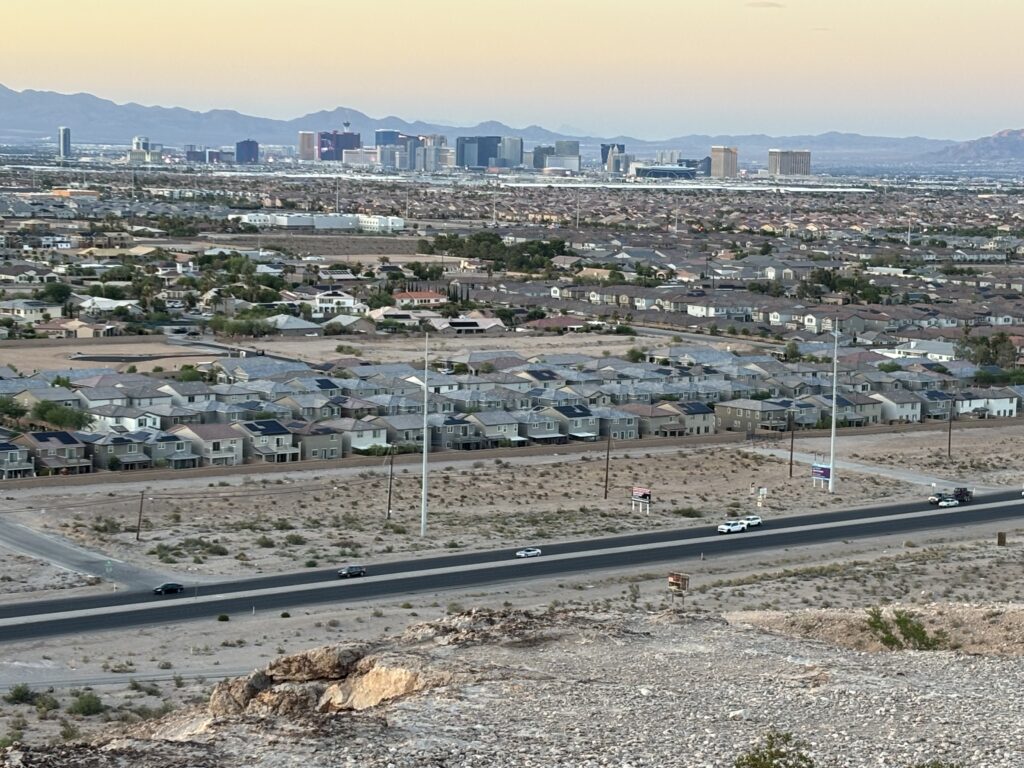
Sagging tourism numbers over the last year and a half have triggered some of the affordability concerns in Las Vegas. Beginning in January 2025, visitor volume fell for 13 straight months, according to data from the Las Vegas Convention and Visitors Authority. Visitation increased in February (1.6%) and March (1.9%) before falling again in April (-1.8%). The pendulum swung back more favorably in May with a 2% increase in tourists.
In May, the average daily room rate, including the Strip and downtown Las Vegas, hit $210.63, a 6.3% increase over the prior year and a nearly 50% increase compared with May 2019.
Viral stories bemoaning double-digit price tags for water bottles in hotel rooms, for instance, have added to the perception that tourists better arrive with deep pockets.
Michael Green, a UNLV professor who teaches history courses about Nevada and Las Vegas, tends to think affordability concerns are overblown. But he cautions the tourism industry from “luxuriating itself out of prosperity.”
“You certainly can find people with a lot more money willing to come here and spend it, but are there enough of them?” he said.
Green attributes higher costs to a variety of factors, including more corporate ownership of gaming properties, fewer visitors gambling and the expansion of legalized betting across the United States. As of early last year, 42 states allowed some form of casino gaming, either through commercial or tribal properties, according to the American Gaming Association.
Las Vegas, in turn, has reinvented itself over the last decade as a diversified entertainment destination, luring visitors through professional sports, concerts, and other attractions. The $2.3 billion Sphere recently hosted country music star Kenny Chesney, which is what drew Don Taylor, 63, from Charlotte, North Carolina. He stayed in an off-Strip hotel and allotted roughly $20 a day for gambling.
“You’re going to lose it,” he said.
The grumblings about affordability, however, have echoed outside the Las Vegas Strip.
Nevada’s average gas price — $4.81 per gallon as of July 29 — is hovering about 15% higher than the national average, according to AAA.
Escalating Housing Values
Housing costs have soared, too. The National Association of Realtors reported a median sales price of $446,400 for a single-family home in June. By that same metric, the cost was $490,000 in Southern Nevada, according to Las Vegas Realtors.
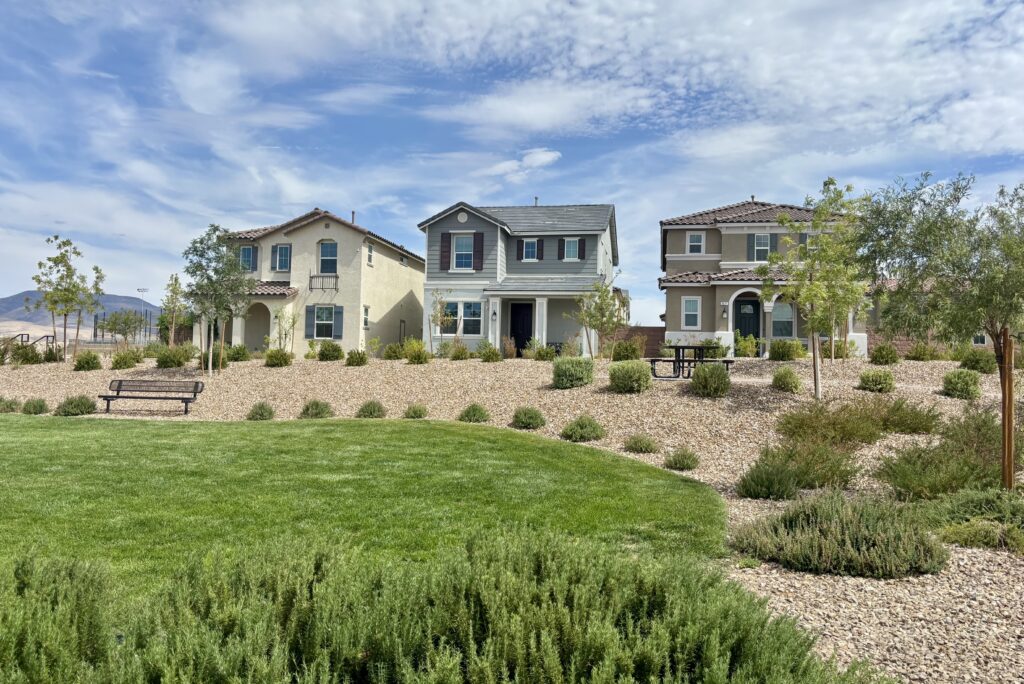
House prices surged following the pandemic as demand grew and inventory tightened. Clark County, which includes Las Vegas, had a population of roughly 2.4 million people in 2025, up 6.2% from five years earlier, per the Census Bureau. The county’s homeownership rate was 57.8% in 2025.
The federal government manages about 88% of the county’s land, making it more difficult for homebuilders to purchase parcels and construct new houses, said Nicholas Irwin, research director at UNLV’s Lied Center for Real Estate. That puts upward pressure on prices, which can push home ownership out of reach for many in a metro area where the median household income is $76,472.
“It’s particularly acute for us because we are still an hourly wage-driven community,” Irwin said. “The majority of people are working shift work, and it’s not the kind of white-collar work in a place like Los Angeles.”
That’s why President Donald Trump has touted a provision within the One Big Beautiful Bill Act that gives tax breaks for tips and overtime. He made a swing through Las Vegas, a hospitality mecca filled with tip-earning workers, in April and framed the tax policy as a way to ease cost-of-living hardships. Tipped workers saw an average tax deduction of more than $7,000 this year, according to his administration, while people who logged overtime received an average deduction exceeding $3,100.
It’s too soon to say whether the law will move the needle on housing affordability, Irwin said, but officials are keeping an eye on it.
Affordability, of course, often lies in the eyes of the beholder. Nevada has relatively low property taxes and no state income tax. California buyers who sell their pricier Golden State properties can scoop up Las Vegas-area homes, sometimes with cash offers. (Last year, nearly a quarter of views for Las Vegas home listings on Realtor.com originated from Los Angeles.)
Ashley Sanchez, a communications professional, and her husband, a teacher, were among the local residents able to break into the Las Vegas housing market. They lived with family while saving for a downpayment. With the help of an assistance program for teachers, the couple recently purchased a $405,000 house with three bedrooms and a pool — perfect for their growing family. Sanchez is pregnant with their first child.
Sanchez said she considers herself lucky given the rising costs. The home she and her husband bought is more than triple the cost of the Las Vegas house her parents purchased in the 1990s.
“Prices of houses go up. Prices of Disneyland tickets go up,” she said, explaining how she came to terms with higher prices. “It’s just the world we live in today.”

 Jackie Valley is a freelance writer based in the Las Vegas area. She previously worked for The Christian Science Monitor, The Nevada Independent, and the Las Vegas Sun.