
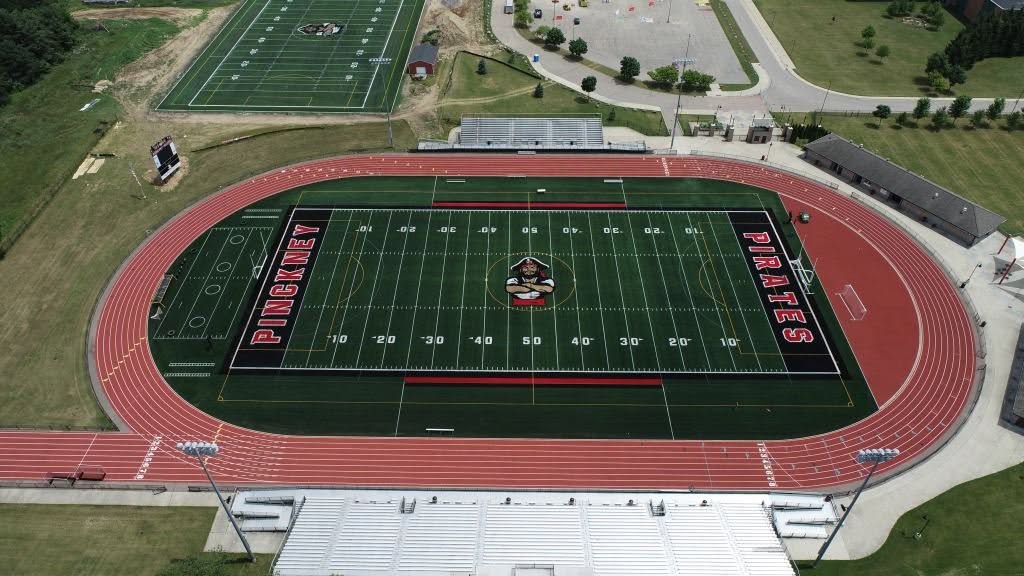
A 20-Year High School Reunion Shows a Michigan Exurb’s Evolution
The American Communities Project visited Pinckney in Livingston County, Michigan, last summer to take a deeper look at the complex dynamics that shape one of the fastest-growing community types in the nation: Exurbs.
When the Pinckney Community High School Class of 2005 celebrated its 20-year reunion, we set out to produce a documentary that explores change through the eyes of three alumni who came back to visit their rural hometown two decades after they graduated high school.
In a way, their reunion served as the perfect point in time to check in on the progress of a small town that is tucked away in the surrounding farmland right between the urban centers of Lansing and Detroit.
Mirroring the larger trend of the county, Pinckney was growing rapidly when the Class of 2005 attended high school, and for a while, it almost looked like the village would develop into a different, more densely populated type of place.
From the ACP perspective, that wouldn’t have been out of the ordinary. With nearby cities like Brighton and Howell also adding residents, Livingston County grew by 15.3% in the 2000-2010 decade — evolving rapidly like other Exurbs across the nation.
After all, the space between suburban and rural America tends to attract residents naturally; located just far enough from major metropolitan areas, Exurbs are often a destination for young families looking for more space and a calmer, more affordable life outside the city.
It’s a trend that continues to change the look and feel of many communities across the nation, turning rural areas into more developed, almost suburban-like places that feature new shops, restaurants, and other amenities.
That’s because the influx of people often puts a strain on local infrastructure, which drives demand for new developments, with newer residents — who are used to the amenities of a city — now weighing in on those conversations.
And all of a sudden, farmland makes room for subdivisions, dirt roads turn into paved ones, and mom-and-pop businesses are replaced by franchises. Plus, new school buildings are developed to meet the demand of a growing school system.
But while some residents welcome that change, others oppose it — often older residents whose families have been in the area for generations or newer residents who moved to the Exurb for the very purpose of getting away from the hustle and bustle of city life.
That’s the story of Pinckney — a place where rapid growth was met with a sentiment of resistance that allowed NIMBYism (Not-In-My-Back-Yard-ism) to play a huge role in the evolution of the village.
Two decades after the Class of 2005 left, this documentary dives into the dynamics of a place that wanted to preserve its rural character; that opposed its fate and evolved differently than people may have expected 20 years ago.
Beyond that, it’s a story that explores how people and places change over time.
In the 20 years after they graduated, three Pinckney alumni pursued their paths to find the places they now call home. As they come back for their high school reunion, they realize that not only have they changed, but their hometown has moved on, too.
 Sonja Krohn is a journalist based in Michigan. She recently graduated with her M.A. in Journalism from Michigan State University, where she worked with the American Communities Project to produce this documentary.