
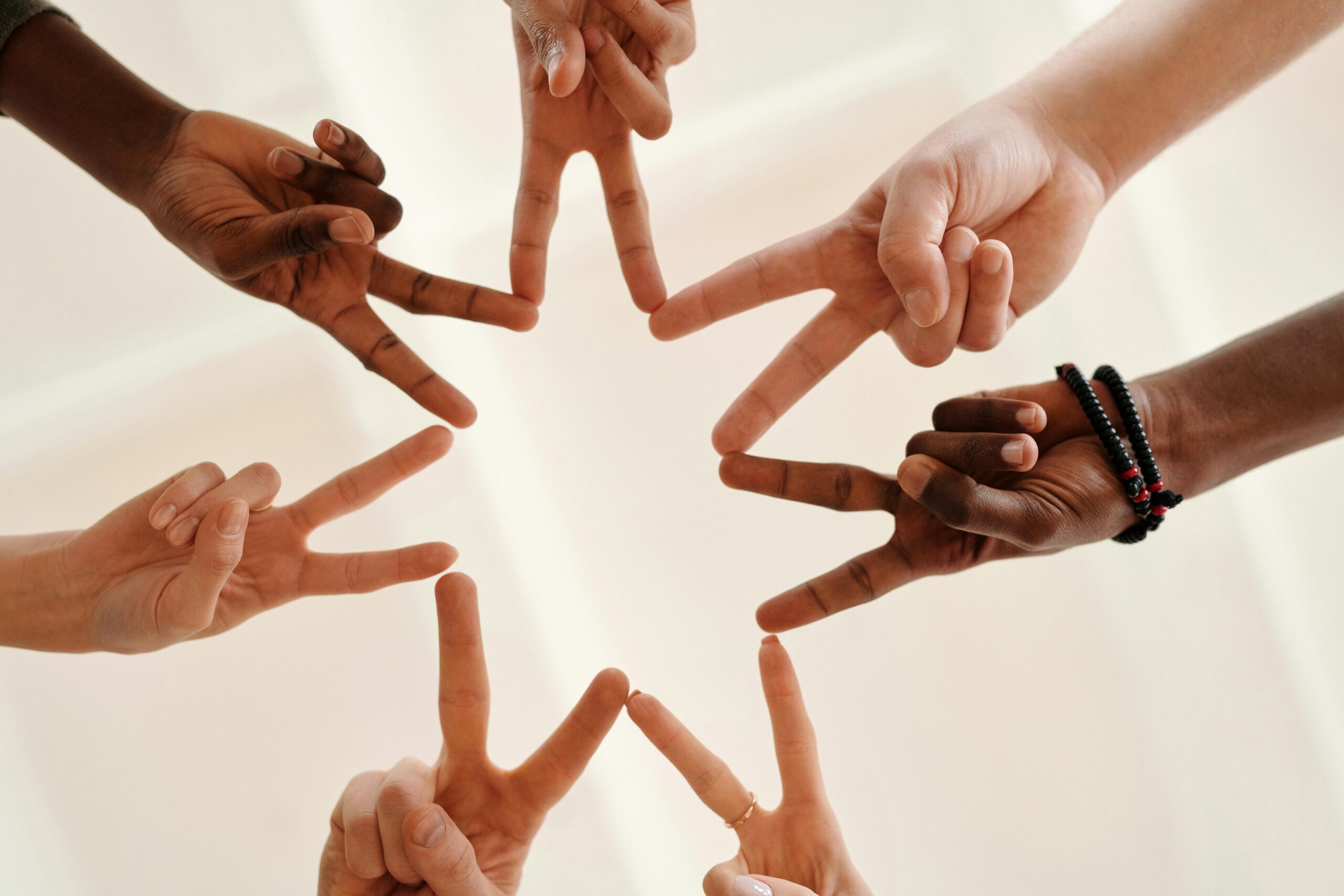
Diverse, Yet Homogenous: Self-Sorting in Today’s America
In 2026, the United States is a study in contradictions.
In many ways, the nation’s population has never been more diverse or fragmented — in race and ethnicity, in faiths represented, and in languages spoken. Politically, it is deeply divided. And economically, the disparities between rich and poor, measured by tools like the Gini Index, are at or near all-time highs.
Yet, data from the American Communities Project finds that people say their friends and neighbors are quite similar to them. On important measures at the local level — politics, economic status, religious practices, and educational attainment — people don’t seem to feel divided at all. Rather, they seem to feel at home among kindred spirits.
That dichotomy — national diversity and local homogeneity — may be at the center of the deep divisions in the country and a big reason why they will likely be difficult to overcome.
A Nation of Different Tribes
This understanding of the nation is central to the American Communities Project’s work.
The United States is vast — 340 million people spread across 3.5 million square miles of land. (That’s the diversity.) But depending on where you stand at any particular moment, the country can look and feel very different. And within those different places, there tends to be more common backgrounds and commonly held beliefs. (That’s the homogeneity.) You can see it across a variety of measures.
In 2025, the ACP asked more than 5,000 people in its 15 community types whether they thought they were “mostly similar” or “mostly different” from the people in their community on a range of issues. “Mostly similar” beat “mostly different” on every measure, and in nearly all communities, “mostly different” didn’t even come close to 40% on any issue.
Consider the attitudes on faith and religion.
The highest “mostly different” number is 36%, and it comes from respondents in the LDS Enclaves. That makes sense. Those are communities where the LDS footprint is prominent across the board, in terms of politics and culture. The non-LDS populations in those communities often feel left out in some way.
But nationally the “mostly different” number is only 29%. Even in the Evangelical Hubs, where faith and religion play big roles in community life, the “mostly different” number is only 24%. That suggests the overwhelming majority of people in those communities feel a part of the larger religious milieu.
Even in the Big Cities, a community type where the religious landscape is decidedly more complicated, less than 30% of those surveyed said they feel their religious views are “mostly different” from their community. That is, their views on religion and faith in public and in their private lives, whatever they are, are largely in line with their friends and neighbors even if their beliefs are different.
Economic Status
Economic inequality, i.e., who is winning and who is losing financially, has been a driver of national political divisions and tensions. Yet, again, when you look at the ACP’s 2025 survey data on the issue, people don’t appear to see a lot of economic disparities around them. Most people believe their friends and neighbors are essentially in the same boat economically.
Nationally, 59% of people believe their economic status is “mostly similar” to those in their community, while only 23% believe their economic status is “mostly different.”
The data here are pretty “flat” (i.e., there are not great variances in those “mostly different” numbers). Most are between 17% and 27% on that score. Only two communities produce “mostly different” numbers of 30% or higher. These two communities, the African American South and Native American Lands, tend to be deeply divided along racial lines, and those racial differences likely play a large role in these figures.
For the most part, however, these numbers show a lot of homogeneity. In 14 of the 15 types, the “mostly different” number is less than one third of those surveyed.
To be clear, such beliefs about economic status are not because these community types exist in similar economic situations. The median household incomes of the 15 types range from a little more than $42,000 in the African American South to more than twice that amount, $87,000, in the Urban Suburbs.
The “mostly similar” feelings about economic status are about feelings within each community type. Whatever economic challenges the country is facing, respondents seem to feel that their friends and neighbors are largely experiencing the same economy.
Politics
Of course, there is a tendency to say politics is different, the great American friction point. Election after election shows we are largely a 50/50 nation.
But the 2025 survey data suggest that in this area also, the local commonalities largely hold. Even in a divided country, only 30% of those surveyed nationally said their thoughts about politics were “mostly different” than those in their community.
At the community level, people in most of the 15 types were far more likely to say their thoughts about politics were “mostly similar” to those in their community than “mostly different.”
Granted, the numbers on this chart are closer than they were on the other charts — especially in the African American South and Military Posts, both community types that tend to be fairly rural with larger minority populations.
But considering the deep political divides in America, these numbers are somewhat remarkable. The “mostly different” number only hits 40% in one community type, the Native American Lands, where the figure is 41% — and even there the “mostly similar” number is 52%
That suggests that even if the nation is 50/50 politically right now, at the community level that is generally not the case. The nation’s “purple” political scene (evenly divided between red and blue) is purple because some areas are a deep hue of navy while others are a brilliant crimson.
A Complicated Challenge
That political split reveals the depth of the challenge the country faces as it tries to get through what has become a very rocky period. In fact, all the splits here do.
Viewed through a national lens, the United States is a picture of diversity and deep divides, but at the community level, the United States looks more like a nation of like-minded tribes living in different geographies and in different realities.
Real-world self-sorting, news media choices, and online algorithms only reinforce those community differences.
That means any solutions for getting through the nation’s tense time and seemingly intractable problems are probably less about breaking down walls between people than they are about building bridges between different kinds of places and appreciating them differently. People need to understand the way people in different kinds of communities live and the drivers behind their thoughts and beliefs.
The people in the diverse, cosmopolitan, and deeply blue Big Cities may not like life in the rural, faith-driven, and red Evangelical Hubs, but they probably need to understand it better. The reverse is true as well.
Getting people to do that will be no easy task, but it may ultimately be crucial to pulling the nation out of its deeply divisive state.