How One African American South County Is Facing Crime and Gun Violence
African American South
Clustered in a belt running from Virginia down through Texas, the African American South is home to a relatively small population of 13 million people in 272 counties, just about 4% of the nation’s population. Yet residents in these small, mostly rural counties rated crime or gun violence as one of the top two issues facing their local community for the past three years, according to the American Communities Project/Ipsos survey series taken in the summers of 2023, 2024, and 2025. It was the only community type to do so.
- In 2025, 35% of residents in the African American South said crime or gun violence was a top local issue of concern, placing it No. 2 behind inflation. (Overall, 14% of survey respondents said crime or gun violence was a top local issue in their community.)
- Similarly, in 2024, 36% said crime or gun violence was a top local issue of concern, again No. 2 after inflation. (Overall, 14% of respondents said crime or gun violence was a top local issue in their community.)
- In 2023, 43% said crime or gun violence was a top local issue of concern, tied with inflation for No. 1. (Overall, 21% of survey respondents said crime or gun violence was a top local issue in their community.)
This data puzzle begged further investigation, so to understand what’s underlying these public attitudes, the ACP traveled to Orangeburg County, South Carolina — the Palmetto State’s second largest by land mass, covering 1,100 square miles of old rail towns, farms, and pockets of new development that’s situated about 45 miles east of the state capital, Columbia, and 75 miles west of Charleston along the coastline.
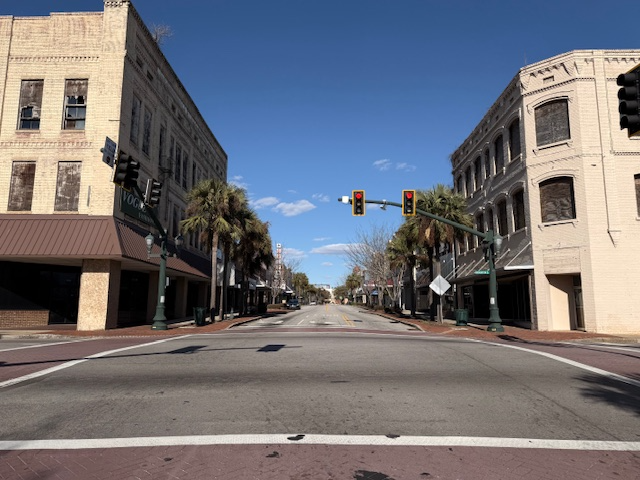
In many ways, Orangeburg is typical of the African American South, a rural, low-income, heterogeneous, and deeply rooted community wrestling with a modern scourge of crime and gun violence. In late winter, one gas station along the county’s main drag was preparing to install new bulletproof glass. High-profile shootings of youth in recent months have rocked the Orangeburg community.
- In January, there was a shooting at a home involving a dispute over ramen noodles that left a man and an infant boy dead and the infant’s 19-year-old mother injured.
- South Carolina State University has had three shooting incidents since October 2025, the most recent in mid-February that left two men, ages 18 and 19, dead and made national news. Neither was a student at South Carolina State, one of two HBCUs that sit side by side in the county.
- Two previous shootings happened on homecoming weekend in October. A 19-year-old woman died in one. A man was injured in a second unrelated shooting. The victims were not students at the university.
This wave of violence is different than in the past — and tends to involve at-risk young people, according to leaders and residents of Orangeburg County. It does not appear driven by racial tensions but personal grievances and social challenges of youth in the post-pandemic era. In addition to families’ relentless socioeconomic hardships and the desensitizing online cruelty, guns are plentiful in the community and used to commit armed robberies and homicides. In many cases, the perpetrators and victims know one another.
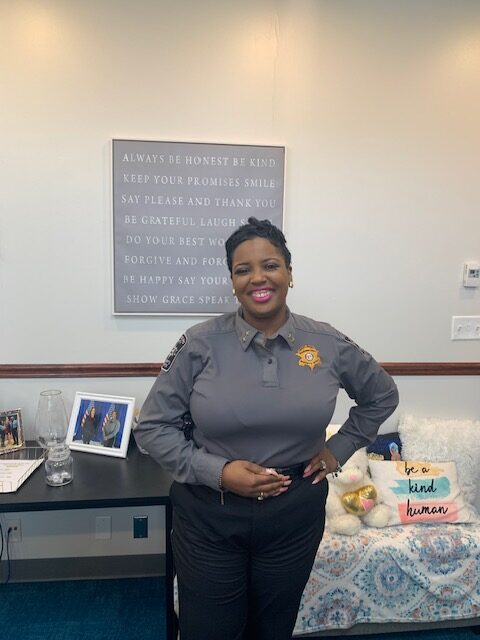
“When I started twentysomething years ago,” said Sheriff’s Chief Deputy Chandra McPhearson Gibbs, “it was very rare that you had a 16-,17-, 18-year-old that was committing those major violent crimes. That was a shocker, for lack of better words. And now it’s almost flipped; if they’re in their mid-30s, their mid-40s, it’s like they’ve graduated out. So, it’s more of a common occurrence, unfortunately, that they’re in that range from 16 to about 26 that are committing these violent crimes.”
For young females, regardless of race, Gibbs added, “We’re seeing it being tied back to some type of relationship that’s happened. Somebody took somebody’s guy or somebody’s girl. And their violence is a little different. It may not be gun violence. It can go into stabbings; it can go into stalking.”
Many incidents can result from long-simmering familiar tensions. “Sometimes, depending on the area, it may be something that’s long-standing that, literally, I’ve nicknamed the Hatfields and McCoys… so it’s been generational that this side of town doesn’t like this side of town,” Gibbs said.
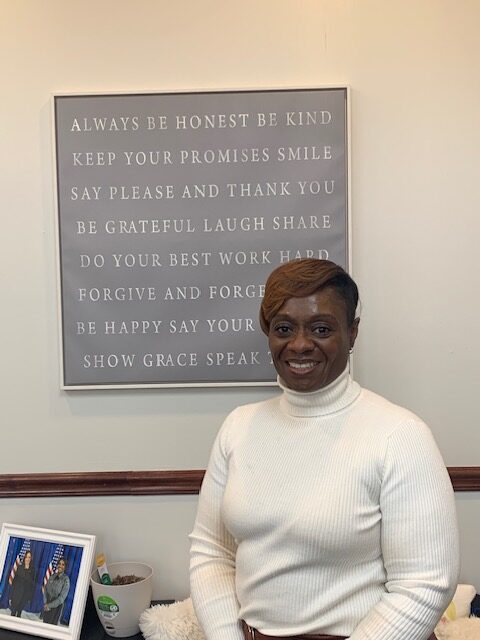
Also joining our conversation was Dr. Lakeisa Tucker, dean of the College of Graduate and Professional Studies at South Carolina State University, who’s held roles in human services, including child advocacy, education, and social work. She noted the display of repping, that is, protecting an individual or group reputation. “I’m repping, repping my community, repping my squad, my game… I think the patterns in which Chief Gibbs pointed out, is the age group in which these activities are taking place are between 16 and above, in reference to crimes and repping their community… With the gun violence, it wasn’t like against anyone else. It’s me protecting or being territorial of a person that’s a part of my squad or my community.”
In the aftermath of such crimes, basic physical and emotional needs for all involved become complicated, Gibbs added. “Where do I put a 16-year-old shooter? This is not one where I can sign them out for parental consent to go back home? On the victim’s services side of my hat… is a shooter who is a baby. And they’re sitting in the back of this car screaming for their mom, but you just took the life of [someone]… then you’re also now bringing in a school system, because these are kids that are now having to process death at this magnitude and then process the emotions of anger that come with it, that you took my friend.”
While community engagement on the issue is strong, so are the headwinds. In the past year, Orangeburg lost federal funding for programs that help meet citizens’ financial and social needs, according to Harold Young, the county administrator. Moreover, South Carolina’s open-carry gun law was implemented in March 2024. Among its provisions: allowing people ages 18 and above to “carry firearms openly or concealed without a permit” and “no restrictions on guns inside vehicles.” South Carolina also consistently ranks among the top 10 states dealing with domestic violence.
Orangeburg’s Leadership and History
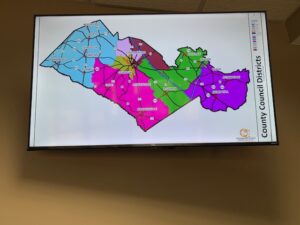
Of South Carolina’s 46 counties, nearly half, 22, are part of the African American South. However, in important ways, Orangeburg County stands out from other counties of its type. Here African Americans make up 61% of the 82,820 residents. (Comparatively, the median African American South county is 43% Black.) The power structure in Orangeburg reflects the demographics as well, with African Americans in the offices of county administrator, county commissioner, mayor of Orangeburg, school board, sheriff, and sheriff’s deputy.
Black leadership is seen as progress in a community that was once the epicenter of the Civil Rights Movement struggles. What became known as “the Orangeburg Massacre” occurred on South Carolina State University’s campus on February 8, 1968, when nine highway patrolmen shot at a crowd of about 200 Black students. Three students were killed and 28 were injured. These shootings culminated after protests against de facto racial segregation at Orangeburg’s only local bowling alley, All Star Bowling Lanes. It marked the first time police killed student protestors at an American university.

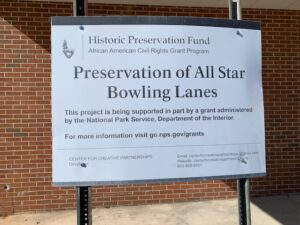
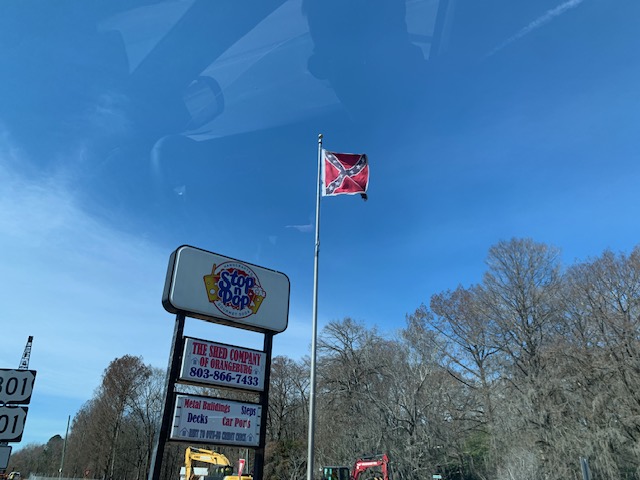
With some civil rights activists still living in Orangeburg County, the wounds here run deep. And the divides continue. While the bowling alley is preserved as a historic site by the National Park Service, there are several confederate monuments still standing in the city and a Confederate flag flying at the garden nearby. The Sons of Confederate Veterans owns that tiny plot of land, deeded to them by the previous owner, Maurice Bessinger, the late segregationist and barbecue restaurateur. County Administrator Young noted the repeated efforts to remove it, including a planned celebration in recent years when developments looked promising, but then an injunction was filed to leave the flag up.
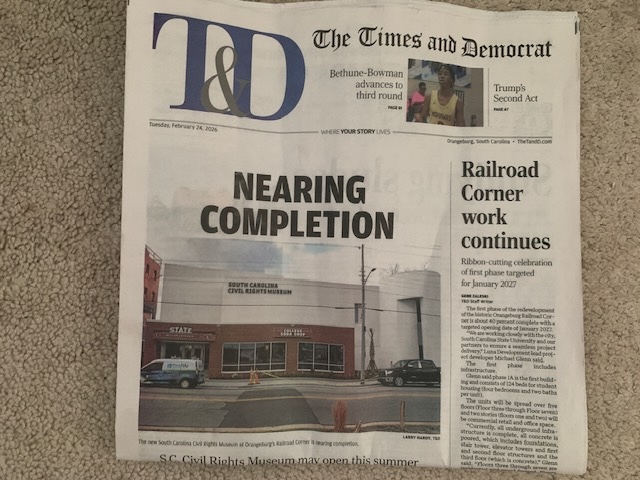
Meanwhile, county residents are moving to commemorate the historic activities in Orangeburg and statewide. Construction of the new South Carolina Civil Rights Museum at Orangeburg’s Railroad Corner is almost complete. The museum’s CEO, executive director, and founder Cecil Williams chronicled the Civil Rights Movement in Orangeburg and beyond as a photographer. His book, “Out-of-the-Box in Dixie: Cecil Williams’ Photography of the South Carolina Events that Changed America,” takes a closer look at the movement’s early days, from the 1949 Briggs v. Elliott case in neighboring Clarendon County that challenged public school segregation and the campaign to boycott certain White-owned businesses in Orangeburg in the summer of 1955, which predates the Montgomery bus boycott.

On today’s challenges around crime, resident leaders in Orangeburg are handling the reins with resolve and care, and the sense of stewardship pulses through the community.
Overall Crime Dropping
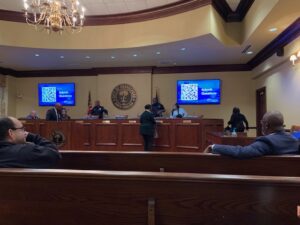
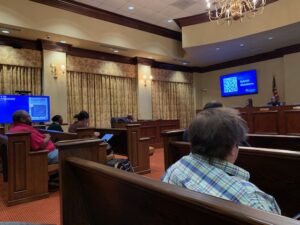
In late February, the ACP attended a community chat meeting on public safety at the City Council Chambers in the city of Orangeburg, which was scheduled before the Feb. 12 shooting at South Carolina State. Early in the meeting, Orangeburg Department of Public Safety Director Charles P. Austin Sr. said, “We’re much further along than we get credit for. I’m very proud of the progress that we’re making. We’re not crime-free, but we are not also a haven of crime or violence.” He said this year overall crime in Orangeburg dropped 27.83%. The following day, the decline was captured in a story in The Times and Democrat, Orangeburg’s local newspaper, published daily online and three days a week in print.
A dozen people of varying ages joined the meeting in person, which was also streamed online and open to questions. One man present asked whether Orangeburg has an intervention program for high-risk children and youth. Austin answered, “We have the Raising Orangeburg Seeds of Excellence, ROSE project, and under that umbrella, we have Mentoring Matters. Of course, we have officers assigned to the schools inside the city as our SROs [School Resource Officers], and they, of course, serve as mentors, and they help out with those programs.” He appealed to the questioner and other residents to share public or private groups who’d like to partner with the police department. The group stressed that partnerships are key to “21st century policing.”
What’s Driving the Decline
The Orangeburg community is reshaping its view of and approach to the problem of violence among youth, according to Chief Gibbs. Having all community stakeholders at the table has spurred a shift in mindsets and behaviors. “After Winston [a 6-year-old boy] was murdered [in 2022], the sheriff said, ‘This is not a law enforcement problem. This is not a Leroy Ravenell Orangeburg County Sheriff’s problem — this is an everybody problem.’ And he took flack for that…. like, you don’t want to take responsibility…. And he was like, ‘No, we have our part, too, but you’ve got to know where your children are… you can’t turn a blind eye. And so, I think those types of hard-truth conversations have started that change.”
Such a whole-of-community approach takes different forms — from grassroots to academic spaces. In a community where churches and multiple HBCUs are pillars, the sheriff’s office has spent time in Lutheran sewing circles as well as with researchers, for example. “Without our community policing approach, it really could be a whole lot more chaotic than what it is,” Gibbs said and Dr. Tucker agreed.
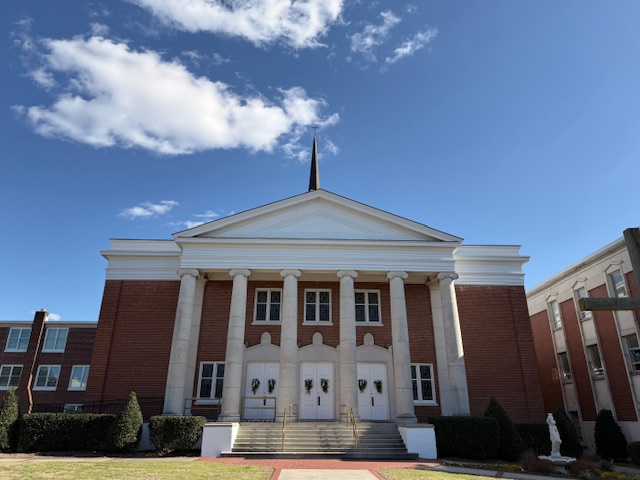
For the past two years, the sheriff’s department has been leveraging the link between literacy and reduced crime rates, Gibbs said. “We’re doing a campaign now, Reading with Heros: One Page at a Time. Imagine my SWAT Team reading to first-graders and kindergartners.” Dr. Tucker, too, comes in with a team and asks the hard questions to the school community about what is happening on crime and why.
In February, the sheriff’s office signed off on reviving the school safety patrol for elementary school students, now being launched by a School Resource Officer. Reaching students early in their schooling is key. “We said get your high-performing kid but also get the one that’s a little shaky,” Gibbs said. Dr. Tucker noted that through this program students learn key life skills, including public speaking, engagement, and alertness.
Gibbs underscored Orangeburg’s overall strides: an increase in reporting and a decrease in overall crime, correlated with an increase in the use of camera systems.
The Importance of Mentoring and Connecting
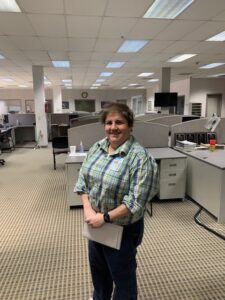
In reflecting on youth violence, reporter Martha Rose Brown who covers crime for The Times and Democrat and has been a journalist in the region for 23 years, also pointed to mentoring’s significance. “Adult figures, people of color, speaking, we call speaking life into younger people, so they see role models of people that care about them and their education. Even in the socioeconomic disadvantaged communities, of any color, if you have any type of person who’s grown up in that similar circumstance and is now kind of coaching you through your academics or whatever.”
This requires adults to be proximate to young people — and staying present with them as they develop. “Sometimes that [coaching’s] found in the faith community. Sometimes you just don’t go. Maybe you don’t have gas money to get to church, or maybe you just watch it online, but you don’t have the camaraderie. So, I always think that adults volunteering and investing in the lives of youth might make a difference,” Brown added.
Chief Gibbs recognizes her position as a role model for youth and what’s needed on all sides to counter the views young people have of police from their daily exposure. As videos of police brutality loom large in thought, maintaining environmental awareness and cultivating relational stability are top of mind for Gibbs. “So, a part of that, even with the SROs, is building that relationship so that they see us in a different light,” she said, animatedly gesticulating, her long fingernails covered in varying shades of pink.
To that end, Gibbs assumes many roles, including that of “auntie.” “For some of the elementary schools or middle schools, I’m the nail lady…. I’ve kept true to the femininity of who I am, because of the simple fact that it also gives a way to connect. So, if I’m at a high school and we’re talking, nine times out of 10, we’re connected. Their initial connection is over what they see…. Wednesdays are our days when we all have to be in uniform. But nine times out of 10, I’m not going to be. I’m in plain clothes, definitely protected.” As students mature, Gibbs might even school them on how to dress to impress, with some tough love. “What are you wearing? You are not coming back in this office looking like that. Go home. No one’s going to hire you like that,” she said.
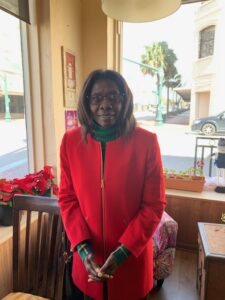
At Broughton Street Cafe & Ice Cream, a mom-and-pop shop in downtown Orangeburg, we met Barbara Williams, president of the NAACP in Orangeburg County who oversees the county’s six branches. She said from her vantage point the crime problem seems to be worsening and coming in from other places, based on news reports. In places she frequents, she sees young people and young parents having a hard time. A retired educator, she tries to guide them through meaningful conversation and works with schools to provide bags of food and clothing to families in need.
As part of her role in civil rights and social justice advocacy, Williams is involved in planning meetings with other organizations, including Greek letter groups and churches, to see “what we can do to combat [violence],” she said. Together they’re discussing civic engagement as well as tackling gun violence, safety, and training to improve the community. Twenty people attended their first meeting in February, and they will continue to meet. “It’s like a rainbow; everyone’s bringing their experiences and knowledge base to the meeting. That’s the only way it’s going to be successful,” Williams said.
Sitting inside The Times and Democrat newsroom, reporter Martha Rose Brown said she sees the efforts to keep engaging as positive signs in Orangeburg. “Just being able to sit at a table and talk things out is hopeful, even if it’s the same conversation over and over again… because that means people haven’t given up.”