
The Quiet Divide: Unpacking ‘Polite Polarization’ in America’s LDS Enclaves
Editor’s note: A few people interviewed in Utah County, Utah, asked that their last names be omitted out of concern for their privacy.
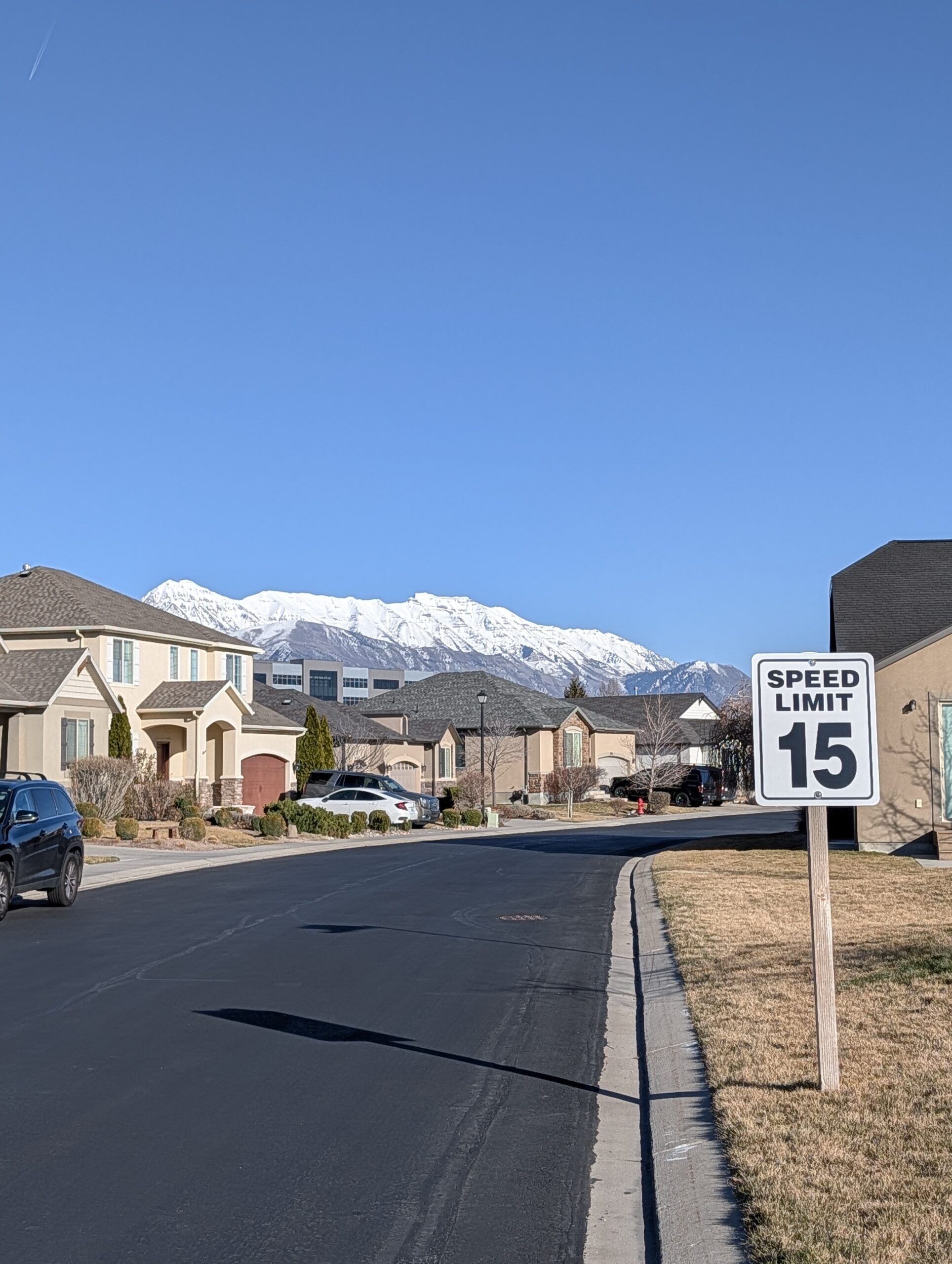
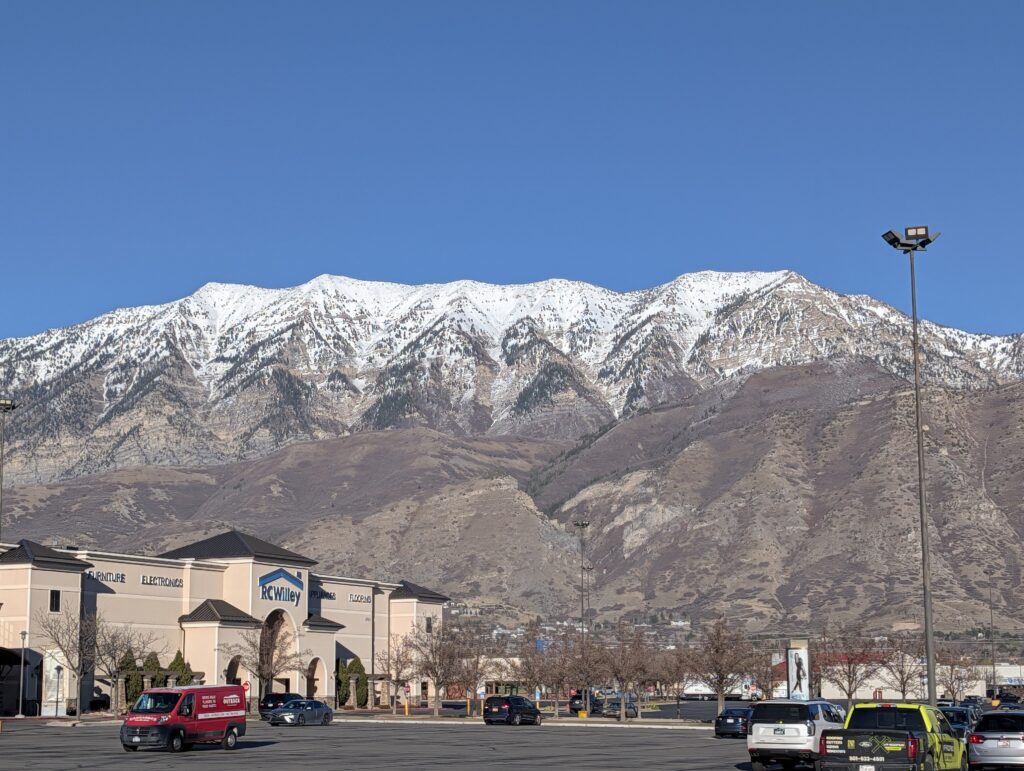
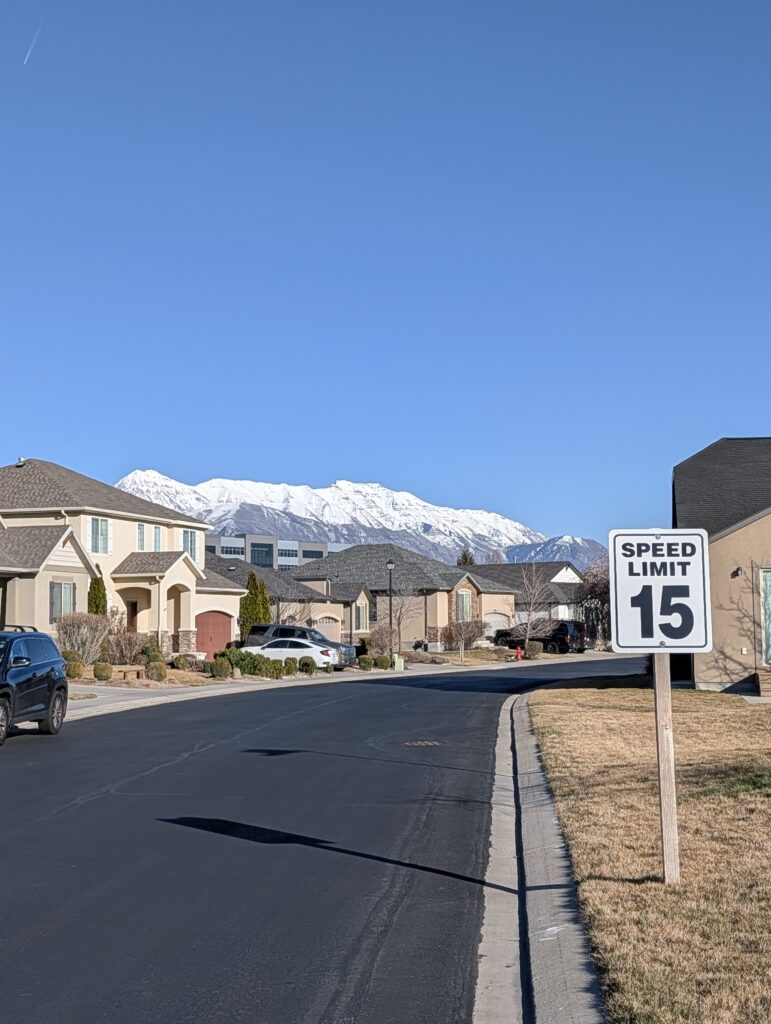
Drive through the sprawling, manicured suburbs of Utah County, and the American political crisis feels like a distant rumor. Framed by the towering Wasatch Mountains, the neighborhoods here project an image of pristine, impenetrable harmony. Neighbors wave across pristine lawns, church parking lots overflow on Sunday mornings, and the culture maintains a deep, collective emphasis on family and community.
Yet, beneath this tranquil surface, the data reveals something more complicated.
In its third annual survey on the fragmentation of American society, the American Communities Project and Ipsos released findings that highlight a striking paradox within communities boasting large populations of members of the Church of Jesus Christ of Latter-day Saints (Latter-day Saints for short and formerly called Mormons), categorized as “LDS Enclaves.” When asked to identify the most important issues facing the nation, 39% of respondents in these communities pointed to political polarization and extremism — a statistically significant leap from the 27% reported by the population overall.
Even more surprisingly, this anxiety bleeds into the local level. Nineteen percent of LDS Enclave residents identified political polarization as a top-three issue in their own communities, compared to 11% nationally and 15% in America’s Big Cities.
How does a community that looks so peaceful on the outside register real anxiety about political division on the inside, as suggested in the survey data above? To explore this question, I interviewed several people in Utah County, which could be considered the heart of Mormon America. Utah County represents the most populous and dense Latter-day Saint area in the nation, with church records adding up to 83% of the county population in the latest 2020 census.
The interviews reveal a sociological phenomenon prevalent in the “LDS Enclaves”: polite polarization. In the LDS Enclaves, the political divide does not manifest as screaming matches at school board meetings or violent public protests. Instead, it is driven underground by a powerful cultural mandate to maintain the peace. The polarization is absolutely present — it simply has better manners.
The Theological Mandate: ‘Contention is of the Devil’
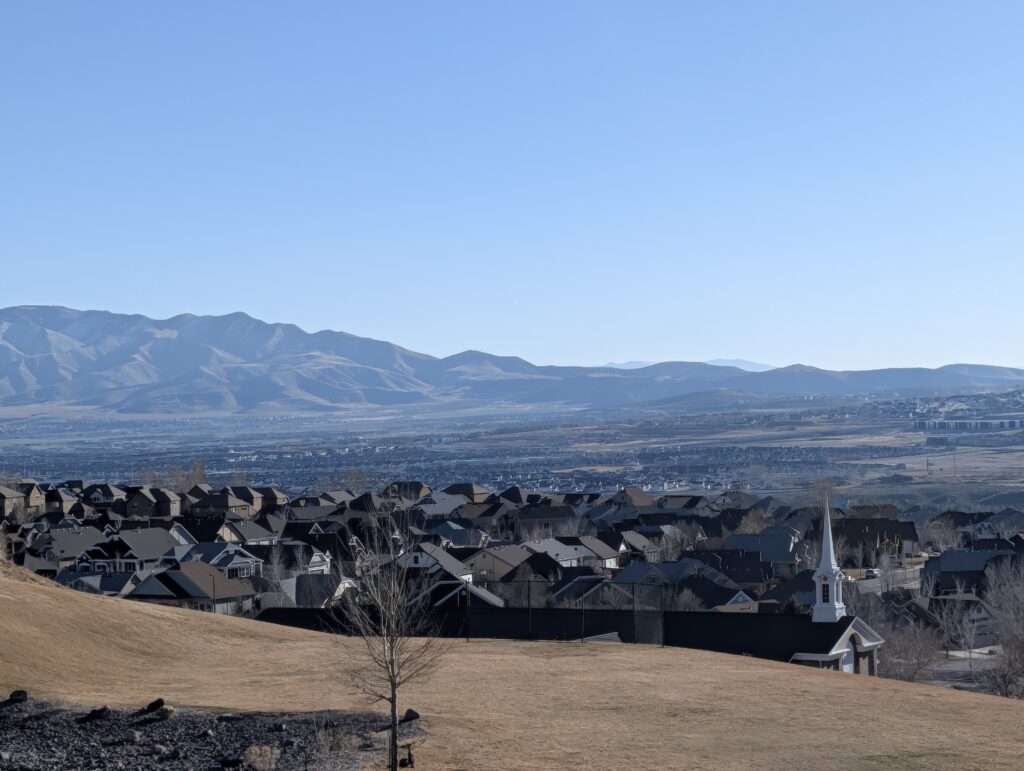
To understand the political climate of the Wasatch Front (which is a densely populated urban corridor running along the base of the Wasatch mountains representing the majority of Utah’s population), one must first understand the theological baseline that governs social interaction. For the Latter-day Saint community, unity is not just a civic preference; it is a spiritual imperative. There is a deeply ingrained scriptural belief that “contention is of the devil,” rendering public conflict not just impolite, but potentially spiritually damaging. The idea originates from the Book of Mormon (a foundation Latter-day Saint text) in which Jesus Christ visited the Americas a few thousand years ago and proclaimed “contention is not of me, but is of the devil” (see verse 29 at this link).
This teaching is commonly emphasized by LDS leaders today. For example, last year former Latter-day Saint head of the church and prophet in his keynote worldwide public address called on Latter-day Saints to be “peacemakers” and that “contention never leads to inspired solutions… the present hostility in public dialogue and on social media is alarming. Hateful words are deadly weapons. Contention prevents the Holy Ghost from being our constant companion.”
For Greg, an IT professional in his 50s living in Lehi, Utah, this theological framework is the literal lens through which he views the current political era. He is deeply skeptical of the national media — both Fox News and CNN — and believes the division plaguing the country is a manufactured crisis. “The devil is creating contention through social media algorithms and through malignant journalists,” he explains. In his immediate Utah County circle, he insists, that contention simply doesn’t exist.
This aversion to conflict creates a culture of self-silencing. When a community collectively agrees that arguing is taboo, those who are not as outspoken about their political beliefs withdraw.
Ashley, an accountant in her 40s from Lehi, views her neighbors as overwhelmingly passive. “I think most people don’t pay attention, don’t read, don’t educate themselves, and don’t really have a stance they can support,” she notes. “I would say they are [politically] moderate for the majority and then we have some Republicans and some liberals.”
During the Covid-19 pandemic, Ashley found herself as a minority regarding her opinions of mask mandates and social distancing in her congregation. She describes it as a socially isolating experience that reinforced her desire to keep the peace. Today, she navigates political differences with strict boundaries. “Our liberal friends have been much more vocal about their opinions and make snide comments,” she says. “We choose not to engage… I usually choose to maintain relationships over fighting. Friendships require listening and acceptance of differences.”
But choosing relationships over fighting requires a nontrivial amount of emotional labor, and for younger generations, the exhaustion is beginning to show. Alayna, a mother of three in her 30s living in a rapidly growing neighborhood in the obscurely named city, American Fork, considers herself politically middle-of-the-road with a slight left lean. In her ward — a local congregation of around 600 people, which is large for a ward — she frequently finds herself biting her tongue.
She recalls a recent Sunday when a vocal older member openly praised conservative political commentator Charlie Kirk, claiming God was proud of him. “It definitely creates polarization instantly, because then other people don’t feel like they can share their opinion,” Alayna explains. “You have the group that is very vocal and they’re gonna speak up. And it’s going to make everyone else feel like they can’t ever share.”
This silence masks hidden divides beneath the surface. Alayna casually notes that out of her 20 closest mom friends, seven of them quietly refuse to vaccinate their children. It is a staggering statistic for a single friend group, yet it rarely causes open conflict because “everyone does it respectfully.” To avoid the immediate opposition of the vocal minority, the moderate majority simply nods, smiles, and stays quiet. It seems that if political topics emerge, the vocal minority may share their views, but the conversation quickly returns to more palatable conversation where community harmony and relationships are preserved.
The Digital Disconnect and the News Cycle
Because face-to-face confrontation is culturally outlawed, the heavy, controversial issues dominating the national and state news cycles are effectively banned from the neighborhood block party.
Utah has not been immune to political turbulence. The state has been embroiled in ongoing, highly contentious gerrymandering battles that have redefined voting districts and sparked legal showdowns. Earlier, the local news cycle was dominated by the tragic shooting of Charlie Kirk right in Utah County at Utah Valley University, a stark reminder of the physical dangers of political extremism.
Yet, in the cul-de-sacs of Utah County, these events are treated as ghosts. They haunt the collective consciousness but are rarely spoken of in polite company. Instead, this pent-up political energy is displaced into the digital sphere.
“I feel like on social media is where more of my friends share their opinions,” Alayna notes. “They’re not bringing it about openly in church.”
This creates a deeply unsettling whiplash effect. Residents interact with warm, cooperative neighbors in the physical world, only to see those same neighbors posting sometimes aggressive, polarized content on Instagram or Facebook later that evening. This digital displacement may explain why survey respondents feel so acutely aware of polarization: The tension is always there, glowing on their screens, even if it is invisible in their streets. But the digital sphere is also where residents are confronted with a broader, national hostility.
The External Pressure Cooker: Circling the Wagons
If the internal culture of the LDS Enclave demands polite harmony, it may be because the external environment feels increasingly hostile. The high rates of anxiety regarding political polarization cannot be fully understood without acknowledging the unique, socially accepted prejudice directed at Latter-day Saints from the outside world.
For many in the community, the hostility feels ubiquitous. In pop culture, the faith is frequently flattened into crude caricatures or sensationalized in streaming true-crime documentaries that paint the religion with a broad, sinister brush. Politically, Latter-day Saints often navigate a lonely no-man’s-land — frequently mocked by secular, left-leaning commentators for their conservative social values, while simultaneously held at arm’s length by right-wing evangelical commentators who question their Christian authenticity.
This cultural friction frequently spills over into public spaces. Marvin Jensen, the 84-year-old Lehi resident, notes that the discrimination is something people in the community tangibly “see and feel,” particularly during collegiate sporting events. “A lot when BYU is in the Big 12 or in other places… chants start going up in the audience,” Marvin notes. “Anti-LDS, anti-Mormon. I think that’s unfortunate.”
But the polarization extends far beyond tasteless stadium chants or media slights; it has also escalated into literal violence. The recent tragic shooting at a Michigan Latter-day Saint church building in September 2025, in which members were explicitly targeted, sent shockwaves through the broader LDS community. It served as a grim, terrifying reminder that anti-Mormon sentiment is not always confined to the internet.
When a community’s houses of worship are targeted, the anxiety captured in the ACP/Ipsos survey ceases to be an abstract political concern — it becomes a matter of physical safety.
Understanding this external pressure cooker recontextualizes the “polite polarization” of the Wasatch Front. When the outside world feels culturally mocking at best and physically dangerous at worst, the enclave walls naturally rise. Circling the wagons and maintaining internal harmony at all costs isn’t just a matter of Utah County politeness; it is a psychological survival mechanism.
A Tale of Two Utahs: Geography as an Echo Chamber
When people cannot speak across their differences, they begin to sort themselves geographically and culturally. In Utah, this sorting is highly visible, creating a stark contrast between the traditional conservative stronghold of Utah County and the more progressive, countercultural hub of Salt Lake City to the north.
For Jojo, a twentysomething ex-Mormon from Weber County who spent years living in Utah County, the cultural sorting feels increasingly rigid. He views the dominant political party of Utah County as having drifted into radical territory, erasing its foundational ideals.
“I think Utah County is infamous for being one of the most notoriously high concentrations of LDS members,” Jojo explains. “I could see [political extremism] being a problem in Utah County because certain communities aren’t accepted within [the Latter-day Saint religious tradition], in turn causing certain discrimination and bigotry.”
He notes a rising counterculture made up of young and old, but increasingly those of the rising generation reacting to this dominance — marked visibly by things like multiplying coffee shops and bars (coffee and alcohol are forbidden in the Latter-day Saint religion) or multiple piercings and tattoos of residents, which have long been culturally taboo in strict LDS circles. This likely originates from earlier versions of church guidance for teenagers named For the Strength of Youth, which previously discouraged multiple body piercings and tattoos as a “body is a temple.”
Jojo points to Salt Lake City as the inclusive foil to Utah County’s exclusivity. He believes that while the population of acceptance has grown, the conservative pushback has also become more extreme in its behavior. “It’s like an unconscious bias towards those of your community, and you just silently discriminate.”
Fascinatingly, those inside the dominant culture see the exact same map but interpret it completely differently. Greg, the IT worker from Lehi, feels no political polarization in his daily life. From his perspective, Utah County is a peaceful haven; he believes all the hostility resides up north with the people in Salt Lake City.
When two demographics living just miles apart view each other as the sole source of the state’s contention, the ACP/Ipsos data begins to make perfect sense. The community isn’t just divided on the issues; they are living in alternate geographic realities.
The Antidote of Exposure
If polite polarization thrives on silence and geographic isolation, the historical antidote in LDS culture has always been exposure. The church’s massive missionary program — sending tens of thousands of young men and women across the globe for up to two years — forces young people out of their enclaves. They learn foreign languages, immerse themselves in different socioeconomic realities, and often return home with profoundly shifted, empathetic views on complex national issues like immigration and poverty.
Marvin Jensen, an 84-year-old retired construction manager from Lehi, embodies the power of this exposure. A well-traveled conservative who raised his family in multiple foreign countries, he views the current political haranguing as the worst he has ever seen.
“They don’t seem like they’re trying to get to a solution to their differences; they’re just wanting to point out their differences,” Marvin says. He fondly recalls a trip to communist China in the 1980s, shortly after the country opened its borders. Despite the group of Chinese students having been thoroughly indoctrinated with anti-American propaganda, their curiosity won out. They approached him, practiced their English, and spent the day hiking together.
“If people will just talk, they can usually resolve what their differences are,” Marvin reflects. “Because [their differences] are usually not exactly what they think.”
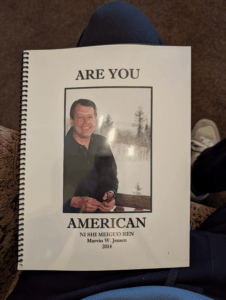
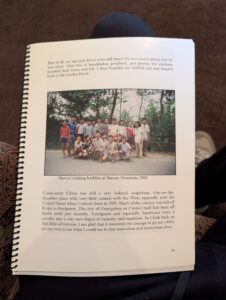
He laments that today, people have replaced that courageous, face-to-face curiosity with the safety of digital echo chambers. “People today don’t visit and don’t talk. They just put out rude and uneducated [comments]… to get themselves seen on Facebook.”
The Cost of the Quiet
LDS Enclaves
The LDS Enclaves profiled by the American Communities Project are not fracturing in the loud, chaotic ways seen in other parts of the country. By prioritizing civility and leaning on a theology of peace, they have successfully preserved the functional day-to-day mechanics of their neighborhoods. As Ashley wisely notes, “The country better functions when we have functioning families, work ethic, morals, and definitions.”
But the survey data where the LDS Enclaves rank political extremism and polarization higher than the rest of the country warrants attention. And perhaps these interviews reveal a psychological toll of maintaining that pristine surface. Polite polarization demands constant vigilance. It requires residents to smile through their profound disagreements, to outsource their political frustrations to social media, and to quietly accept the isolation of possibly feeling politically homeless in their own congregations.
The residents of the Wasatch Front have proven they can successfully keep the social peace. The question lingering in the data, however, is how long they can carry the quiet weight of doing so.
 Alex Bass is a data scientist and founder of Mormon Metrics, an influential blog that analyzes Mormon demographics and culture. Leveraging his political polling and data background, he consults for corporate and political clients and helps them turn messy data into actionable insights.